Voting at 16, Term Limits, and a 32% Office Vacancy Rate: Rockville’s October 5 Agenda
Rockville’s Mayor and Council meets Monday, October 5, 2026 beginning at 5:30 p.m., with two issues likely to have long-term consequences: a substantial rewrite of the city’s election rules and a review of Rockville’s economic-development performance (warning: the first hour will be devoted to ten proclamations). The agenda also includes proposed Charter amendments that would lower the municipal voting age, establish a minimum age for elected officials, and impose consecutive-term limits. (City of Rockville)
Rockville’s Election Code Heads Toward a Major Rewrite
The Mayor and Council will introduce a substantial rewrite of Chapter 8 of the City Code, which governs municipal elections. The proposal addresses election administration, campaign finance, reporting and enforcement, voter assistance, electioneering, and responsibilities of the Board of Supervisors of Elections. Staff says the revisions respond partly to issues identified during the 2023 election and incorporate subsequent recommendations and Council direction. Public hearings are tentatively planned for October 26 and November 2. (Earlier background: “Historic Preservation, Election Rules, and State Priorities”)
Among the most significant changes:
- Individual contributions would be limited to $1,200 per candidate or campaign committee per election cycle, with the limit periodically adjusted for inflation. Contributions over $100 would have to be made by check or electronically.
- Transfers between candidate or campaign committees could reach $5,000, substantially more than the normal individual contribution limit.
- Campaign treasurers would be explicitly responsible for managing and recording contributions and expenditures, and candidates or committee members could not make expenditures without the treasurer’s knowledge.
- Late campaign reports could generate escalating penalties of $200, $300, and eventually $450 per day, up to a maximum of $7,500.
- The Board of Supervisors of Elections would have clearer authority to verify candidate eligibility, investigate possible violations, request documents, and issue notices of violation.
- Electioneering would be prohibited within 50 feet of vote-center entrances and exits and outdoor ballot drop boxes, and obstructing access to a drop box would be prohibited.
Maryland Ballot 2026: Question 3 on Redistricting
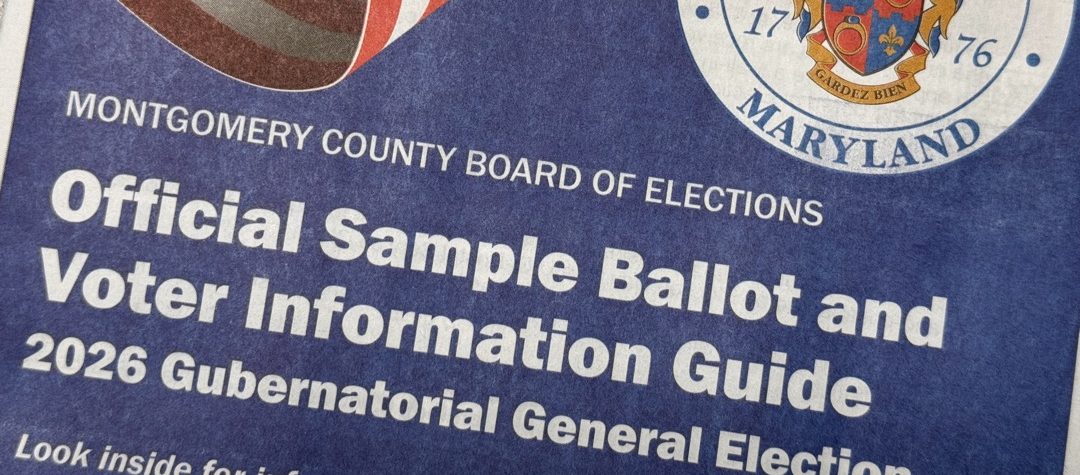
Maryland voters will face an unusually complicated constitutional question this November concerning congressional redistricting. Question 3 does not itself redraw Maryland’s congressional districts. Instead, it would change the Maryland Constitution to clarify which state constitutional rules apply when congressional districts are drawn—and, just as importantly, which rules do not.
The history behind the amendment helps explain why it is controversial.
Maryland’s Constitution requires legislative districts to be contiguous, compact, and drawn with “due regard” for natural boundaries and the boundaries of political subdivisions. For many years, those provisions were generally treated as rules governing districts for the Maryland General Assembly. That understanding changed during litigation over the congressional map enacted after the 2020 census.
In 2022, retired Judge Lynne Battaglia ruled that those state constitutional requirements also applied to Maryland’s congressional districts. She struck down the General Assembly’s 2021 congressional map, finding, among other things, that it failed state constitutional standards concerning compactness and political boundaries. The General Assembly subsequently adopted a replacement congressional map.
Question 3 is, in significant part, a response to that 2022 decision. During a special session in August 2026, the General Assembly passed HB 2100, sponsored by House Speaker Joseline Peña-Melnyk. The measure passed the Senate 32–13 and was approved by the governor on August 5. Because it changes the Constitution, however, voters must approve it before it can take effect.
If adopted, Question 3 would make three principal changes.
- First, it would specify that Maryland’s constitutional requirements concerning compactness, contiguity, and political and natural boundaries apply to districts for the Maryland Senate and House of Delegates—not congressional districts.
- Second, it would state explicitly that nothing elsewhere in the Maryland Constitution, including the Declaration of Rights, supplies criteria for drawing congressional district boundaries.
- Third, it would allow the General Assembly to give the Supreme Court of Maryland original jurisdiction to hear challenges to congressional redistricting plans.
The argument for Question 3
Supporters describe the amendment principally as a clarification of constitutional law. Their argument is that Article III of the Maryland Constitution was designed to regulate districts for the General Assembly and that the 2022 court decision extended those provisions to congressional districts in a way that had not previously been understood. Under that view, Question 3 restores the historical distinction between state legislative redistricting and congressional redistricting and establishes clearer rules before the next round of mapmaking.
Continue reading →Election Reform Should Make It Easier to Run for Office, Too

Rockville is revising Chapter 8 of the City Code, which governs municipal elections. Much of the discussion understandably focuses on election integrity: campaign contributions, disclosure, independent expenditures, enforcement, and the rules governing political committees.
But there is another test the Mayor and Council should apply to the proposed ordinance:
Could a first-time candidate running a $2,000 volunteer campaign comply confidently with these rules without hiring an attorney or experienced campaign treasurer?
That is not a hypothetical concern. Rockville’s own 2025 Election Review concluded that the existing code needed substantial revision in part so candidates could understand the rules “without having to hire an attorney to decipher the language.” It also recommended clearer explanations, an election handbook, and simpler navigation for candidates and voters.
Continue reading →Historic Preservation, Election Rules, and State Priorities on Rockville Council’s September 14 Agenda
Rockville’s Mayor and Council meets Monday, September 14, 2026 beginning at 5:30 p.m. The first hour will be devoted largely to community recognitions and proclamations. The heavier policy work begins around 7 p.m., with the first significant Council actions scheduled for roughly 7:20 to 7:25 p.m. Several items deserve particular attention because they could shape Rockville well beyond Monday night.
Will Rockville Preserve 24 Martins Lane?
The most immediate decision concerns 24 Martins Lane, a property associated with the historically Black Haiti/Martins Lane community. The Mayor and Council will first hold a public hearing and then are scheduled to vote on whether to place the property in Rockville’s Historic District Overlay Zone. The Historic District Commission voted 4-1 to recommend designation, finding that the property met five of the city’s historic-designation criteria. The Planning Commission later found the designation consistent with the Comprehensive Plan.
The history here matters. The Haiti/Martins Lane community is one of Rockville’s oldest Black neighborhoods, with roots extending to about 1830, when free Black landowner Samuel Martin settled in the area. The neighborhood’s name reflects a broader African American identification with Haiti, whose successful revolution against slavery and declaration of independence in 1804 made it a powerful symbol of Black freedom and self-determination in the nineteenth century. The city’s analysis also identifies the property as representative of Rockville’s Black heritage and of early vernacular residential construction.
The timing also matters because demolition is contemplated. Historic designation would not freeze the property in time, but it would require Historic District Commission review of future exterior alterations and changes to the site. This is the kind of decision that forces Rockville to weigh several legitimate interests at once: preserving African American history, respecting private property, accommodating future development, and deciding what parts of the city’s physical history should remain visible.
Rockville’s Election Rules Are Heading Toward a Rewrite
Later in the evening, the Mayor and Council will hold a worksession on a substantial rewrite of Chapter 8 of the City Code, which governs municipal elections. This discussion is part of a much longer reconsideration of how Rockville conducts its elections. In 2022, the city’s Charter Review Commission recommended a range of changes, including term limits, representative districts, lowering the voting age, allowing noncitizen residents to vote in municipal elections, and exploring ranked-choice voting. The Mayor and Council initially considered placing ranked-choice voting before voters along with several of those questions in 2023, but it did not appear on the final ballot. Instead, voters considered four nonbinding questions on voting age, noncitizen voting, term limits, and representative districts.
Continue reading →Rockville Council to Consider Updates to Tree Preservation Rules

The Rockville Mayor and Council will meet on Monday, January 12, 2026, at 6:30 p.m. Key items include routine board and commission appointments, a community forum for public comment, and approval of several consent items, including a $309,000 vehicle purchase, the City’s FY 2025 financial reports, and an election-related agreement for a Drop Box at City Hall. The primary policy action is an ordinance updating the City’s Forest and Tree Preservation regulations to align with state law and improve administration. Looking ahead to the February 2 meeting, the Council will consider changes to the Green Building Code.
In 2026, I’m taking a fresh approach to covering Rockville’s mayor and council meetings. Rather than listing every agenda item all year long, I’ll focus on a few key issues that are affecting the community and provide short, clear summaries that highlight what really matters. If you want every detail, the City already does a great job sharing agendas by email, so I’ll leave that role to them.
This shift will let me spend more time taking a closer look at specific issues as they arise and explaining why they matter to residents and businesses. For example, I plan to pay closer attention to board and commission appointments, where the same members are often reappointed for decades—raising important questions about community participation and diverse perspectives. I’ll also listen carefully to council discussions to note who is actively shaping decisions and who is less engaged, information that can be useful to voters. Finally, I’ll broaden the lens beyond City Hall to explore other developments across Rockville and Montgomery County that affect daily life in our community.
Housing Aid, Election Reforms, and Vision Zero on Rockville’s September 8 Agenda
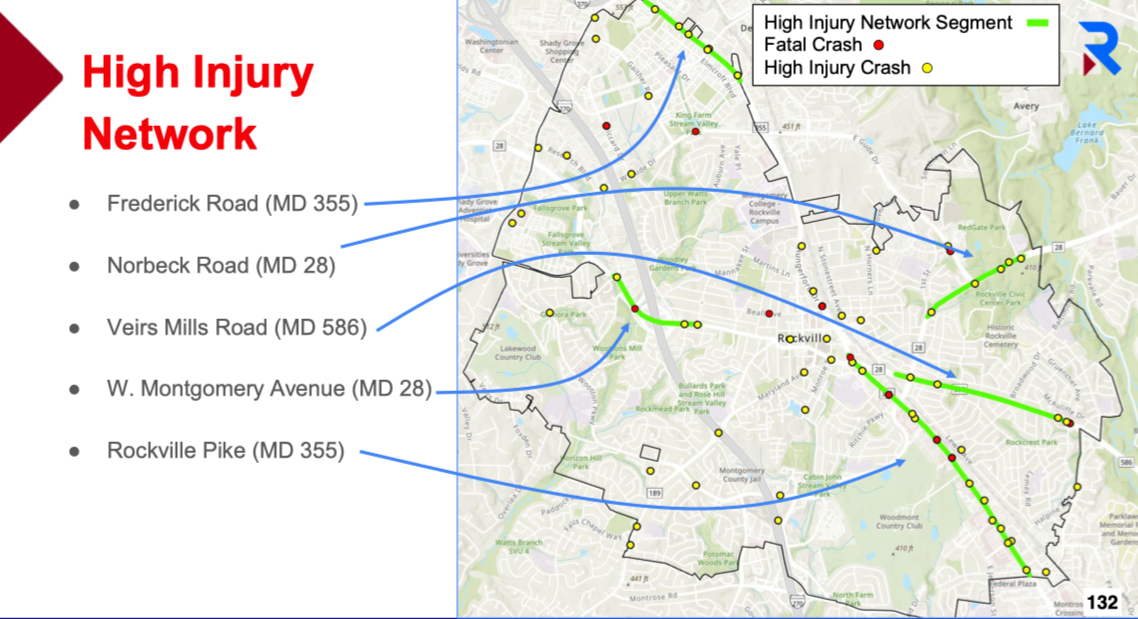
Rockville’s Mayor and Council is returning from its August break facing a packed agenda with decisions that could shape the city’s future for years to come. At the September 8 meeting, three major issues will take center stage: housing affordability and federal funding priorities, a complete overhaul of the city’s election code, and progress on Rockville’s ambitious Vision Zero traffic safety plan. Each of these topics speaks directly to the daily lives of residents and businesses, raising questions about how Rockville grows, governs, and protects its people.
Rockville Council to Hear Public Testimony on Housing Needs and Federal Grant Priorities
The Rockville City Council will hold a public hearing to shape how the city will spend its $263,000 allocation of federal Community Development Block Grant (CDBG) funds for FY 2027. The grants, distributed through Montgomery County, must be used for projects that benefit low- and moderate-income residents.
In the past, Rockville has used CDBG funding to rehabilitate supportive housing at Jefferson House, upgrade shared recovery housing, replace failing HVAC systems at David Scull Courts, and fund its single-family rehab program. With housing affordability worsening, this year’s hearing carries added weight.
A recent city needs assessment underscores the challenge: nearly half of Rockville residents are renters, and more than half of them are cost-burdened, paying over 30 percent of their income on housing. Median rent has climbed to $2,244 per month, requiring an income of nearly $90,000, while the median home price now tops $681,500. Homeownership rates continue to fall, particularly for younger and first-time buyers.
Continue reading →What Rockville Residents Are Saying: Youth Voices, Rent Stabilization, and Fair Elections
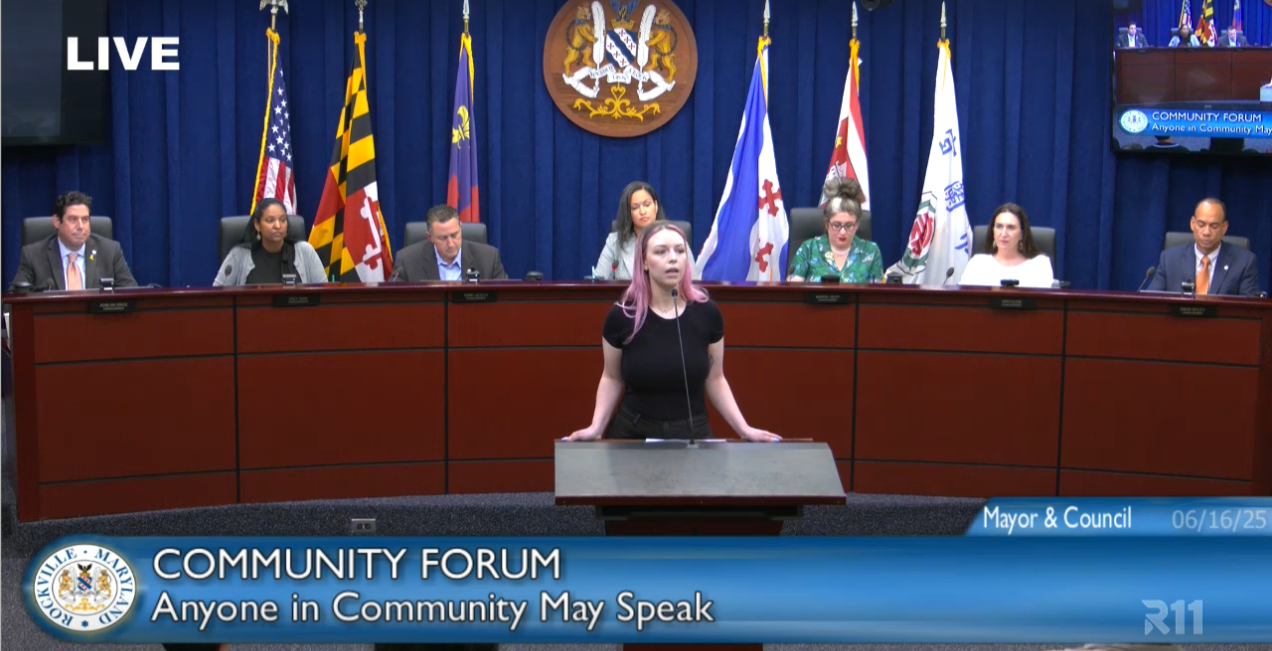
At the June 16, 2025 meeting of the Rockville Mayor and Council, more than two dozen residents—many of them renters and students—delivered passionate testimony on the future of our city during Community Forum. Three major themes were emphasized (note: the claims or facts are presented as given by the speakers and were not fact-checked for accuracy or context):
1. Rent Stabilization Dominates Public Concern
The majority of speakers called on the city to adopt rent stabilization policies similar to those in Montgomery County, which caps annual rent increases at 6%. Residents described being priced out of their homes despite working full-time jobs, raising families, or serving in essential roles such as teachers, nurses, and federal employees. Many pointed to:
- Sharp rent hikes of 10–17% over the past year or two.
- Unsafe or neglected apartment conditions.
- Displacement and homelessness among vulnerable groups, especially Black women and children.
- A sense of political frustration with city officials who have declined to move forward on rent stabilization.
While Councilmembers Zola Shaw and David Myles were repeatedly thanked for their support, other council members were criticized for inaction, perceived conflicts of interest, or dismissive behavior toward tenant advocates.
2. Youth Push for Voting Rights at 16
Several articulate high school students—members of Sunrise Rockville, the Youth Commission, and the Vote16 Movement—advocated for lowering the voting age to 16 in municipal elections. Their arguments included:
Continue reading →Housing, Mental Health, and Election Reform on June 16 Council Agenda
The next Rockville Mayor and Council meeting on Monday, June 16, 2025, will tackle several important topics that could shape life in the city—from how affordable housing is preserved, to how the police handle mental health calls, to how future city elections are run. Residents and businesses alike may want to tune in or weigh in on these wide-ranging proposals.
Affordable Housing Preservation
What’s on the Agenda
The Council will hear a presentation on strategies to preserve affordable housing in Rockville, especially older apartment buildings that may otherwise be lost to redevelopment or rising rents. The report recommends creating a database to track at-risk properties, reviving a rehabilitation loan program, and building a coalition of local partners to protect long-term affordability. However, the report does not fully address the challenges faced by property owners and developers, such as rising construction costs, regulatory burdens, and limited access to financing—all of which make it increasingly difficult to preserve or create affordable units.
Why It Matters
Housing affordability is a growing concern in Rockville. These strategies could help longtime residents stay in their homes, keep neighborhoods stable, and ensure a mix of incomes across the city.
Mental Health Specialist for Rockville Police
What’s on the Agenda
The Council will vote to renew an agreement with Montgomery County to embed a licensed mental health professional in the Rockville Police Department for $160,000 per year. This specialist assists officers on mental health calls and helps connect residents to support services. The role also includes training officers on crisis response.
Why It Matters
While mental health calls only represent 3% of police activity (742 out of 26,047 calls in 2024), they require a set of skills that few police officers are trained to handle. This program is a way to improve public safety responses, reduce emergency room visits, and support residents in crisis more effectively.
City Election Reform
What’s on the Agenda
As part of an ongoing review, the Council will hold a worksession on proposed changes to Rockville’s election system. The discussion will focus on four main areas: rewriting the election code, updating campaign finance rules, rethinking the structure and independence of the Board of Supervisors of Elections, and improving public education and enforcement. Potentially off-the-table issues are ranked-choice voting and public funding of campaigns. A Charter Review Commission presented recommendations in late 2022, voters responded to advisory referendum questions in the 2023 election, and the Mayor and Council is revisiting everything again (except increasing the size of Council) in 2025. Seems there’s little traction on this issue and I wonder if they’ll consider what voters and Charter Review Commission said previously (they’re not mentioned in the staff report).
Why It Matters
Rockville’s election rules haven’t kept up with modern expectations. These updates could make local elections fairer, more transparent, and easier to understand for voters, candidates, and campaign volunteers alike.
The meeting will be broadcast live on Rockville 11 and streamed on the city’s website.
Residents can send comments to the Mayor and Council by email or speak during Community Forum, which begins at 6:50 p.m. You can sign up to speak online at rockvillemd.gov before 10 a.m. the day of the meeting.
Affordable Housing and Election Integrity: Residents Share Concerns with Council
The public comments during the Rockville City Council’s Community Forum on October 21, 2024, covered the following major topics:
- Enforcement of Campaign Laws: Several speakers, including Brigitta Mullican, Steven Weiner, and Bridget Newton, emphasized concerns over the enforcement of Rockville’s campaign regulations. They argued that a lack of consistent action on campaign violations could undermine trust in local election laws. These comments called for clearer standards and increased accountability for campaign rule violations. Next steps? The Council could direct the City Attorney to establish clear guidelines for when and how campaign violations will be addressed, possibly creating a review process for the Board of Supervisors of Election to report findings and suggest enforcement actions.
- Rent Stabilization and Housing Affordability: Numerous residents, such as Misha Clive, Grant Sams, and Wendy Murphy, urged the council to prioritize rent stabilization. They discussed the challenges of rising rent costs, particularly for renters on fixed incomes or with lower-wage jobs, and expressed concerns that the current lack of rent caps could displace long-term residents. The call for rent stabilization was framed as a measure to maintain Rockville’s diversity and accessibility. Next steps? At the same meeting, the Council held a work session on housing strategies.
- Election Integrity and Voter Access: Senator Cheryl Kagan provided comments focused on election integrity and reminded the community of available options for casting ballots securely in the upcoming elections. Her remarks aimed to dispel misinformation and highlighted her efforts in sponsoring election-related bills for improved municipal election oversight. Next steps? The Council could enhance outreach efforts to ensure residents understand their voting options and election security measures. Partnering with state or county election boards may provide additional support.
- Traffic and Speed Control on Major Roads: John Becker addressed issues regarding traffic safety, especially along Rockville Pike and East Jefferson Street. He advocated for the installation of speed cameras to enhance safety in residential areas, especially given the planned increases in residential development along these roads. Next steps? The Council could explore the installation of speed cameras or other traffic-calming measures on Rockville Pike, East Jefferson, and Viers Mill Road. A collaboration with the State Highway Administration to address these concerns would ensure safety for both current and future residents.
- Requests for Transparent Campaign Finance Records: There was also a response from council members, including Mayor Monique Ashton and Council Member Adam Van Grack, who clarified that they had not accepted any PAC donations, addressing comments about alleged developer influence on council decisions. Next steps? The Council might consider publishing more detailed campaign finance records or hosting an information session to clarify the council’s stance on developer influence. This could foster greater trust and show commitment to transparency.
These topics reflect a community deeply engaged in matters of governance, housing equity, and transparency.
Continue reading →Rockville Election Laws at Risk: Board Pushes for City Attorney Action
During the September 30, 2024 Rockville City Council meeting, two members of the Board of Supervisors of Elections, Robert Kurnick (Chair) and David Sklar, addressed the council to express serious concerns about the enforcement of the city’s election laws following the 2023 election.
Election Law Crisis
Kurnick emphasized that Rockville faces a crisis regarding its election laws. The city attorney has declined to enforce citations issued against candidates who violated campaign finance laws in the 2023 election. According to Kurnick, the rationale provided—that violations are not “ongoing” and therefore not enforceable—renders Rockville’s campaign finance laws essentially “unenforceable.” Kurnick urged the council to direct the city attorney to enforce these violations to maintain the integrity of the city’s election laws. Without enforcement, Kurnick warned, there would be no incentive for future candidates to comply with campaign finance regulations, leading to a breakdown in transparency.
Impact on Election Integrity
David Sklar, another member of the Board, echoed Kurnick’s concerns, stating that the decision not to enforce these laws undermines the entire election process. Sklar pointed out that the failure to hold violators accountable erodes the purpose of having campaign finance laws in the first place. He noted that the current approach could lead to candidates repeatedly violating election laws with no consequences, rendering the role of the Board of Supervisors of Elections meaningless. Sklar added that if the city continues down this path, he would resign from the Board, as there would be no reason to analyze campaign finance forms if the law itself is ignored.
Continue reading →

