Voting at 16, Term Limits, and a 32% Office Vacancy Rate: Rockville’s October 5 Agenda
Rockville’s Mayor and Council meets Monday, October 5, 2026 beginning at 5:30 p.m., with two issues likely to have long-term consequences: a substantial rewrite of the city’s election rules and a review of Rockville’s economic-development performance (warning: the first hour will be devoted to ten proclamations). The agenda also includes proposed Charter amendments that would lower the municipal voting age, establish a minimum age for elected officials, and impose consecutive-term limits. (City of Rockville)
Rockville’s Election Code Heads Toward a Major Rewrite
The Mayor and Council will introduce a substantial rewrite of Chapter 8 of the City Code, which governs municipal elections. The proposal addresses election administration, campaign finance, reporting and enforcement, voter assistance, electioneering, and responsibilities of the Board of Supervisors of Elections. Staff says the revisions respond partly to issues identified during the 2023 election and incorporate subsequent recommendations and Council direction. Public hearings are tentatively planned for October 26 and November 2. (Earlier background: “Historic Preservation, Election Rules, and State Priorities”)
Among the most significant changes:
- Individual contributions would be limited to $1,200 per candidate or campaign committee per election cycle, with the limit periodically adjusted for inflation. Contributions over $100 would have to be made by check or electronically.
- Transfers between candidate or campaign committees could reach $5,000, substantially more than the normal individual contribution limit.
- Campaign treasurers would be explicitly responsible for managing and recording contributions and expenditures, and candidates or committee members could not make expenditures without the treasurer’s knowledge.
- Late campaign reports could generate escalating penalties of $200, $300, and eventually $450 per day, up to a maximum of $7,500.
- The Board of Supervisors of Elections would have clearer authority to verify candidate eligibility, investigate possible violations, request documents, and issue notices of violation.
- Electioneering would be prohibited within 50 feet of vote-center entrances and exits and outdoor ballot drop boxes, and obstructing access to a drop box would be prohibited.
Election Reform Should Make It Easier to Run for Office, Too
Rockville is revising Chapter 8 of the City Code, which governs municipal elections. Much of the discussion understandably focuses on election integrity: campaign contributions, disclosure, independent expenditures, enforcement, and the rules governing political committees.
But there is another test the Mayor and Council should apply to the proposed ordinance:
Could a first-time candidate running a $2,000 volunteer campaign comply confidently with these rules without hiring an attorney or experienced campaign treasurer?
That is not a hypothetical concern. Rockville’s own 2025 Election Review concluded that the existing code needed substantial revision in part so candidates could understand the rules “without having to hire an attorney to decipher the language.” It also recommended clearer explanations, an election handbook, and simpler navigation for candidates and voters.
Continue reading →Historic Preservation, Election Rules, and State Priorities on Rockville Council’s September 14 Agenda
Rockville’s Mayor and Council meets Monday, September 14, 2026 beginning at 5:30 p.m. The first hour will be devoted largely to community recognitions and proclamations. The heavier policy work begins around 7 p.m., with the first significant Council actions scheduled for roughly 7:20 to 7:25 p.m. Several items deserve particular attention because they could shape Rockville well beyond Monday night.
Will Rockville Preserve 24 Martins Lane?
The most immediate decision concerns 24 Martins Lane, a property associated with the historically Black Haiti/Martins Lane community. The Mayor and Council will first hold a public hearing and then are scheduled to vote on whether to place the property in Rockville’s Historic District Overlay Zone. The Historic District Commission voted 4-1 to recommend designation, finding that the property met five of the city’s historic-designation criteria. The Planning Commission later found the designation consistent with the Comprehensive Plan.
The history here matters. The Haiti/Martins Lane community is one of Rockville’s oldest Black neighborhoods, with roots extending to about 1830, when free Black landowner Samuel Martin settled in the area. The neighborhood’s name reflects a broader African American identification with Haiti, whose successful revolution against slavery and declaration of independence in 1804 made it a powerful symbol of Black freedom and self-determination in the nineteenth century. The city’s analysis also identifies the property as representative of Rockville’s Black heritage and of early vernacular residential construction.
The timing also matters because demolition is contemplated. Historic designation would not freeze the property in time, but it would require Historic District Commission review of future exterior alterations and changes to the site. This is the kind of decision that forces Rockville to weigh several legitimate interests at once: preserving African American history, respecting private property, accommodating future development, and deciding what parts of the city’s physical history should remain visible.
Rockville’s Election Rules Are Heading Toward a Rewrite
Later in the evening, the Mayor and Council will hold a worksession on a substantial rewrite of Chapter 8 of the City Code, which governs municipal elections. This discussion is part of a much longer reconsideration of how Rockville conducts its elections. In 2022, the city’s Charter Review Commission recommended a range of changes, including term limits, representative districts, lowering the voting age, allowing noncitizen residents to vote in municipal elections, and exploring ranked-choice voting. The Mayor and Council initially considered placing ranked-choice voting before voters along with several of those questions in 2023, but it did not appear on the final ballot. Instead, voters considered four nonbinding questions on voting age, noncitizen voting, term limits, and representative districts.
Continue reading →Housing Aid, Election Reforms, and Vision Zero on Rockville’s September 8 Agenda
Rockville’s Mayor and Council is returning from its August break facing a packed agenda with decisions that could shape the city’s future for years to come. At the September 8 meeting, three major issues will take center stage: housing affordability and federal funding priorities, a complete overhaul of the city’s election code, and progress on Rockville’s ambitious Vision Zero traffic safety plan. Each of these topics speaks directly to the daily lives of residents and businesses, raising questions about how Rockville grows, governs, and protects its people.
Rockville Council to Hear Public Testimony on Housing Needs and Federal Grant Priorities
The Rockville City Council will hold a public hearing to shape how the city will spend its $263,000 allocation of federal Community Development Block Grant (CDBG) funds for FY 2027. The grants, distributed through Montgomery County, must be used for projects that benefit low- and moderate-income residents.
In the past, Rockville has used CDBG funding to rehabilitate supportive housing at Jefferson House, upgrade shared recovery housing, replace failing HVAC systems at David Scull Courts, and fund its single-family rehab program. With housing affordability worsening, this year’s hearing carries added weight.
A recent city needs assessment underscores the challenge: nearly half of Rockville residents are renters, and more than half of them are cost-burdened, paying over 30 percent of their income on housing. Median rent has climbed to $2,244 per month, requiring an income of nearly $90,000, while the median home price now tops $681,500. Homeownership rates continue to fall, particularly for younger and first-time buyers.
Continue reading →Financial Reports Reveal Top Contenders in Rockville Mayor and Council Race
UPDATE: This post was corrected and expanded to reflect the following: revision of funds raised in the mayoral race, charts clarifying loans and mayoral vs council candidates, and a minor error in Danniel Belay’s financial report.
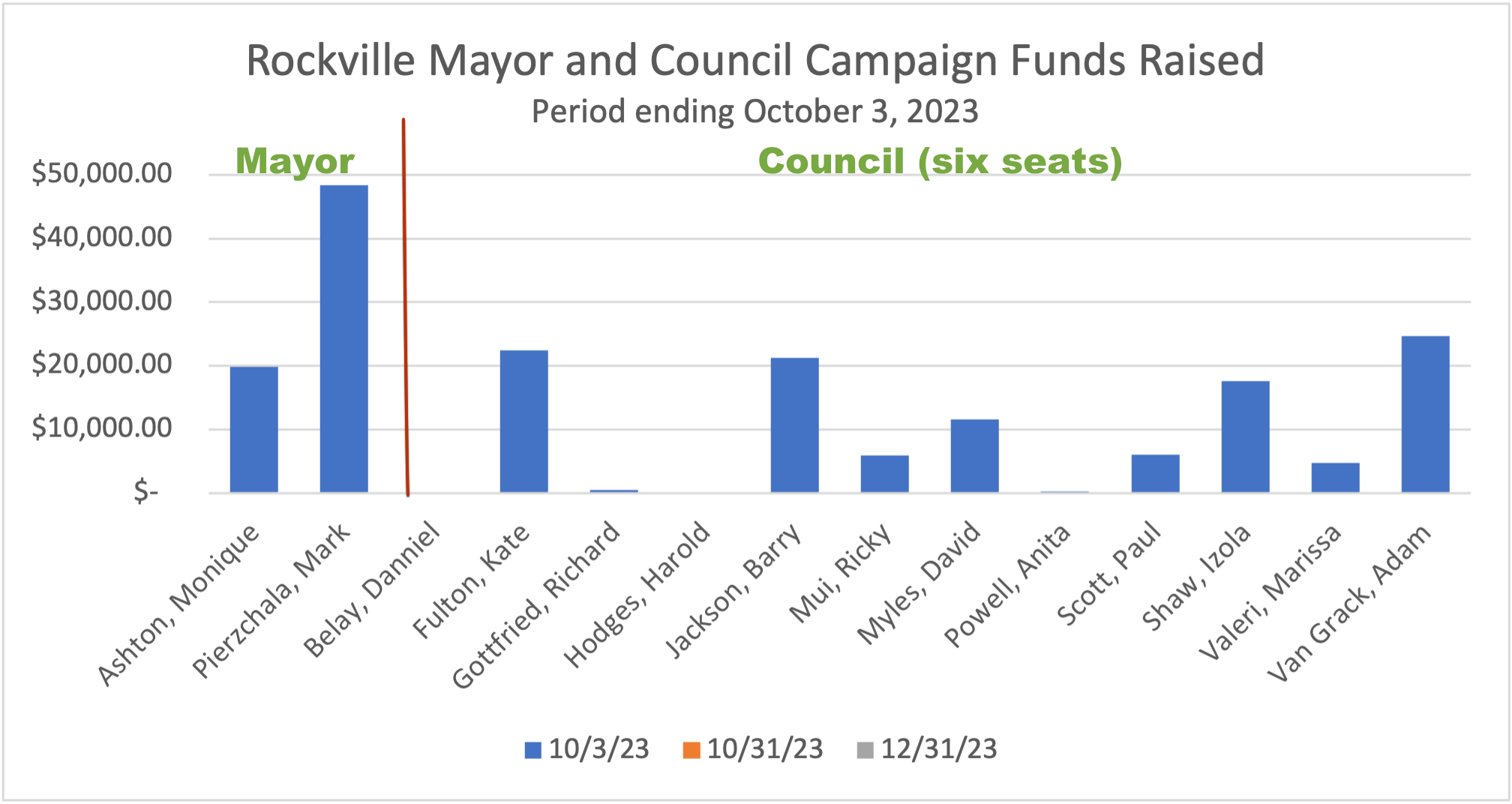
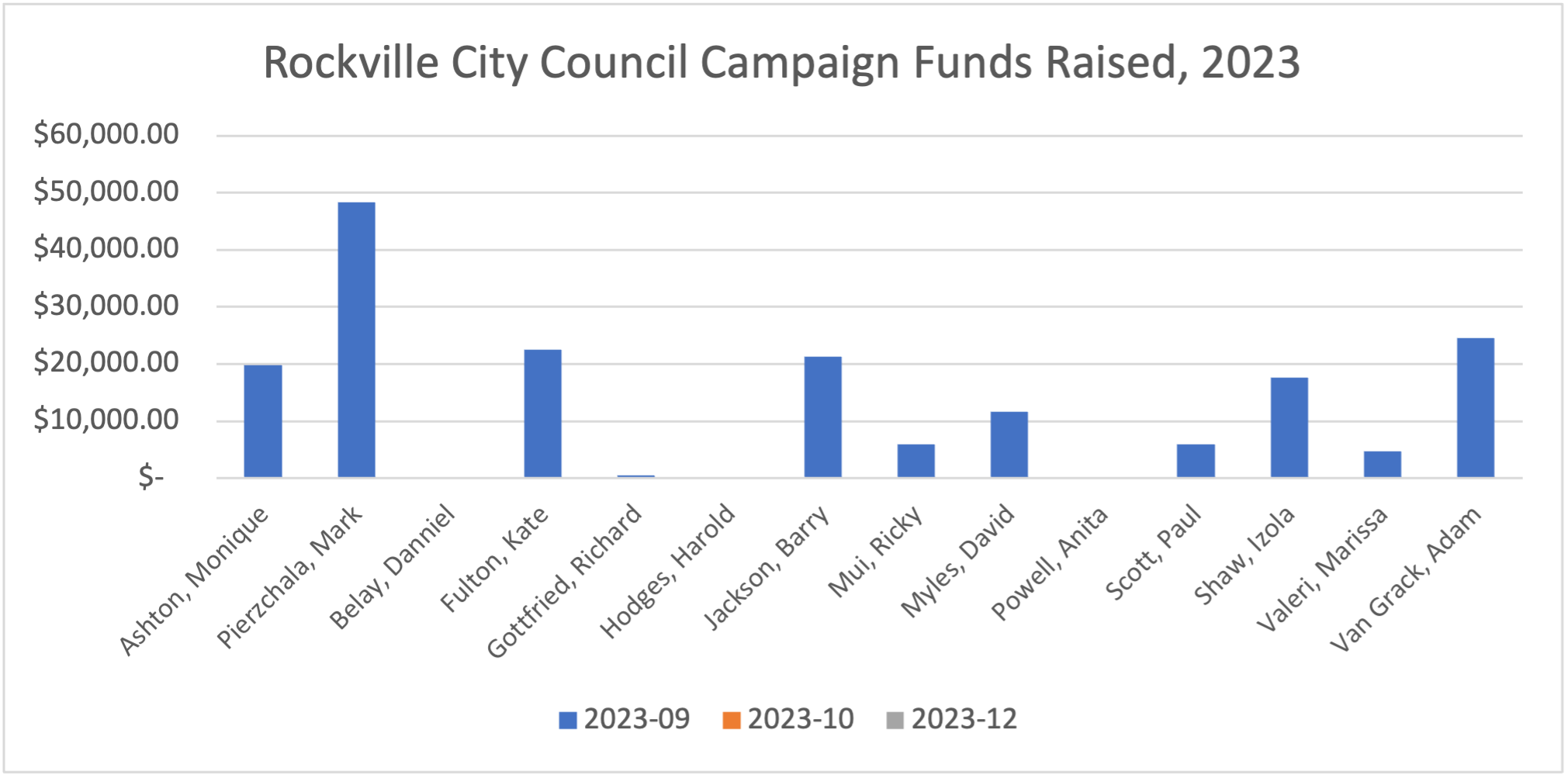
In the Rockville Mayor and Council race, the first round of financial reports, due on October 9, 2023, have begun to paint a picture of the candidates with the most substantial resources and support. As the race for the six council seats intensifies, the field appears to have narrowed from twelve to eight contenders: Kate Fulton, Barry Jackson, Ricky Mui, David Myles, Paul Scott, Izola Shaw, Marissa Valeri, and Adam Van Grack.
However, not all candidates are faring as well. Financial reports indicate that Danniel Belay, Anita Powell, and Richard Gottfried are trailing, each having raised less than $500, a sum considered insufficient to garner substantial voter support in Rockville. Harold Hodges, another candidate, appears to be even less active in the race, having not submitted a financial report.
The mayoral race in Rockville is shaping up to be a complex contest. Candidate Mark Pierzchala has raised an impressive $48,352, but with a self-loan of $33,160 this period, his effective fundraising total comes to $15,192 (ignoring funds and loans carried over from his 2019 campaign).
In contrast, Monique Ashton‘s fundraising efforts have yielded $19,836, a figure that not only falls short of her opponent’s total but also those of council candidates Kate Fulton, Barry Jackson, and Adam Van Grack. Ashton has loaned her campaign $8,224, leaving her with a net fundraising total of $11,612, (ignoring funds and loans carried over from her 2019 campaign). This places Ashton among the middle of all candidates in this election but an improvement compared to 2019, when she had raised nearly $8,000 by the end of September.
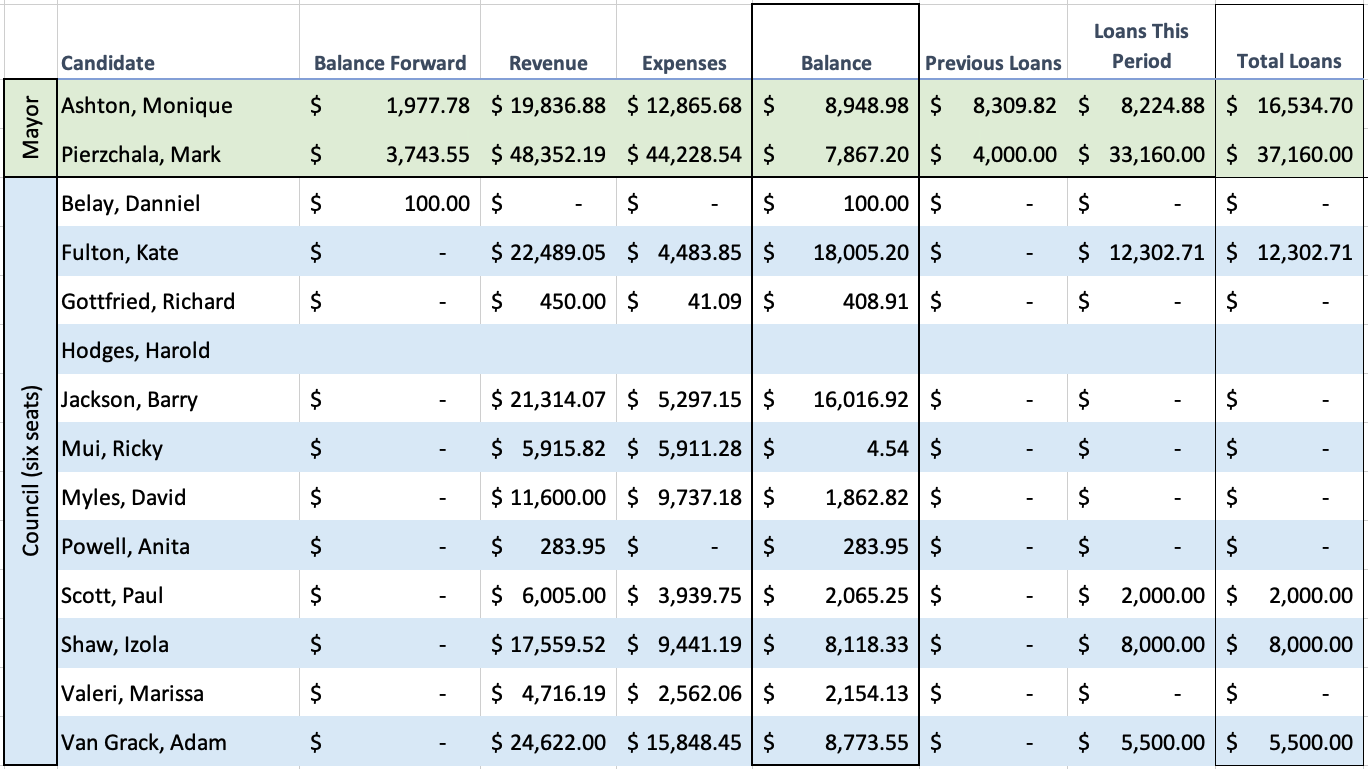
Contributors to campaigns offer revealing insights into financial influences and influencers, but it is different in smaller local races as in Rockville. Donor analysis typically shows many candidates receive support from family, such as Adam Van Grack. However, this election reveals an unusual trend: incumbents Monique Ashton, Mark Pierzchala, and David Myles have not garnered substantial support from local residents, which would be expected if they had significantly impacted residents’ lives. This raises questions about the perceived influence of the Mayor and Council. Are their actions going unnoticed, or are they not making a significant impact? Notably, current Mayor Bridget Newton and her husband are supporting Monique Ashton, Barry Jackson, and Paul Scott.
For your own analysis, here are the individuals who made contributions of $500 or more, all of whom are based in Rockville unless stated otherwise:
Ashton, Monique: Aaron Stallworth (DC, $500), Antonio Quirindongo (NY, $1,000), Joseph Song (CA, $500), Simon Francis (DC, $1,000), Bridget Newton ($750), Fred Newton ($750), Cyrus Allafi ($500)
Pierzchala, Mark: Norma Pierzchala ($1,000), Joel Martinez ($1,000), Paul O’Brien ($500), Janet Gallant ($1,000), Carl Pierzchala ($1,000), George and Barbara Felber ($500), Benjamin Ross (MD, $500), Ingrid Chua ($1,000), Eduardo Alueta ($1,000; returned)
Belay, Danniel: None over $500
Fulton, Kate: Joel Martinez ($1,000), Beverly McFarland (Delaware, $1,000), Bill Fulton (California, $500)
Gottfried, Richard: None over $500
Hodges, Harold: No report
Jackson, Barry: Elizabeth Bartz (Ohio, $500), James “Jack” Jackson (Washington, $1,000), Peter Fosselman ($750), John Killpack (California, $1,000), Bridget Newton ($750), Fred Newton ($750)
Mui, Ricky (DBA Communities Electing Ricky Mui & Supporters of Mui Ricky Fai): Jacob Miller (Washington, $500), Mark Pierzchala ($500), Michael O’Brien (Pennsylvania, $500)
Myles, David: Duncan Maru (NY, $1,000), Tommy Roberts (GA, $500)
Powell, Anita: None over $500
Scott, Paul: Christopher Cash ($1,000), Bridget Newton ($750), Fred Newton ($750)
Shaw, Izola: Steven Van Grack ($520.87), Michael Rubin (MD, $520.87), Kimberley Propeack (MD, $500), Quinton Zondervan (MA, $1,000)
Valeri, Marissa: None over $500
Van Grack, Adam: Steven Van Grack ($1,000), Brandon Van Grack ($1,000), Claire Bohenegel (DC, $1,000), Gail Van Grack-Aks ($1,000), Ryan Van Grack (MD, $1,000), Citizens for Brian Feldman (MD, $500), Terry Lierman (MD, $1,000).
The Board of Supervisors of Elections requires candidates to file their campaign financial statements on simple yet confusing forms (or are they simply confusing forms?) that always trip up candidates and require correction (to see how widespread this problem occurs, count the number of amended returns in 2019). For this round, there seem to be a couple errors that deserve closer scrutiny but do not seem to affect my overall conclusions:
- Rockville United lists an in-kind contribution of $200 to Paul Scott, which does not appear in Paul Scott’s report.
- Danniel Belay lists $100 as a balance forward, however, there is no previous campaign finance report. I suspect this was a self-contribution to open a bank account for the campaign and is recorded incorrectly.
- Anita Powell lists $283.95 in contributions as loans but they are actually campaign expenses.
Candidates Share Their Vision for Rockville at October 5, 2023 Forum
Community Reach of Montgomery County, in partnership with Rainbow Place Shelter, hosted a Rockville Election 2023 Candidate Forum at the F. Scott Fitzgerald Theatre on October 5, 2023. The Forum, which was a significant event in the lead-up to the November election, saw candidates take to the stage to present their qualifications, experiences, and key policy positions. It’s important to note that the candidates’ statements were not independently verified, or as Ronald Reagan loved to say, “trust but verify.”
Candidate forums are a valuable opportunity for voters to hear directly from the candidates on a range of important issues but if you didn’t attend or don’t have time to watch the 90-minute replay on YouTube, I’m offering ChatGPT-generated summaries (with some light editing) to the candidates’ responses to the major questions in the attached six-page handout (thanks TM!). This will enable you to swiftly share your preferred candidate’s stance on issues with friends and family, strategize on the optimal choices for Mayor and Council seats, or potentially identify which candidates may be unclear, evasive, or inconsistent in their responses.
If you’re a candidate, these summaries could serve as a tool for reviewing your positions and assessing how effectively you stand out from others. Do the summaries accurately capture your ideas? Did any crucial points get overlooked? How do your views align or differ from other candidates? Are your statements well-rounded, or do they lean towards being too abstract or too specific? Do any of your opponents exhibit a significant lack in knowledge or critical thinking?
A Week of Surprises on Rockville’s Campaign Trail
It’s been a very strange week on Rockville’s campaign trail, starting on Monday at the Mayor and Council meeting and ending with a conversation in the parking lot after the Candidate Forum on Thursday night.
The Mayor and Council meetings often start with a half hour of proclamations highlighting a particular person, anniversary, or community issue, each read out by a council member without any drama. The October 2, 2023 meeting followed this tradition with the 45th Anniversary Art in Public Places Program, Arts and Humanities Month, Breast Cancer Awareness Month, Domestic Violence Awareness Month, Indigenous Peoples’ Day, and Walktober but things went strangely awry. In the agenda, David Myles was assigned to Domestic Violence Awareness Month, an ironic choice give his recent arrest for an assault on his wife. That must have caught someone else’s attention in City Hall because Myles was reassigned to Breast Cancer Awareness Month at the last minute. Council Member Myles, who participated in the meeting remotely, didn’t agree with the change and voiced his concerns during his presentation, and then proceeded to discuss domestic violence instead of reading the proclamation on breast cancer awareness. Mayor Newton attempted to interrupt him but they merely wound up talking over each other, making an uncomfortable mess, leaving it to the Mayor to read the proclamation on Breast Cancer Awareness Month. You can watch this unfold online at “Proclamation Declaring October 2023, at Breast Cancer Awareness Month (CM Myles).”
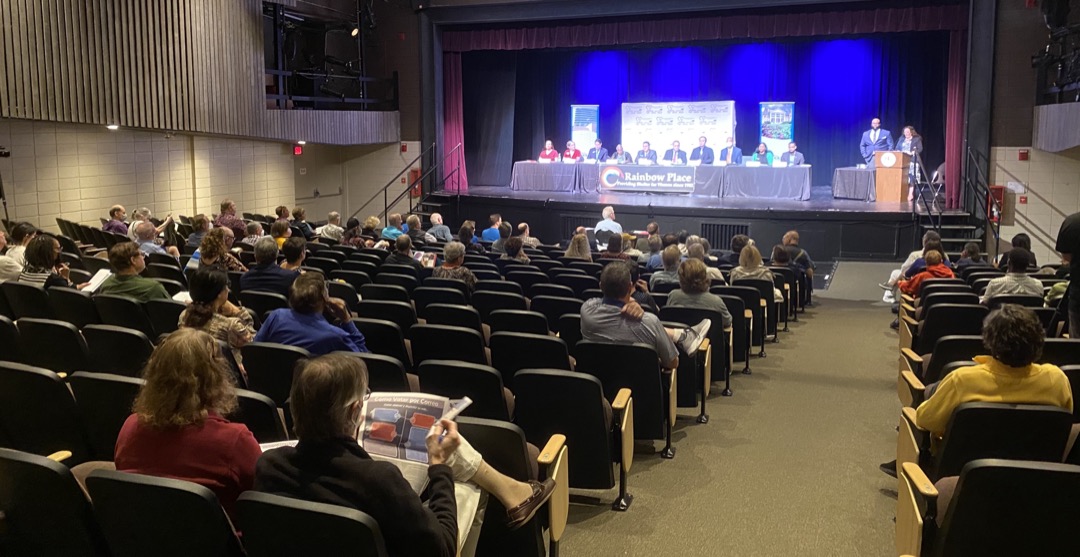
The Candidate Forum on Thursday, October 5 hosted by Community Reach of Montgomery County with Rainbow Place Shelter at the F. Scott Fitzgerald Theatre demonstrated the extraordinary challenge that voters will have when faced with a dozen council candidates. Although we’re mid-season, most candidates haven’t managed to distinguish themselves and are relying far too much on platitudes and vague statements about leadership, neighborhoods, vacancies, residents, funding, taxes, transparency, experience, city services, safety, housing, green space, diversity, partnerships, and sustainability, so they all seem to offer the same ideas and solutions. Here are some potential distinctions among them, but can you identify who they are (and more importantly, does it matter?):
- “I’m the only candidate that lives in Town Center.”
- “I led the effort to tie funding for our needs-based organizations to the cost of inflation.”
- “There’s a need for more live music in Town Center and throughout the city of Rockville.”
- “While on the Charter Review Commission…[I] routinely brought up the issues of justice and equity.”
- “I am disappointed in the vacancies in Town Center.”
Confusing matters, many talked out of two sides of their mouth: “we’re doing well on diversity but need to do more” or “we are a safe community but must hire more police” or “we need more live music and parks but we have to reduce expenses.” Part of it is due to the pressure to avoid alienating potential voters, but it’s also due to the nature of Candidate Forums: demanding simple answers to complex questions. At the Forum, a couple candidates had 90 seconds to answer:
- What are the problems you currently see facing Town Center and how do you intend to address them?
- Nonprofit organizations cover many services for city residents that Rockville helps to fund through grants. Is there too much funding going to nonprofits or not enough? Is the city funding the most important services? Does the city get the best bang for its buck through the nonprofits that provide those services or would you recommend increasing city staff to provide such services?
Complex, compound questions can be tricky for both seasoned politicians and newcomers. Experienced politicians will sidestep parts of the question, while new candidates may struggle to provide clear answers due to lack of knowledge or experience, resorting to vague statements to avoid embarrassment. Neither helps voters make informed decisions. For clearer answers, forums should pose simple, open-ended questions. Providing questions in advance could also lead to better responses. While spontaneous answers can reveal a candidate’s values and superficial knowledge (gotcha!), they don’t necessarily reflect their critical thinking on specific topics like Town Center, Red Gate Park, or the city budget.
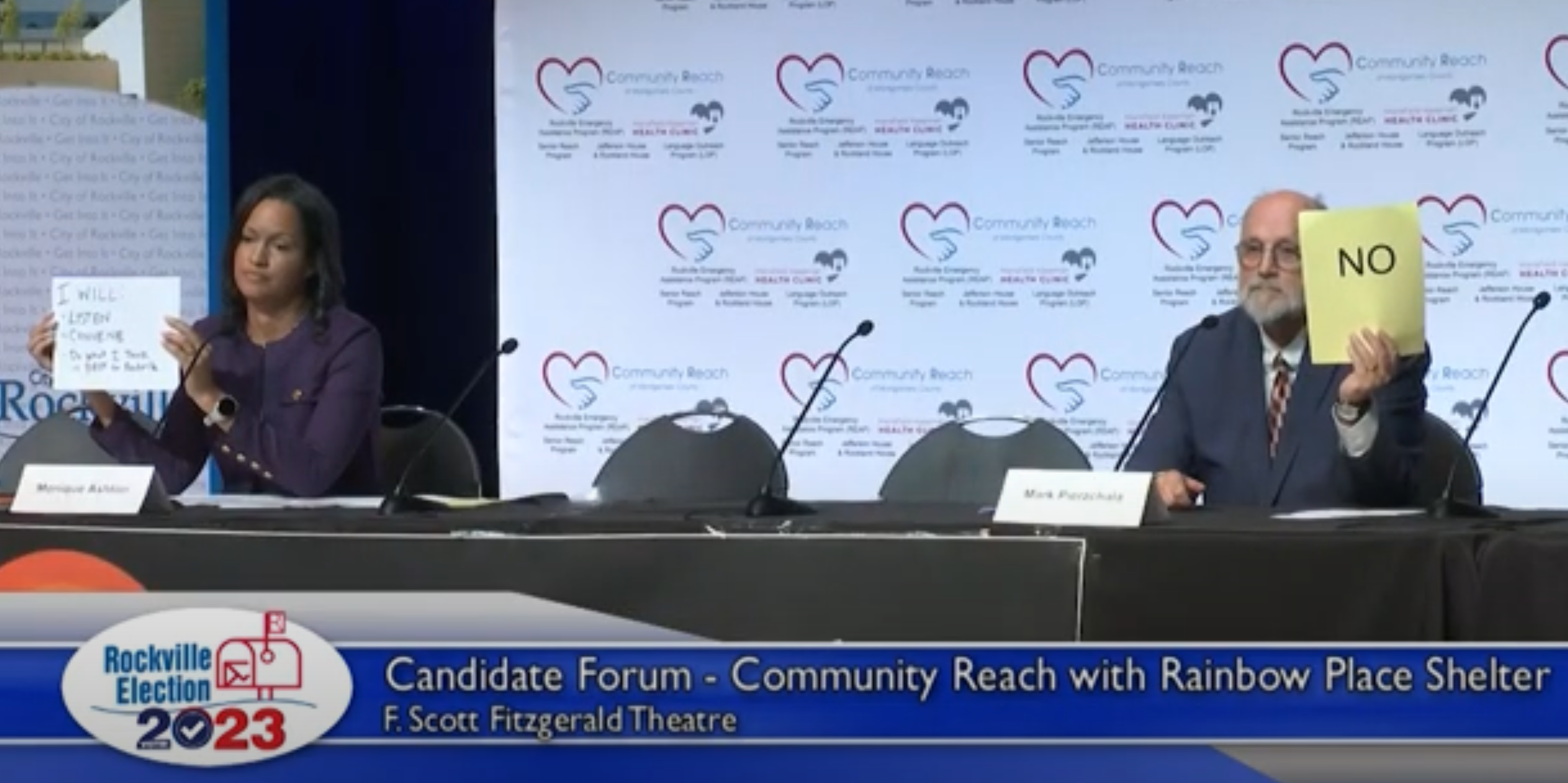
But even if questions are provided in advance, some candidates will be unprepared. The October 5 Candidate Forum addressed the referenda questions on the November ballot, which have been discussed by Mayor and Council for the last year (see Board of Supervisors of Elections Recommends Lowering Voting Age to 16 and Mayor and Council to Choose Earmarks and Decide Upcoming Election Changes), so every candidate should be prepared with an answer. The issues of lowering the voting age to 16, permitting noncitizens to vote, setting term limits, and creating representative districts are quite familiar to Council Members David Myles and Monique Ashton, yet were strangely unwilling to state their conclusions. In his closing remarks, Myles stated that “voting is private matter” and provided an “outline of his philosophy” so that voters might guess at his answers (perhaps he prefers that the City Council vote in secret?). Mayoral candidate Monique Ashton held up an illegible handwritten sign that elicited groans from the audience, who eventually was asked to read it out: “I will listen, convene, and do what I think is best for Rockville.” It’s a non-answer that anyone running for office can spout, but certainly not appropriate for a current council member running for mayor. Voters “hire” the Mayor and Council to lead the city; we need to know what you think and where you’re taking us.
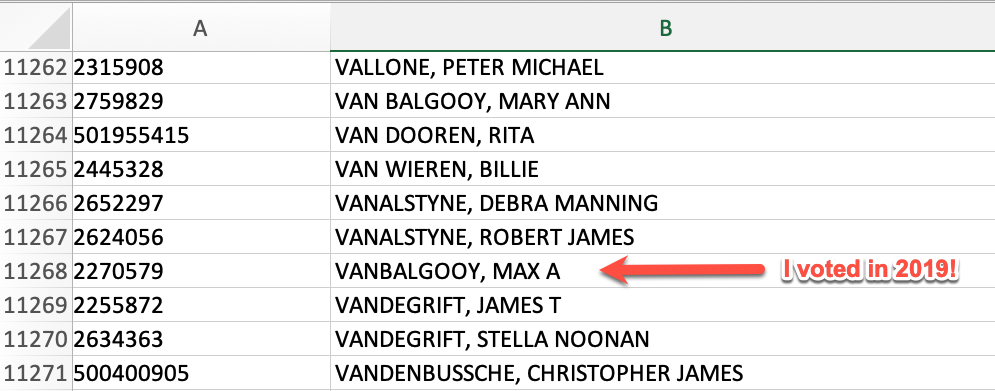
Finally, the strangest event of the week occurred after the October 5 Forum in the parking lot. I ran into a candidate for the Rockville council who pointed out an error in my post about their voting record. They told me they had voted in the 2019 election and thought I had used an incorrect 2019 voter list provided by the City of Rockville. They also mentioned that they had notified the City Clerk about this mistake. So, on October 6, I contacted the City Clerk’s office to request an updated voter list, as the one they gave me in September 2023 seemed to be incorrect. They responded quickly, but instead of giving me a corrected list, they directed me to the State of Maryland. This was very strange. The City Clerk’s Office didn’t show any concern about the potential error in the 2019 voter list—it could suggest there are errors in the voter list for the upcoming election. Hmm. There are several ways to get at this without the City’s cooperation. It’s slow and costly, but I’ll keep at it. Hopefully, I’ll have answers before the election.
Rockville’s Neighborhoods: A Key Factor in Local Elections?
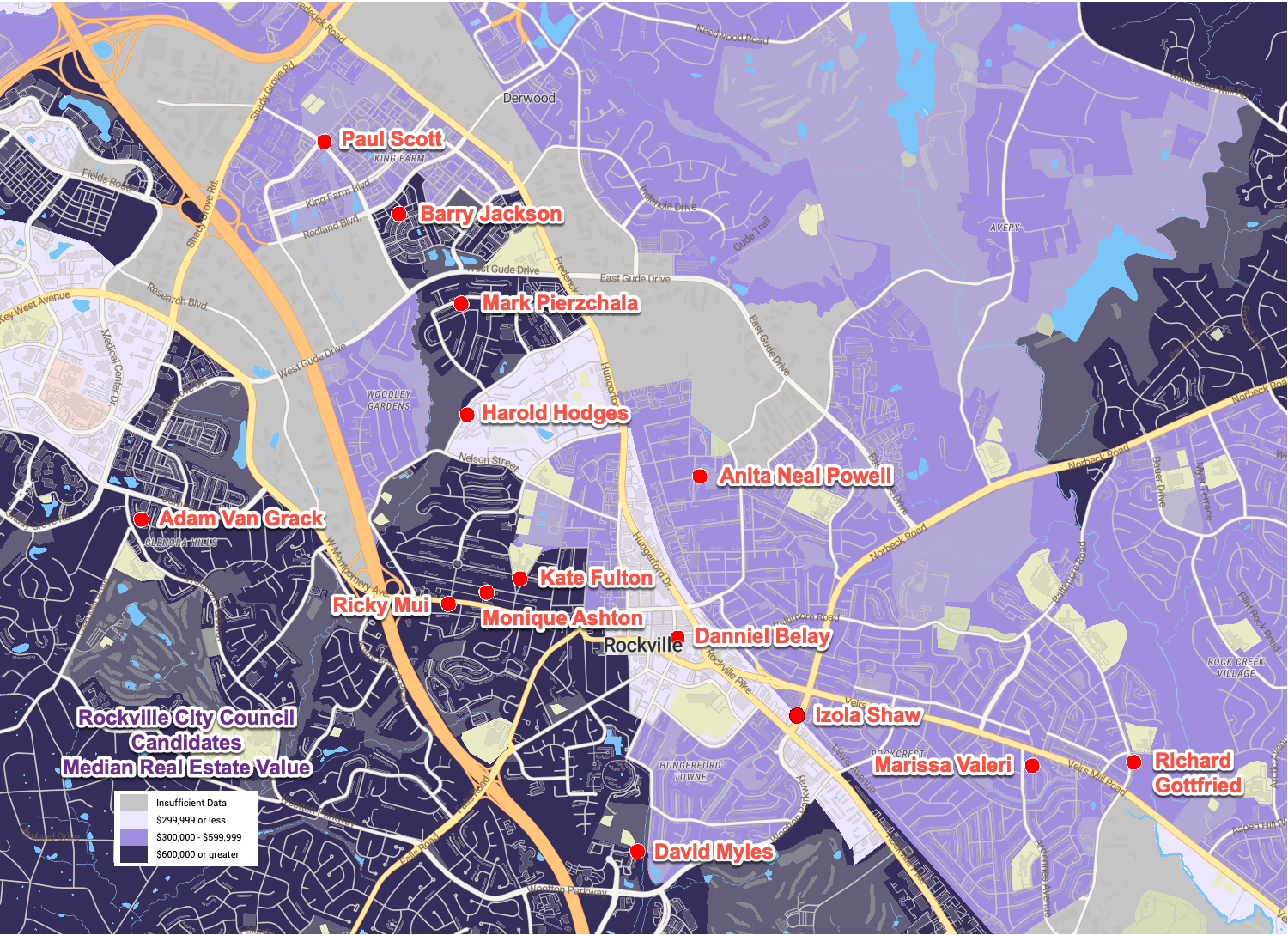
If you want to run for a spot on the Mayor and Council, you need to be at least 18, registered to vote, and have lived in Rockville for at least a year before the election (for this race, that means living here since November 7, 2022). But when people vote, they often pick candidates who they feel are like them and will represent what they care about. So, where a candidate lives can be really important, especially if they live in a neighborhood that’s similar to the voter’s.
Looking at the map, you can see Rockville is split into three parts by major highways. To the west of I-270 is the “wealthy west,” where the average house costs more than $600,000. Adam Van Grack is the only candidate from this part of Rockville. To the east of #355 (Rockville Pike/Hungerford Drive/Frederick Road—actually, the dividing line is Metro) are the “middleburbs,” where houses typically cost between $300,000 and $600,000 and is home to Anita Neal Powell, Izola Shaw, Marissa Valeri, and Richard Gottfried.
Right in the center of the city is the “mixing bowl,” where house prices vary the most and has the greatest number of candidates: Paul Scott, Barry Jackson, Mark Pierzchala, Harold Hodges, Kate Fulton, Monique Ashton, Ricky Mui, Danniel Belay, and David Myles.
In past elections, the richest neighborhoods usually had the most people voting. If we think they’ll vote for people who are like them or share their interests, we will likely see Barry Jackson, Adam Van Grack, Kate Fulton, Ricky Mui, and David Myles take five seats on the next city council. If we continue this logic, there is one more seat available on council so it will be a tight race between Paul Scott, Anita Neal Powell, Izola Shaw, Marissa Valeri, and Richard Gottfried. The contest for Mayor between Mark Pierzchala and Monique Ashton, who both live in wealthy neighborhoods, will be more complicated. Voters will likely consider additional factors like experience, background, personality, and age.
As for age, once again this council election attracted candidates that span at least three generations. The Millennial generation (born 1981-1996) is solely represented by Danniel Belay; Gen Xers (1965-1980) by David Myles, Monique Ashton, Ricky Mui, Izola Shaw, Kate Fulton, Barry Jackson, Marissa Valeri, Adam Van Grack, and Harold Hodges; and Boomers (1946-1964) by Paul Scott, Richard Gottfried, Mark Pierzchala, and Anita Neal Powell. Most people who vote in Rockville are from Generation X. If they vote for people who are like them, we might see a lot of candidates like David Myles, Monique Ashton, Ricky Mui, Izola Shaw, Kate Fulton, Barry Jackson, Marissa Valeri, Adam Van Grack, and Harold Hodges on the city council. But the people who vote the most are Baby Boomers, so Paul Scott, Richard Gottfried, Mark Pierzchala, and Anita Neal Powell could also have a good shot at winning.
The Rockville United campaign committee, which includes Monique Ashton, Kate Fulton, Paul Scott, Izola Shaw, and Marissa Valeri, could really shake things up in the city council if voters decide they want a big change. However, it’s hard to find information about this team online, and usually, people prefer to pick their candidates one by one. But remember, teams like Rockville United can be a great way to make the most out of limited resources.
Candidates for City Council Expands to 14
By September 7, the Board of Supervisors of Elections had certified two candidates for Mayor and twelve candidates for Council for the upcoming November 7, 2023 election. Danniel Belay, Richard Gottfried, and Anita Neal Powell are the latest additions, so if candidates were selected randomly, the chances of gaining a seat on Council decreased from 67 to 50 percent. But Councilmembers are not elected randomly and rely on their campaign strategies and voter motivation and preferences. Here’s the current list of candidates:
- Candidates for the Office of Mayor
- Monique Ashton
- Mark Pierzchala
- Candidates for the Office of Council
- Danniel Belay
- Kate Fulton
- Richard Gottfried
- Harold Hodges
- Barry Jackson
- Ricky Mui
- David Myles
- Anita Neal Powell
- Paul Scott
- Izola Shaw
- Marissa Valeri
- Adam Van Grack
Candidate Forums: The Heart of the Rockville City Council Race
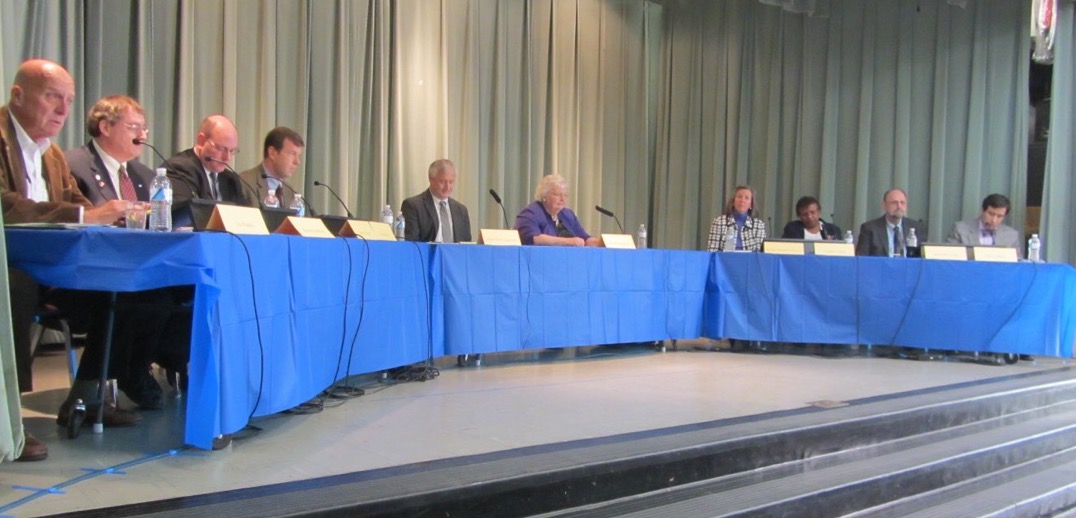
The race for Rockville City Council is gaining momentum, with candidate forums being among the most intriguing events. These forums provide an opportunity for each candidate to answer questions on various issues. While sometimes referred to as “debates,” they rarely involve direct exchanges between candidates or in-depth discussions. However, they do provide a platform for comparing candidates and understanding their stances. Their responses may be rough and awkward at times, yet this rawness often provides more insight into their true beliefs and intentions, unlike the polished and often vague statements we typically hear from elected officials in Congress.
The City of Rockville has selected the candidate forums that will be broadcast on Rockville 11 and YouTube, but everyone is welcome to attend in person:
Tuesday, September 26 from 2-3:30 pm at the Thomas Farm Community Center, hosted by the Greater Rockville Chamber of Commerce.
Thursday, October 5 from 7-8:30 pm at F. Scott Fitzgerald Theatre, hosted by Community Reach of Montgomery County with Rainbow Place Shelter.
Thursday, October 12 from noon to 1:30 pm at the Rockville Senior Center, hosted by the League of Women Voters of Montgomery County.
The hosting organization determines the format and questions, and obviously, each has a different interest so the topics will vary among the forums.
Other community organizations and neighborhood associations will host their own forums. Usually everyone is welcome and some will be broadcast, so look for announcements on a candidate’s or organization’s web sites or social media pages.
There are currently two candidates for mayor and nine candidates for council. If you are interested in serving, there is still time to get on the ballot. Petitions need to be signed by as least 100 registered voters who live in Rockville and submitted by this Friday, September 8. More details at Running for Office on the City web site.
Starting today until Election Day, I will close comments on this blog. Unfortunately, elections can bring out the worst in people and the blog comments become a place for slinging mud and venom. Question every fact and assertion from candidates, expect the stealing of yard signs, and know that impersonators will lurk on social media. Yes, in Rockville. Sigh.