Housing Aid, Election Reforms, and Vision Zero on Rockville’s September 8 Agenda
Rockville’s Mayor and Council is returning from its August break facing a packed agenda with decisions that could shape the city’s future for years to come. At the September 8 meeting, three major issues will take center stage: housing affordability and federal funding priorities, a complete overhaul of the city’s election code, and progress on Rockville’s ambitious Vision Zero traffic safety plan. Each of these topics speaks directly to the daily lives of residents and businesses, raising questions about how Rockville grows, governs, and protects its people.
Rockville Council to Hear Public Testimony on Housing Needs and Federal Grant Priorities
The Rockville City Council will hold a public hearing to shape how the city will spend its $263,000 allocation of federal Community Development Block Grant (CDBG) funds for FY 2027. The grants, distributed through Montgomery County, must be used for projects that benefit low- and moderate-income residents.
In the past, Rockville has used CDBG funding to rehabilitate supportive housing at Jefferson House, upgrade shared recovery housing, replace failing HVAC systems at David Scull Courts, and fund its single-family rehab program. With housing affordability worsening, this year’s hearing carries added weight.
A recent city needs assessment underscores the challenge: nearly half of Rockville residents are renters, and more than half of them are cost-burdened, paying over 30 percent of their income on housing. Median rent has climbed to $2,244 per month, requiring an income of nearly $90,000, while the median home price now tops $681,500. Homeownership rates continue to fall, particularly for younger and first-time buyers.
Continue reading →Rockville Council Explores Bold Updates to Downtown
At its Monday, December 16, 2024 meeting, the Rockville Mayor and Council will approve a concept plan for the Rockville Metro Station and hold a second worksession on the Town Center Master Plan. On the Consent Agenda (items approved without discussion) are purchase refuse trucks, approve easements and agreements for public and stormwater improvements, install EV charging stations, construct a sidewalk on Virginia Avenue, execute ADA improvements at the F. Scott Fitzgerald Theatre, establish affordable housing agreements for a new development, approve meeting minutes, and extinguish a pedestrian path easement on Hardwicke Place, among others. The next meeting will be held on January 6, 2025.
This meeting is an important opportunity for you to stay informed and engaged with the decisions that shape our community.
Key Agenda Items:
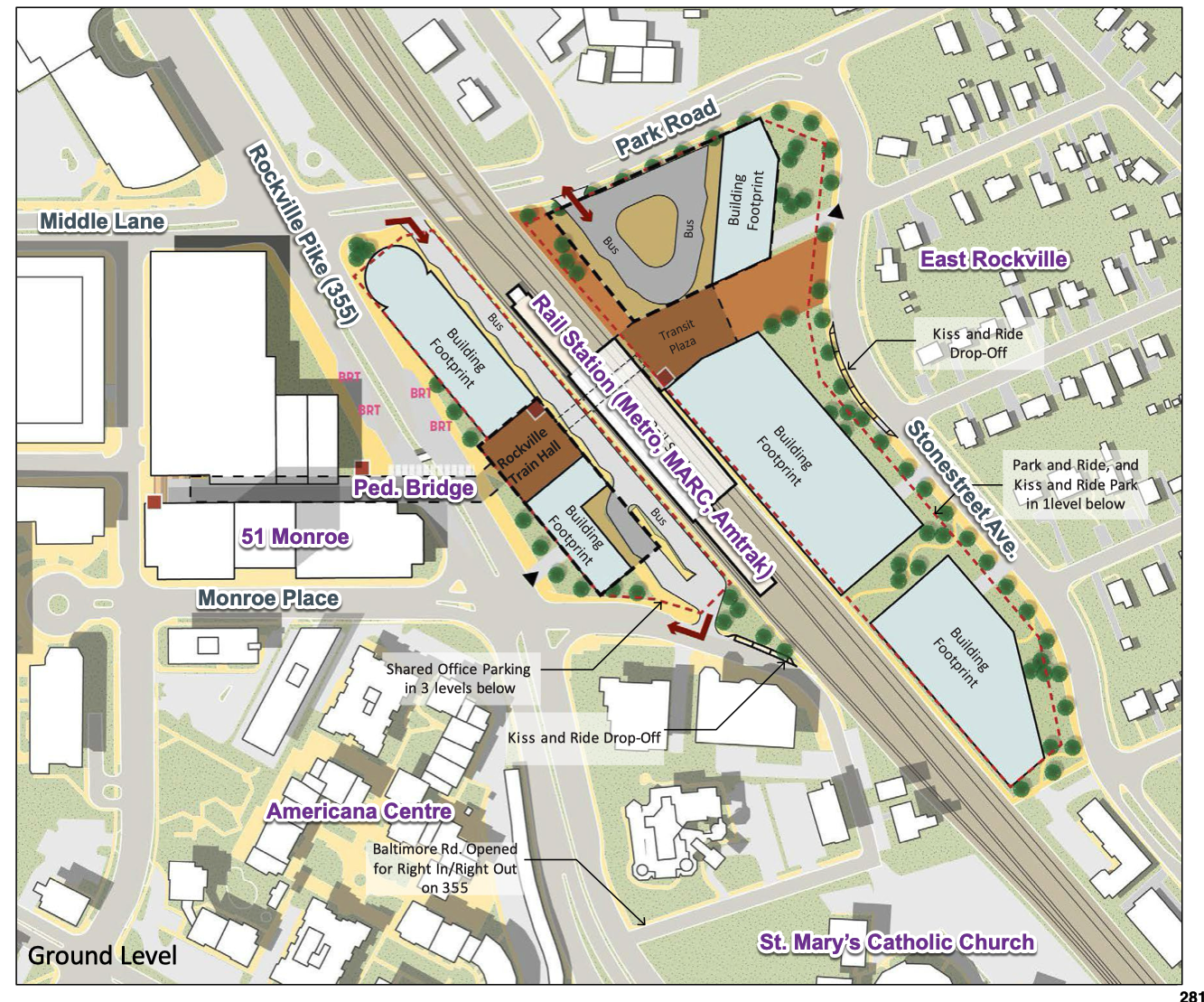
Approval of Concept Plan for Rockville Metro Station (page 238+). This plan envisions the station as an iconic gateway and multi-modal hub, featuring up to 1,200 residential units, retail spaces, public amenities, and improved pedestrian and transit connections. Public feedback has been largely supportive, highlighting desires for higher residential density, enhanced pedestrian safety, and sustainable features like solar canopies. The plan includes a separate pedestrian bridge extension as an add-on project, requiring city-led funding efforts.
Worksession on Town Center Master Plan (287+). This is a follow-up to the worksession on December 9 to discuss four remaining topics. At this meeting, Council will discuss:
- Housing Goals: Increasing the goal for housing units in Town Center from 2,000 to 3,000 by 2040, reflecting current development applications and potential future projects.
- Building Heights: Revising building height allowances to facilitate growth while maintaining community transition zones. Options for increased heights in key areas, with potential bonuses for including affordable housing units, are under discussion.
- Character Areas: Modifications to the planning area’s character zones are proposed, particularly consolidating certain areas along the western edge to simplify development guidelines.
- Transit-Oriented Development: A new “Transit-Oriented Character Area” is recommended along MD-355 to allow higher building heights and promote dense, mixed-use developments near transit hubs.
- Affordable Housing and Green Spaces: Creating incentives for affordable housing and open public spaces, aiming to balance density with livability.
Council to Review Town Center and Metro Development Plans
At its Monday, December 9, 2024 meeting, the Rockville Mayor and Council will hold a public hearing on the Town Center Master Plan. On the Consent Agenda (items approved without discussion) are FY2024 Financial Report, contracts for diesel fuel, CDBG funding request, among others. The Mayor and Council will also receive reports on the remodeling of the Rockville Metro Station as part of a worksession on Town Center.
This meeting is an important opportunity for you to stay informed and engaged with the decisions that shape our community.
Key Agenda Items:
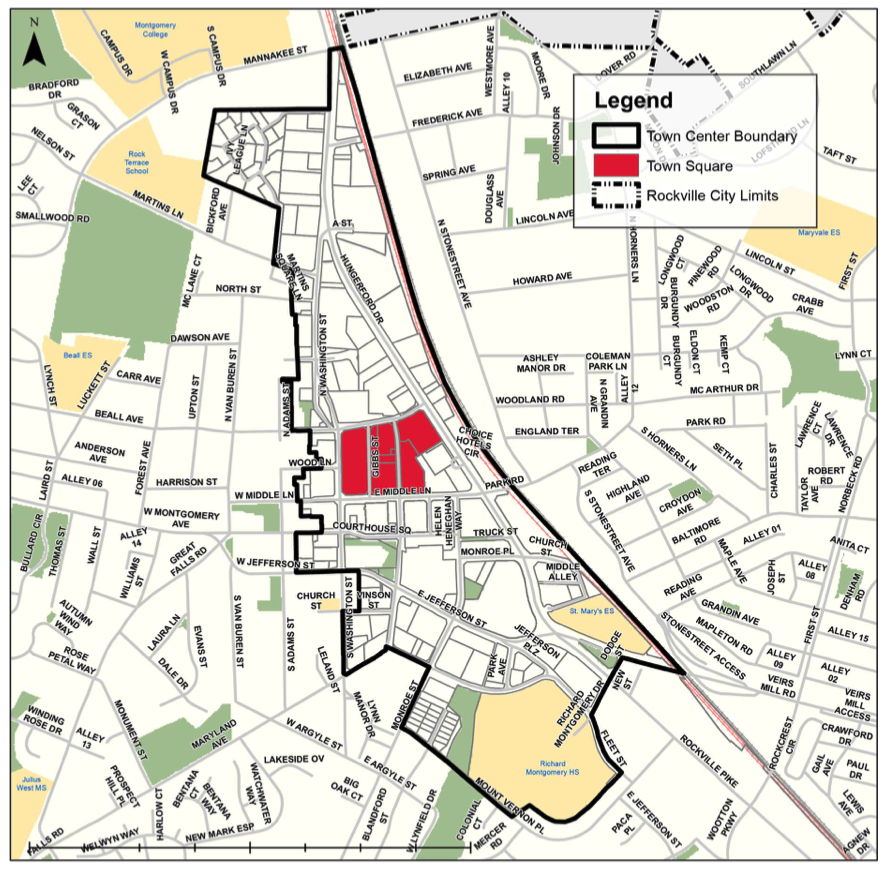
Town Center Master Plan public hearing (page 401+). The Rockville Mayor and Council will hold a second public hearing on the updated Town Center Master Plan during their meeting on December 9, 2024. This updated plan, an amendment to the Rockville 2040 Comprehensive Plan, replaces the current Planning Area 1 chapter. It builds on community feedback, research, and the city’s long-term goals to shape a vibrant, equitable, and sustainable Town Center for the future.
Key Themes and Goals of the Plan:
- Housing: Focus on adding 2,000 new residential units by 2040, including affordable and attainable housing.
- Economic Development: Encouraging retail diversity and activating vacant spaces to make the Town Center a hub of activity.
- Transportation: Improving mobility with pedestrian-friendly designs, enhanced bus services, and new wayfinding signage.
- Sustainability and Equity: Promoting green building practices and ensuring that changes support all residents equitably.
- Parks and Recreation: Expanding green spaces and recreational programming for all ages.
Council Seeks Community Input on Budget, Downtown Growth, and Reuse of King Farm
At its Monday, October 28, 2024 meeting, the Rockville Mayor and Council will discuss Fiscal Year 2026 budget, another hearing on the Town Center Master Plan, and a worksession for a master plan on the adaptive re-use of the King Farm Farmstead Park Complex. On the Consent Agenda (items approved without discussion) are funding emergency management facilities, energy-efficient lighting, office upgrades, and electricity supply contracts. Reminder: Council meetings now start at 6:30 pm.
This meeting is an important opportunity for you to stay informed and engaged with the decisions that shape our community.
Continue reading →Rockville Council Discussed Financial Oversight, Emergency Preparedness, and 2025 Legislative Priorities at October 7 Meeting
Note: I’ve been out of town in August and September, so I’m doing a bit of catch-up on the Mayor and Council meetings, including this meeting from last week. The next meeting is October 21.
At its Monday, October 7, 2024 meeting, the Rockville Mayor and Council discussed Emergency Management and the 2025 Mayor and Council State Legislative Priorities. On the Consent Agenda (items approved without discussion) were agreements for on-call roofing services with three companies, totaling up to $4.5 million annually; a contract with Magnolia Plumbing, Inc., for stormwater facility maintenance, not exceeding $435,000 annually; and approval of a storm drain easement at Rockshire Village Center, among others. The Mayor and Council also received reports on Financial Advisory Board’s FY 2024 Annual Report and FY 2025 Action Plan.
Mayor and Council Meeting Schedule Changed on October 7: Meetings now begin a
half hour earlier at 6:30 p.m. Proclamations — official statements or declarations presented by a city’s mayor and council to recognize and honor specific events, causes or individuals — will be presented
from 5:30-6:30 p.m. before the first meeting of the month. The Mayor and Council drop-in, where the mayor and a councilmember meet with members of the public, will be held from 5:15-6:15 p.m. before
the second meeting of each month. More details in Rockville Reports (October 2024), page 3.
Key Agenda Items:
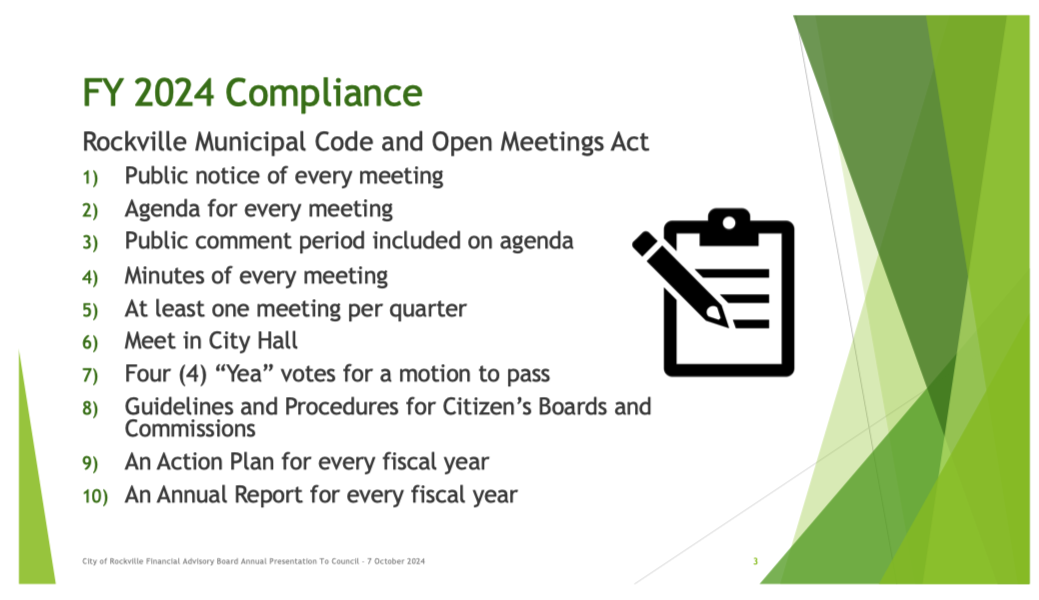
Financial Oversight and Policy Recommendations (pp 95-125). The Financial Advisory Board (FAB) presented its FY 2024 Annual Report and proposed FY 2025 Action Plan. The FAB plays a vital role in ensuring financial transparency and accountability for Rockville’s residents and businesses. Key accomplishments from FY 2024 include reviewing the City’s annual financial reports, assessing financial policies, and overseeing procurement practices. The FAB found no significant discrepancies in the City’s finances and recommended establishing an independent internal audit function to further enhance fiscal oversight. For FY 2025, the board will continue reviewing financial reports, monitor City-awarded grants, and evaluate revenue sources. The FAB will also focus on improving the City’s use of financial Key Performance Indicators (KPIs) to ensure Rockville’s finances remain healthy. These efforts aim to support informed financial planning and decision-making that benefits the entire Rockville community. BTW, this committee is among the best prepared and managed in the city, a model for others to follow.
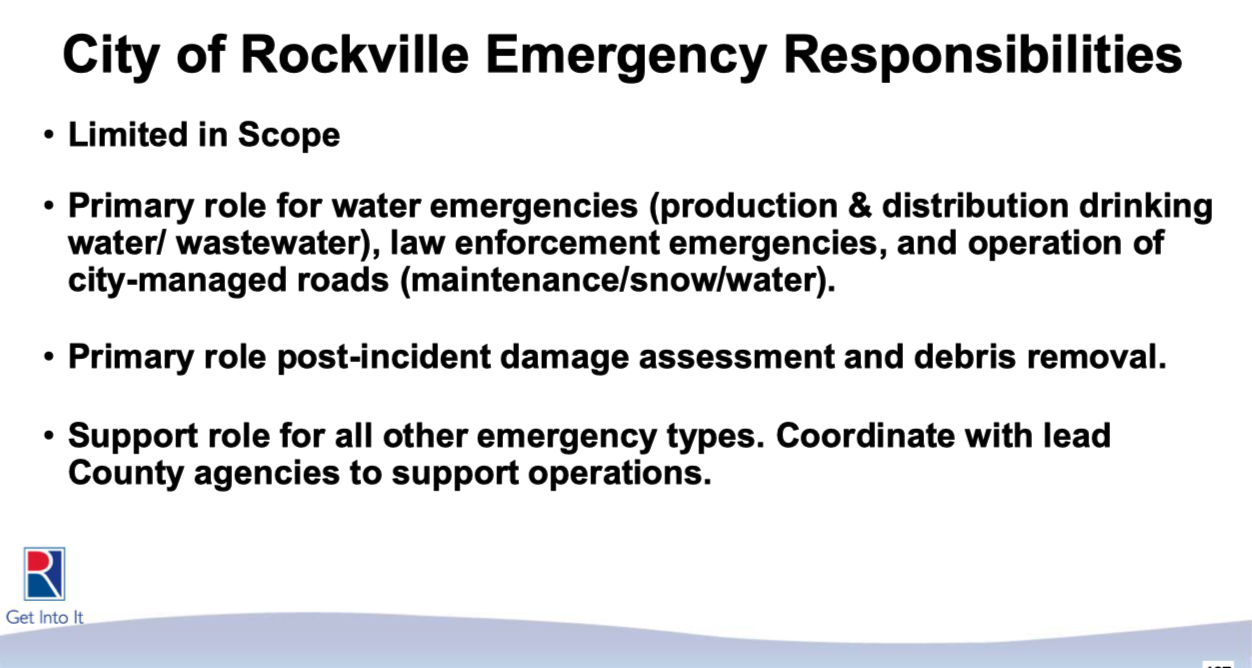
Emergency Preparedness (126-42). The City’s Emergency Management team highlighted key developments, including the completion of a Continuity of Operations Plan (COOP) that identifies 97 essential city functions and outlines strategies for dealing with potential disruptions. Rockville’s emergency responsibilities are closely integrated with Montgomery County’s Emergency Operations Plan, with the City playing a vital role in law enforcement, water supply, debris management, and damage assessment during emergencies. State law designates the county as the emergency management authority; the City of Rockville cannot declare a disaster and their authority is limited. A new Emergency Operations Center (EOC) is being developed at Taft Court, supported by federal funding, to improve coordination and response. Looking ahead, the City is finalizing its own Emergency Operations Plan, with a draft expected by December 2024.
State Legislative Priorities (143-50). The City of Rockville outlined its key priorities for the 2025 Maryland General Assembly. These legislative goals include advocating for the State Highway Administration to maintain sidewalks and bicycle pathways on state-owned roads and expanding the state property tax credit for low and moderate-income homeowners, including seniors, to help with rising living costs. Rockville will also work to preserve municipal highway user revenues (HUR) to maintain critical transportation infrastructure, which is at risk due to the state’s projected budget deficit. Rockville is also seeking funding for local projects, including the renovation of the Elwood Smith Community Center and the development of Talbot Street Park. In addition to these legislative efforts, the City is focused on ongoing support for education from birth to community college, pedestrian safety through Vision Zero initiatives, climate action, senior services, and more broadly on economic development, housing and zoning, and public safety and wellness.
How to Participate:
Attend in Person: The meeting will be held at City Hall, 111 Maryland Avenue (downtown, behind the Maryland District Courthouse). We encourage residents to attend and voice their opinions during Community Forum.
Watch Online: If you can’t make it in person, you can watch the live stream on the city’s website at https://www.rockvillemd.gov/157/Rockville-11.
Submit Comments: You can submit your comments or questions in advance by emailing MayorAndCouncil@RockvilleMD.gov by no later than 10:00 a.m. on the date of the meeting.
Your participation is crucial in shaping the future of our city. Whether you have specific concerns or just want to stay informed, we hope to see you at the meeting.
Stay Connected: For more updates on city council meetings and other local government news, subscribe to this blog. Your contact information is never shared.
Thank you for being an active and engaged member of our community. More details in the 160-page agenda packet are available at https://www.rockvillemd.gov/AgendaCenter/ViewFile/Agenda/_10072024-7299.
Contradictory Suggestions Challenge Decision-Making Process for City’s FY2025 Budget
At its Monday, March 18, 2024 meeting, the Rockville Mayor and Council will discuss the budget for FY2025, tax rates, and modifying Council rules and procedures. On the Consent Agenda (items approved without discussion) are contracts for engineering and design services, a collective bargaining agreement with AFSCME #1453, and nearly $500,000 in data center and disaster recovery, among others. The Mayor and Council will also hold a worksession on the FY25 revenues, fees, and cost recovery. They are also approving the minutes from the Closed Sessions held on November 9, 2023 and November 15, 2023–long after the requirements of the Maryland Open Meetings Act (“as soon as practicable after a public body meets, it shall have minutes of its session prepared.” § 3-306(b)(1)).
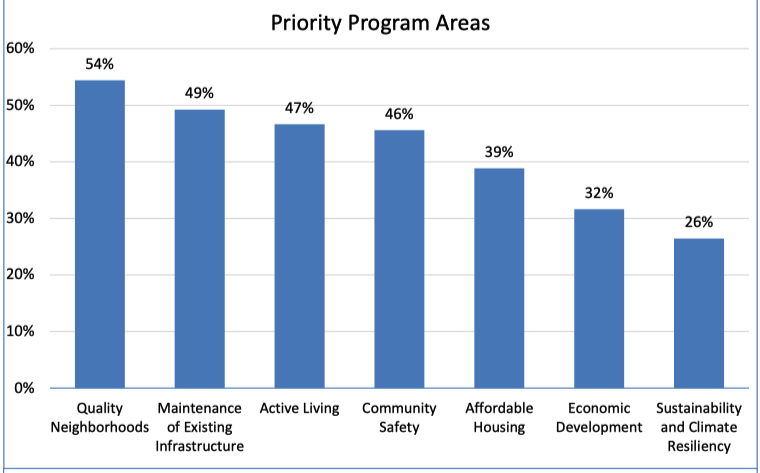
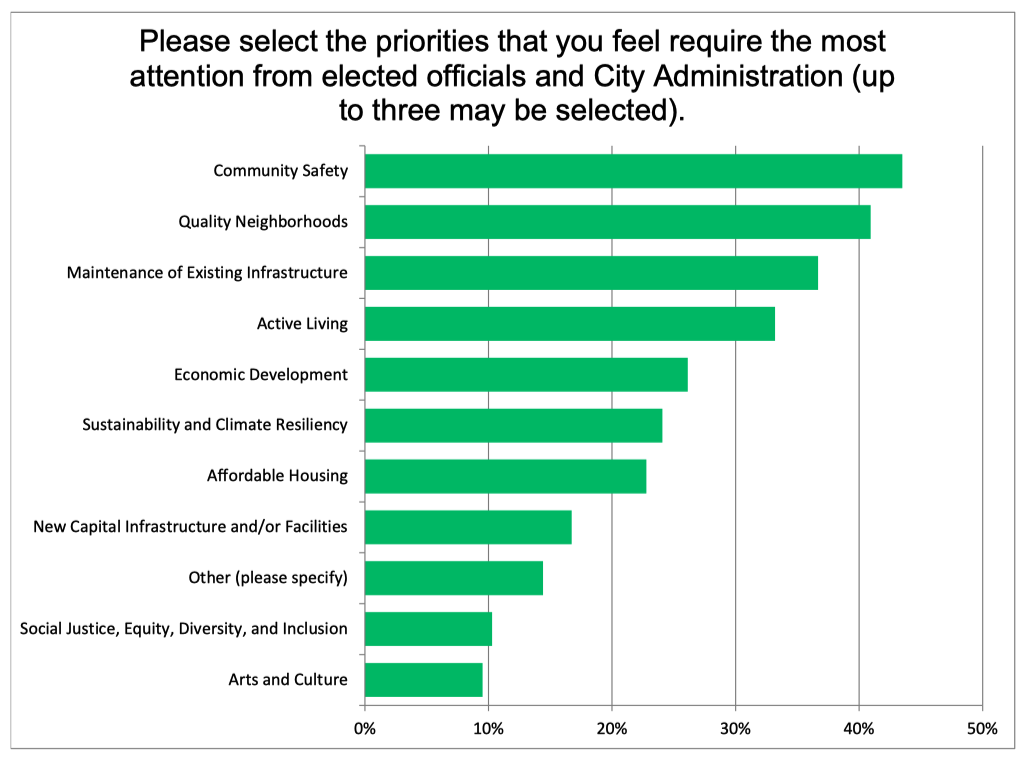
The bulk of the agenda is devoted to the budget for FY2025 and will include a public hearing to collect more comments (p. 770+. The City has received nearly 800 comments from residents and businesses, which identified the top three priorities as community safety, quality neighborhoods, and maintenance of existing infrastructure (receiving about 35-45% of votes). The highest response rate was from the north end of the city (north of West Montgomery between 270 and 355) and lowest were from the east side of the city (east of 355).
Upon reviewing the open comments, it becomes evident that decision-making is a complex process. There are suggestions that fall outside the City’s jurisdiction, such as implementing a Bitcoin standard (a federal issue), improving academics at Twinbrook Elementary School (a school board issue), and prioritizing common sense (whose responsibility is this?). Once these are set aside, a multitude of individual suggestions remain, some of which are in conflict. For instance, while one person suggests increasing pay for police, another proposes eliminating the police department altogether. Similarly, opinions diverge on the addition or removal of bike lanes. With the assistance of ChatGPT, these suggestions seem to cluster around five major issues. However, the ways to address these can also be contradictory, and understandably, no one is keen on increased taxes to fund these initiatives:
- Infrastructure and Environment, such as improving traffic light timings, addressing potholes and street noise, maintaining and improving existing parks, preserving RedGate as green space, increasing preventative maintenance for storm water infrastructure, and promoting environmental sustainability through controlling invasive species and planting more native trees.
- Community Development and Safety, such as reviving the Town Center [didn’t we already do this?], improving safety in neighborhoods and near the Metro station, addressing crime, improving Rockville Pike, adding or removing bike lanes, and ensuring law enforcement is effective and well-funded.
- Housing and Zoning , such as upzoning detached SFH-only zoning areas, discussing housing for asylum seekers, preserving single-family zoning, and increasing residential density in Rockville Town Center.
- Services and Amenities, such as improving water customer service, providing free shuttle buses to key locations, expanding the Latino Youth Development Program, adding a compost service, increasing public art, establishing more dog parks and exercise classes, and providing easily accessible senior services.
- Economic and Business Development, such as supporting local businesses, reducing business turnover, and encouraging businesses to open in the Town Center (TC continues to be a perennial issue—I guess redevelopment in the 1960s didn’t cure it).
I wonder if if the City Council would have better information if they conducted random, in-depth phone interviews with a couple dozen residents, rather than survey of a thousand who decided to participate?
The Council is considering a change in its current Rules and Procedures because of the increase from five to seven members (p. 957). The City Attorney has drafted an amendment for the Council’s consideration, including that an item may only be removed from an agenda with the approval of at least six Council members, otherwise it follows Robert’s Rules of Order (developed by US Army officer Henry Robert in 1876; it is now in its twelfth edition). To add an item to the agenda still requires the request of two or more members.
The Mayor and Council are conducting hybrid meetings. If you wish to submit comments in writing for Community Forum or Public Hearings, please email the comments to MayorAndCouncil@RockvilleMD.gov by no later than 10:00 a.m. on the date of the meeting.
More details in the 1028-page agenda packet are available at https://www.rockvillemd.gov/AgendaCenter/ViewFile/Agenda/_03182024-7139.
Random Rockville Reports: January 28, 2024
Playing Musical Chairs and Three-Card Monte in Rockville City Hall
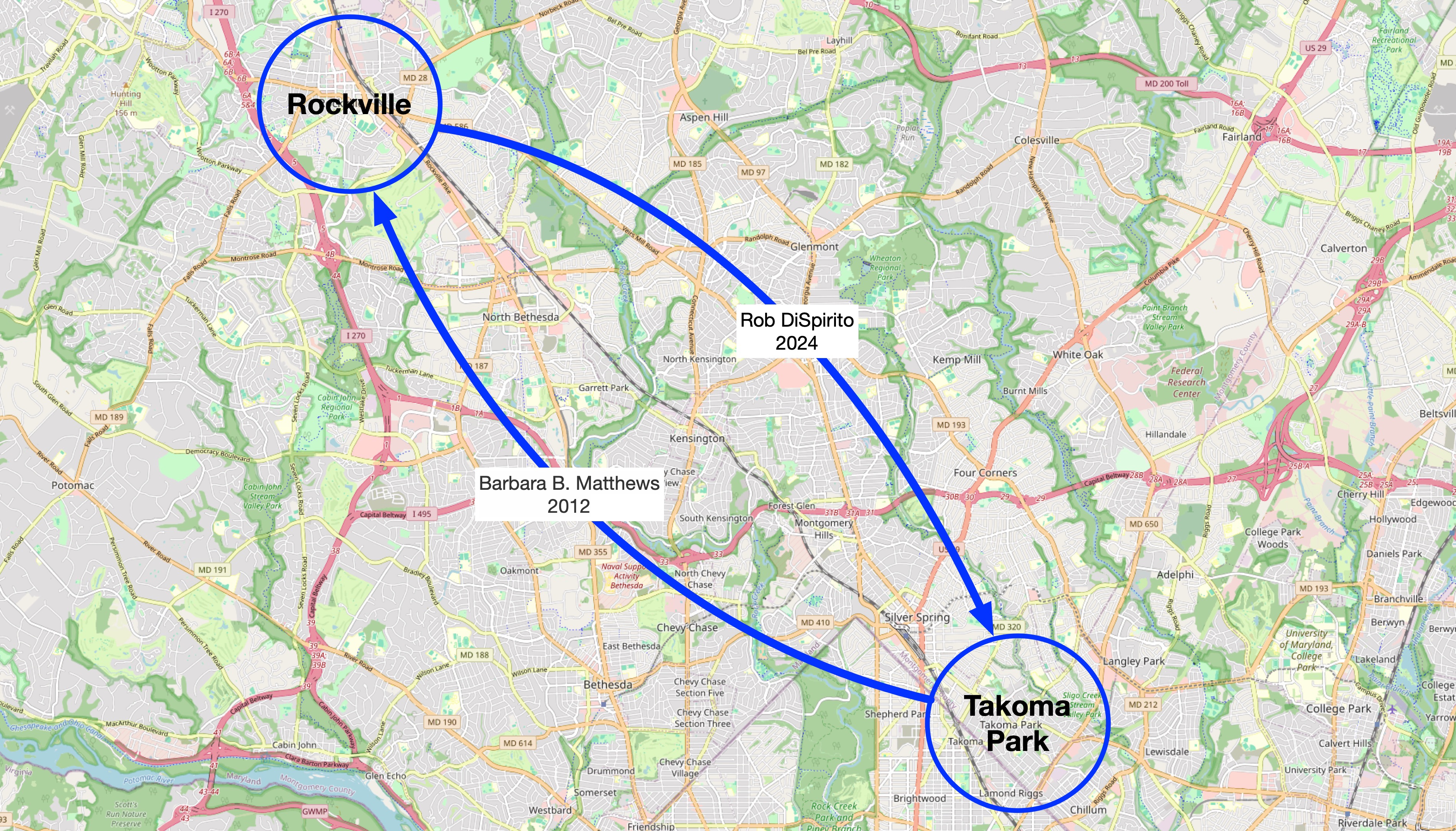
The Takoma Park City Council hired Robert DiSpirito as their new City Manager effective January 22, 2024. DiSpirito was City Manager of Rockville for seven years and by coincidence, his predecessor was Barbara Mathews, who was previously the City Manager of Takoma Park. They were also both hired and fired by the Rockville Mayor and Council, which both times included Mayor Bridget Newton and Councilmember Beryl Feinberg.
DiSpirito’s departure continues to be an embarrassment of poor management by the Mayor and Council. When he resigned at the conclusion of a Closed Session (aka “secret meeting”) of the Mayor and Council on August 17, he also received a $307,093 severance package (typically resignations don’t include severance). But figuring out what was going on was kept secret illegally for several months. According to Maryland’s Open Meetings Act, the Mayor and Council must provide minutes of a closed session at its next open session (3-306), which would have been September 11 but they failed to share the minutes. It wasn’t until October 23, 2023 (three regular meetings later) that the Mayor and Council approved the August 17 minutes (Agenda, page 218), keeping the public uninformed for more than two months. Furthermore, they played a trick in the meeting minutes. The Mayor and Council approved the official minutes of the September 11 meeting as if they included the Closed Session minutes of August 17 (watch the video of September 11 meeting and you’ll see the August 17 meeting was not discussed)–but it actually didn’t happen until October 23. Hmm, looks like the Mayor and Council is playing three-card monte with the public. Clearly, the Mayor and Council violated the Open Meetings Act but also acted unethically in the preparation of their official records.
More Pedestrians Struck in Rockville Than Reported
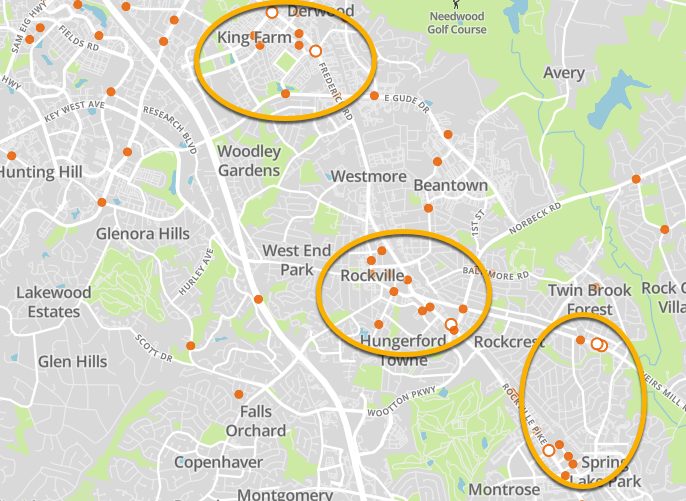
The recent death of a 70-year old pedestrian struck by two vehicles at Atlantic Avenue and Viers Mill Road prompted me to see if this a growing problem in Rockville. Data collected by Montgomery County suggests that many more pedestrians were injured or killed in Rockville in 2023 than the eight reported at the most recent Mayor and Council meeting. Not sure the cause of the discrepancy, but county data shows the greatest numbers of incidents occur in and near King Farm, downtown Rockville, and Twinbrook. Although these high incident areas all share major highways (MD Route 355 and 586), pedestrian injuries and deaths also occurred on smaller streets in these neighborhoods, which conflicts with the City’s conclusions. Both the City of Rockville and Montgomery County have adopted Vision Zero, but they don’t seem to be working from the same data. Should pedestrian safety be a higher priority for Rockville’s Transportation and Mobility Commission?
Mayor and Council to Discuss Unsafe Streets in Rockville
At its Monday, January 22, 2024 meeting, the Rockville Mayor and Council will discuss police pension. On the Consent Calendar (items approved without discussion) are contracts for equipment or services related to building construction and repair ($140K); security enhancements to the water treatment plant ($136K), equipment and support for the Data Center ($1.9M); and playground maintenance and repair ($850K), among others. The Mayor and Council will also receive reports on Bus Rapid Transit on MD 355; Environment Commission; Vision Zero; Bikeway and Pedestrian Master Plan; Procurement; and the outreach program for minority, female, disabled, and veteran-owned businesses.
The Montgomery County Department of Transportation has been considering Bus Rapid Transit (BRT) throughout the county, including Viers Mill Road (MD 586) and the Rockville Pike (MD 355) in Rockville, to provide fast and reliable public transportation using dedicated lanes on the busiest streets (Agenda page 5+). In July 2019, the County Council stated they preferred two dedicated lanes in the median (one lane in each direction in the center of the street) for MD 355, however, design has become more complicated for the area near College Parkway. Furthermore, the project will affect Rockville’s Vision Zero, Bikeway, and Rockville Pike plans. To help pay for the project, the County has requested a $1 million contribution from Rockville’s portion of the Montgomery County Transportation Impact Tax.
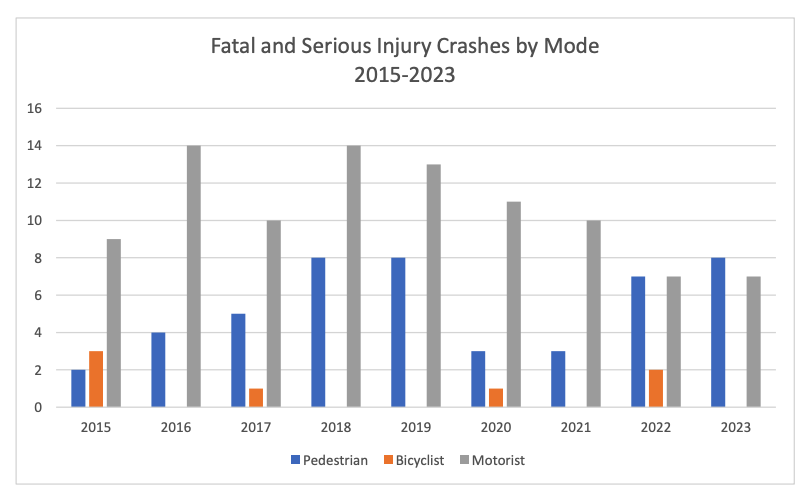
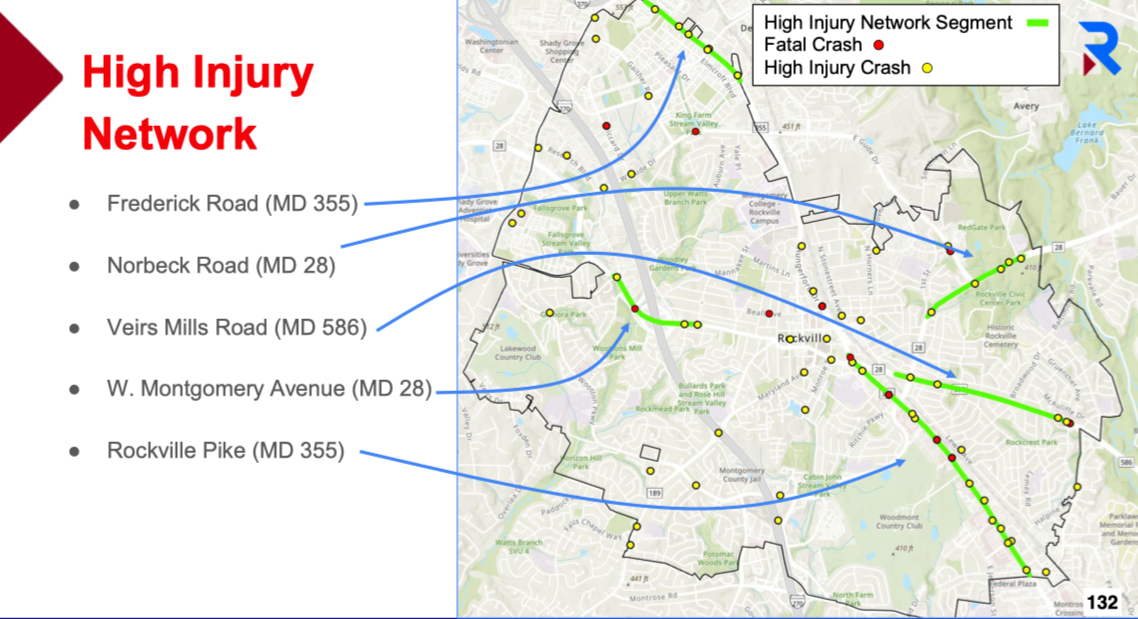
In July 2020, the Mayor and Council adopted the Vision Zero Action Plan (page 28+). Vision Zero is a multidisciplinary traffic safety program with the overarching goal to wholly eliminate deaths and serious injuries that result from traffic crashes. This program is designed for all roadway users: motorists, pedestrians, bicyclists, and transit users. This program departs from past roadway safety programs by explicitly rejecting any traffic death or serious injury as acceptable and recognizing that people will often make mistakes while traveling, but mistakes should not result in death or serious injury. A recent study revealed six roads in Rockville as “High Injury Network” segments, which means there have been at least four fatal or serious injuries crashes: Rockville Pike (from Veirs Mill Road to Bouic Avenue); West Montgomery Avenue (from Research Blved to Mannakee Street); Norbeck Road (from First Street to Avery Road); Frederick Road (from Ridgemont Ave to Watkins Pond Blvd); Veirs Mill Road (from Rockville Pike to Twinbrook Parkway); and North Washington Street (from Hungerford to W. Jefferson St.). Unfortunately, most of these highways are controlled by the State of Maryland (N. Washington Street is the only City-maintained roadway among those listed). Time to contact your State Senator and Delegates to light a fire under the State Highway Administration!
The Mayor and Council are conducting hybrid meetings. If you wish to submit comments in writing for Community Forum or Public Hearings, please email the comments to MayorAndCouncil@RockvilleMD.gov by no later than 10:00 a.m. on the date of the meeting.
More details in the 455-page agenda packet are available at https://www.rockvillemd.gov/AgendaCenter/ViewFile/Agenda/_01222024-7097.
Meanwhile, in the State of Maryland
The 90-day legislative session has begun! Taxes and cost shifts are on the table for the General Assembly session as Gov. Wes Moore (D) and lawmakers look to solve both a structural budget shortfall and massive cuts to transportation projects. In November, legislative budget analysts told the joint Spending Affordability Committee that the state faces a structural gap of $322 million in the coming legislative session. Projections show the gap continuing to grow in fiscal 2026 and 2027 to $376 million and $436 million respectively. More at MarylandMatters.org.
State Delegate Joe Vogel (District 17) is among the seven state lawmakers who are currently running for Congress in either the 3rd or 6th districts, with the primaries fast approaching on May 14.
The FBI arrested Carlos Ayala of Salisbury, a State Board of Elections member, for participating in the January 6 insurrection. He resigned from the Board of Elections on January 11. Ayala was appointed to the state Board of Elections last year by Gov. Wes Moore (D) following a recommendation by the Maryland Republican Party. Looks like they need to do a deeper background check before appointing people to public office.
Mayor and Council to Approve 82-Townhouse Development Despite Environmental and School Capacity Concerns
At its Monday, October 2, 2023 meeting, the Rockville Mayor and Council will discuss permission to build 82 townhouses at 2200 Tower Oaks Boulevard and reduce parking by 18% at 2000 Tower Oaks Boulevard. On the Consent Calendar (items approved without discussion) are increasing funding for stormwater management from $95,000 to $422,000 and appointing David Sklar to the Board of Supervisors of Elections. The Mayor and Council will also receive reports on the Seven Locks Road Diversion Center (aka “county jail”), Financial Advisory Board, and Pedestrian Master Plan.
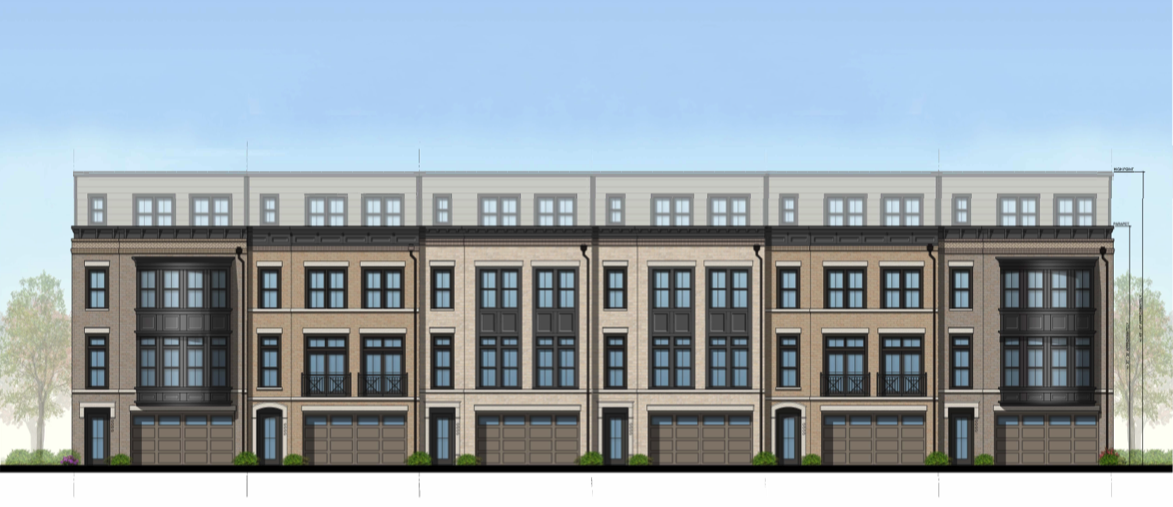
The Planning Commission, Bicycle Advisory Committee, and Pedestrian Advocacy Committee reviewed and approved the proposed 82-townhouse development, but strangely, the Mayor and Council excluded the Environment Commission and Education Commission. This project will replace about 10,000 sf of forest and with 7,600 sf of “new” forest; is adjacent to a stream; and subject to an existing Forest Conservation Plan (pages 47-8)—aren’t these environmental issues? For those who are concerned about school capacity in the Richard Montgomery Cluster Area, the proposed townhouse development will generate 18 students at the elementary school grade level; 10 students at the middle school level; and 14 students at the high school level (page 44). That means capacity is expected to rise to 99% for Bayard Rustin Elementary School, to 95% for Julius West Middle School, and to 123% for Richard Mongomery High School. By fall 2027, however, “capacity at Richard Montgomery is slated to be adequate due to an approved CIP project that will reassign students among Gaithersburg HS, Richard Montgomery HS, Quince Orchard HS, Thomas S. Wootton HS, and Crown HS.” What’s the purpose of the Education Committee if they aren’t aware of one of the most contentious school issues?
On pages 135-166, the Financial Advisory Board, chaired by Bob Wright, presented its FY2023 Annual report and found no discrepancies in Rockville’s financial reports; had no recommendations on the financial policies (although noted that no policies on donations was needed); found that the investment portfolio declined in value due to rising interest rates; stated that the city staff had done an outstanding job in preparing the annual budget; made three recommendations regarding the Capital Improvements Program; made complex findings and recommendations regarding the 2015 Purchasing Study; reported that the City has spent nearly $6 million on the King Farm Farmstead (and noted that the Mayor and Council do not agree on future uses); and that City is making good progress on including performance measures in the budget.
On pages 167-189, the Pedestrian Master Plan seems to be running ahead of itself and should take a step back. It offers five goals and ten recommendations, but nothing sufficiently specific nor any priorities to help the Mayor and Council know what to do next and why. Strangely, the Traffic and Transportation Department is hoping to propose an ordinance to City Council on October 23 even though the nearly 300 public comments collected since May haven’t been summarized (it doesn’t even close until October 13!). Perhaps they’re trying to get in done in “Walktober” month but it looks like they need to do a lot more research and analysis. For examples, here are pedestrian master plans from Portland and Seattle. Let’s hope the Mayor and Council provides clarity on expectations for a master plan.
October is National Arts and Humanities Month and the Rockville’s Cultural Arts Commission recommends that you celebrate by reading book, putting your child’s art on the fridge, and singing in the car, among others. Alas the expectations are pretty low, so here are five better suggestions from the non-human ChatGPT:
- Visit a Local Museum or Art Gallery: Explore the rich cultural heritage and artistic talent in your community by visiting local museums and art galleries.
- Attend a Workshop or Lecture: Many institutions offer workshops, lectures, or webinars during National Arts and Humanities Month. These can provide a deeper understanding of various art forms and humanities topics.
- Participate in a Community Art Project: Engage with your local community by participating in a collaborative art project or humanities event. This could be a mural painting, a community theater production, or a local history project.
- Read a Book: Celebrate the humanities by reading a book on a topic you’re interested in, such as history, philosophy, or literature. Consider joining a book club to discuss and share insights.
- Support Local Artists and Scholars: Purchase artwork from local artists or attend performances and presentations by local scholars. Your support can help sustain the arts and humanities in your community.
The Mayor and Council are conducting hybrid meetings. If you wish to submit comments in writing for Community Forum or Public Hearings, please email the comments to MayorAndCouncil@RockvilleMD.gov by no later than 10:00 a.m. on the date of the meeting.
More details in the 197-page agenda packet are available at https://www.rockvillemd.gov/AgendaCenter/ViewFile/Agenda/_10022023-7016.
Mayor and Council to Consider Increasing Lots of Fees; Can it Untangle 900 Rockville Pike?
At its Monday, May 8, 2023 meeting, the Rockville Mayor and Council will discuss amending master fees for community planning and development services. On the Consent Calendar (items approved without discussion) are the pension plan for 2023. The Mayor and Council will also receive reports on the Vision Zero Action Plan, Bikeway and Pedestrian Master Plans, development of 900 Rockville Pike, and the historic preservation work plan.
Fees for building permits, inspections, and licenses are proposed to increase 2.5% to keep up with inflation; include a 10% fee to offset the cost of technology; adopt a fee structure based on square footage or estimated construction cost; and assess a separate application fee. For example, a building permit for new residential construction or to repair fire damage will be $0.25 per square foot, including the basement, garage, and roof; a license for short-term rentals is $450; and a building permit for a swimming pool or to demolish a building of any size is $553.
Interestingly, the staff report admits that the actual cost of providing services is unknown and it is uncertain whether the revenues from fees are sufficient to cover their expenses (170). Secondly, new construction accounts for 35-40% of global greenhouse gas emissions and “virtually every green rating program (LEED, USGBC, IgCC) recognizes the value of adaptive reuse” (173). Nevertheless, the City is comfortable granting inexpensive demolition permits (where does all that building material go? into the county dump!). Instead, it should encourage adaptive reuse by significantly increasing the demolition permit fees on a square-foot basis.

J. Danshes LLC has filed an application to build a 4,400 square foot one-story retail building at 900 Rockville Pike (southeast corner of Rockville Pike and Edmonston Drive, one of the narrowest lots on the east side of the Pike due to the railroad tracks). In 2006, the City adopted a Mixed-Use Corridor District zone for this small lot, which allowed up to 12,754 square feet of retail space. Despite this new proposal being a much smaller building, it is now subject to several new city regulations that have been adopted over the years plus it needs to accommodate the proposed Bus Rapid Transit (BRT) route. As a result, this project has been in the pipeline since 2017 and is becoming an enigma wrapped in a puzzle—what would you do with this property when you’re faced with the following situation:
“To create the right-of-way land area dictated by the public agencies, the Applicant must dedicate 6,523 square feet of area (0.15 acres, 25.2% of existing lot area) to public use. Said dedication reduces the size of the site from 25,862 (0.59) acre to 19, 339 square feet (0.44 acre).” (257)
More details in the 329-page agenda packet are available at https://www.rockvillemd.gov/AgendaCenter/ViewFile/Agenda/_05082023-6899.

 Max for Rockville