Housing Aid, Election Reforms, and Vision Zero on Rockville’s September 8 Agenda
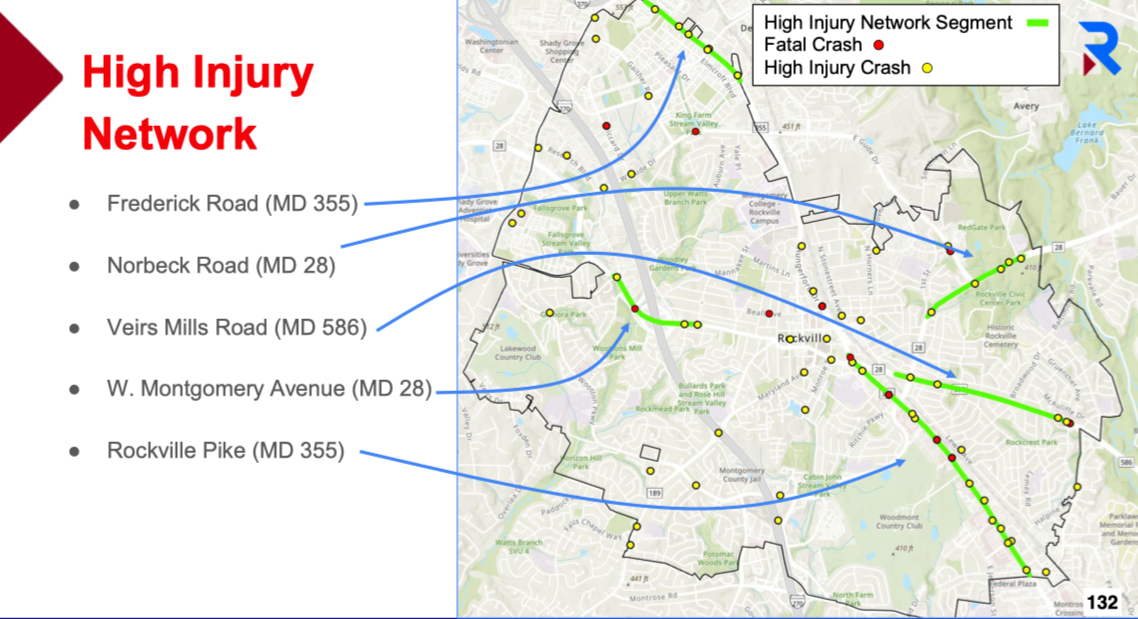
Rockville’s Mayor and Council is returning from its August break facing a packed agenda with decisions that could shape the city’s future for years to come. At the September 8 meeting, three major issues will take center stage: housing affordability and federal funding priorities, a complete overhaul of the city’s election code, and progress on Rockville’s ambitious Vision Zero traffic safety plan. Each of these topics speaks directly to the daily lives of residents and businesses, raising questions about how Rockville grows, governs, and protects its people.
Rockville Council to Hear Public Testimony on Housing Needs and Federal Grant Priorities
The Rockville City Council will hold a public hearing to shape how the city will spend its $263,000 allocation of federal Community Development Block Grant (CDBG) funds for FY 2027. The grants, distributed through Montgomery County, must be used for projects that benefit low- and moderate-income residents.
In the past, Rockville has used CDBG funding to rehabilitate supportive housing at Jefferson House, upgrade shared recovery housing, replace failing HVAC systems at David Scull Courts, and fund its single-family rehab program. With housing affordability worsening, this year’s hearing carries added weight.
A recent city needs assessment underscores the challenge: nearly half of Rockville residents are renters, and more than half of them are cost-burdened, paying over 30 percent of their income on housing. Median rent has climbed to $2,244 per month, requiring an income of nearly $90,000, while the median home price now tops $681,500. Homeownership rates continue to fall, particularly for younger and first-time buyers.
Continue reading →County Considering Higher Densities along Twinbrook and Viers Mills Road
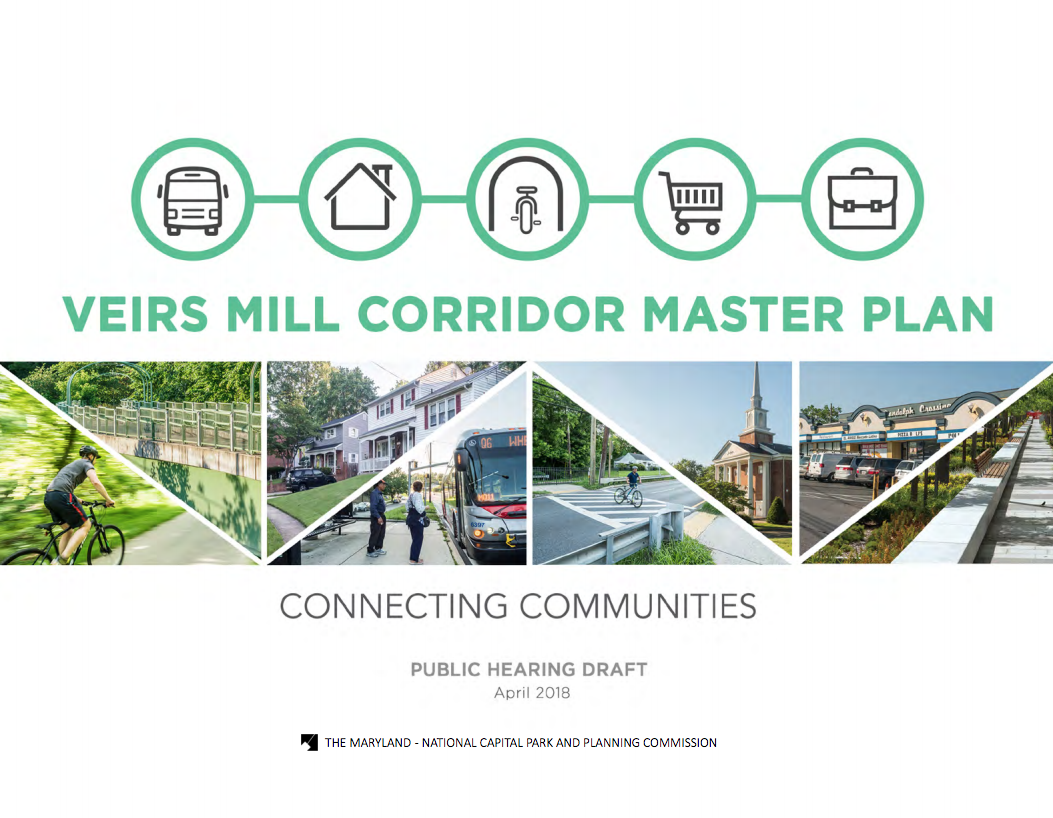
Veirs Mill Corridor Master Plan, Public Hearing Draft, April 2018.
The Maryland-National Capital Park and Planning Commission has released the Veirs Mill Corridor Master Plan in preparation for public hearings. Veirs Mill Road cuts through Twinbrook in southern Rockville before connecting with the Rockville Pike in downtown. This plan only focuses on the areas of Veirs Mill Road south of Rockville’s borders, however, coordinating the commission’s and county’s plans with Rockville’s is crucial to ensure compatibility as well as reduce impacts and ensure benefits to residents and businesses (remember the struggles on the Rockville Pike?). Planning began in January 2017 and while the draft Master Plan was released in April 2018, the Commission has not established any public hearing dates (things move slowly in the county). The draft Master Plan and more details available at http://montgomeryplanning.org/planning/communities/area-2/veirs-mill-corridor-plan/
The Master Plan examines land use, urban design, housing, transportation (including pedestrians and bicycles), parks and trails, environment, and community facilities, then provides findings and recommendations by four districts. The Plan identified the major challenges as Continue reading →
How Will County’s Plans for Bus Rapid Transit Affect Rockville?

Bus Rapid Transit corridors for Montgomery County under consideration in 2016.
Plans for a BRT (bus rapid transit) system in Montgomery County will affect Rockville in two ways: Rockville Pike (Clarksburg to Bethesda) and Veirs Mill Road (Rockville to Wheaton). On Wednesday, September 28 from 6:30 to 8:30 pm, the Maryland State Highway Administration will hold a public meeting in the cafeteria of the Montgomery County Executive Office Building (EOB), 101 Monroe Street in Rockville. Parking available in the garage underneath the EOB. The meeting will provide information and gather public comments on the alternatives for BRT service between Rockville and Wheaton. The proposed MD 586/Veirs Mill Road BRT Corridor Study extends approximately 6.7 miles from the Rockville Metrorail Station to the Wheaton Metrorail Station in Montgomery County, Maryland. This study also includes the extension of enhanced bus service from the Rockville Metrorail Station, north in mixed traffic along MD 355, an additional 1.5 miles to Montgomery College. There will not be a formal presentation, so you can drop by anytime to learn about the alternatives, operations, environmental impacts, and cost estimates from representatives from both the county and state departments of transportation. A draft of the recently completed Continue reading →

 Max for Rockville