A Week of Surprises on Rockville’s Campaign Trail
It’s been a very strange week on Rockville’s campaign trail, starting on Monday at the Mayor and Council meeting and ending with a conversation in the parking lot after the Candidate Forum on Thursday night.
The Mayor and Council meetings often start with a half hour of proclamations highlighting a particular person, anniversary, or community issue, each read out by a council member without any drama. The October 2, 2023 meeting followed this tradition with the 45th Anniversary Art in Public Places Program, Arts and Humanities Month, Breast Cancer Awareness Month, Domestic Violence Awareness Month, Indigenous Peoples’ Day, and Walktober but things went strangely awry. In the agenda, David Myles was assigned to Domestic Violence Awareness Month, an ironic choice give his recent arrest for an assault on his wife. That must have caught someone else’s attention in City Hall because Myles was reassigned to Breast Cancer Awareness Month at the last minute. Council Member Myles, who participated in the meeting remotely, didn’t agree with the change and voiced his concerns during his presentation, and then proceeded to discuss domestic violence instead of reading the proclamation on breast cancer awareness. Mayor Newton attempted to interrupt him but they merely wound up talking over each other, making an uncomfortable mess, leaving it to the Mayor to read the proclamation on Breast Cancer Awareness Month. You can watch this unfold online at “Proclamation Declaring October 2023, at Breast Cancer Awareness Month (CM Myles).”
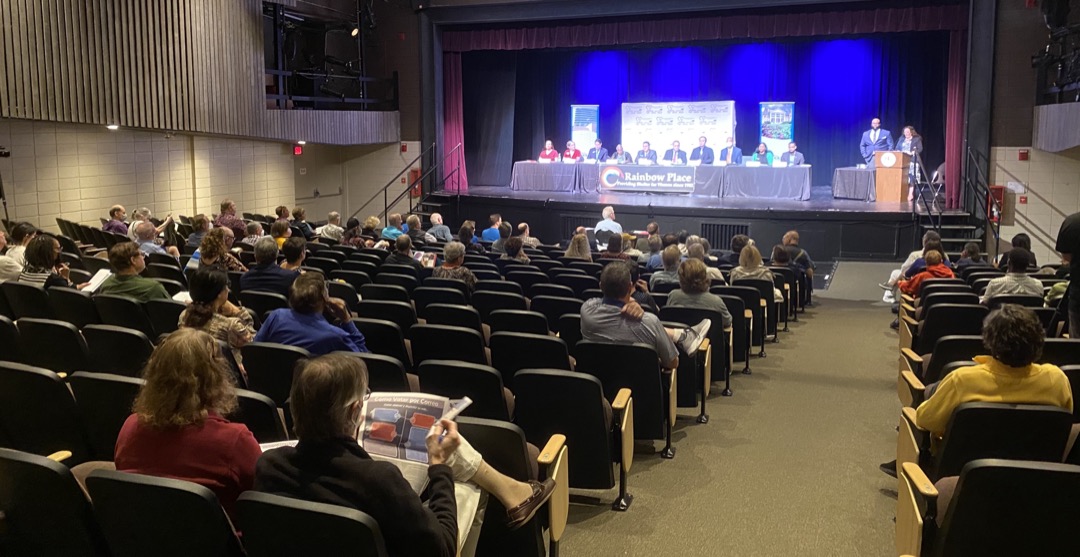
The Candidate Forum on Thursday, October 5 hosted by Community Reach of Montgomery County with Rainbow Place Shelter at the F. Scott Fitzgerald Theatre demonstrated the extraordinary challenge that voters will have when faced with a dozen council candidates. Although we’re mid-season, most candidates haven’t managed to distinguish themselves and are relying far too much on platitudes and vague statements about leadership, neighborhoods, vacancies, residents, funding, taxes, transparency, experience, city services, safety, housing, green space, diversity, partnerships, and sustainability, so they all seem to offer the same ideas and solutions. Here are some potential distinctions among them, but can you identify who they are (and more importantly, does it matter?):
- “I’m the only candidate that lives in Town Center.”
- “I led the effort to tie funding for our needs-based organizations to the cost of inflation.”
- “There’s a need for more live music in Town Center and throughout the city of Rockville.”
- “While on the Charter Review Commission…[I] routinely brought up the issues of justice and equity.”
- “I am disappointed in the vacancies in Town Center.”
Confusing matters, many talked out of two sides of their mouth: “we’re doing well on diversity but need to do more” or “we are a safe community but must hire more police” or “we need more live music and parks but we have to reduce expenses.” Part of it is due to the pressure to avoid alienating potential voters, but it’s also due to the nature of Candidate Forums: demanding simple answers to complex questions. At the Forum, a couple candidates had 90 seconds to answer:
- What are the problems you currently see facing Town Center and how do you intend to address them?
- Nonprofit organizations cover many services for city residents that Rockville helps to fund through grants. Is there too much funding going to nonprofits or not enough? Is the city funding the most important services? Does the city get the best bang for its buck through the nonprofits that provide those services or would you recommend increasing city staff to provide such services?
Complex, compound questions can be tricky for both seasoned politicians and newcomers. Experienced politicians will sidestep parts of the question, while new candidates may struggle to provide clear answers due to lack of knowledge or experience, resorting to vague statements to avoid embarrassment. Neither helps voters make informed decisions. For clearer answers, forums should pose simple, open-ended questions. Providing questions in advance could also lead to better responses. While spontaneous answers can reveal a candidate’s values and superficial knowledge (gotcha!), they don’t necessarily reflect their critical thinking on specific topics like Town Center, Red Gate Park, or the city budget.
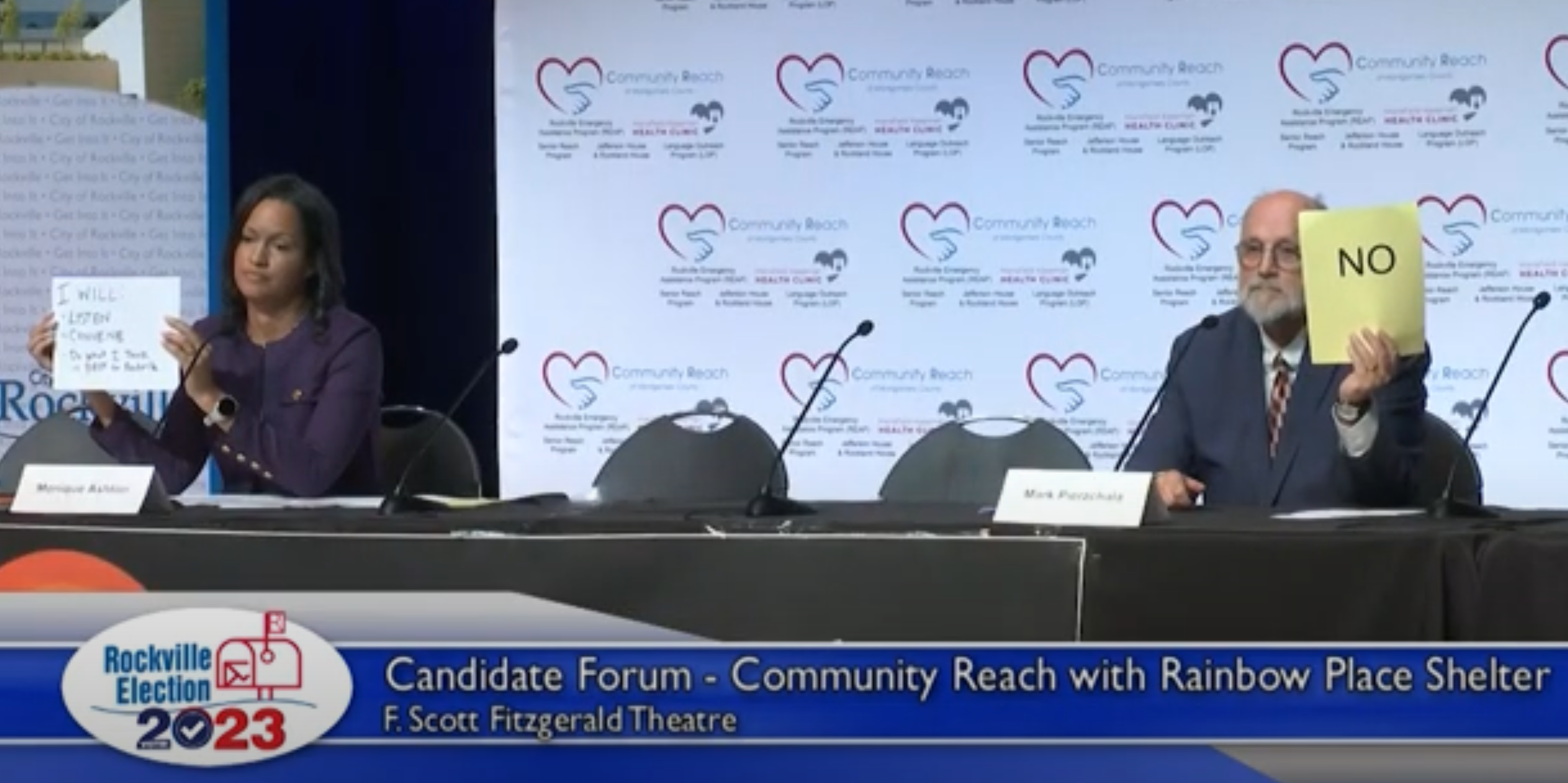
But even if questions are provided in advance, some candidates will be unprepared. The October 5 Candidate Forum addressed the referenda questions on the November ballot, which have been discussed by Mayor and Council for the last year (see Board of Supervisors of Elections Recommends Lowering Voting Age to 16 and Mayor and Council to Choose Earmarks and Decide Upcoming Election Changes), so every candidate should be prepared with an answer. The issues of lowering the voting age to 16, permitting noncitizens to vote, setting term limits, and creating representative districts are quite familiar to Council Members David Myles and Monique Ashton, yet were strangely unwilling to state their conclusions. In his closing remarks, Myles stated that “voting is private matter” and provided an “outline of his philosophy” so that voters might guess at his answers (perhaps he prefers that the City Council vote in secret?). Mayoral candidate Monique Ashton held up an illegible handwritten sign that elicited groans from the audience, who eventually was asked to read it out: “I will listen, convene, and do what I think is best for Rockville.” It’s a non-answer that anyone running for office can spout, but certainly not appropriate for a current council member running for mayor. Voters “hire” the Mayor and Council to lead the city; we need to know what you think and where you’re taking us.
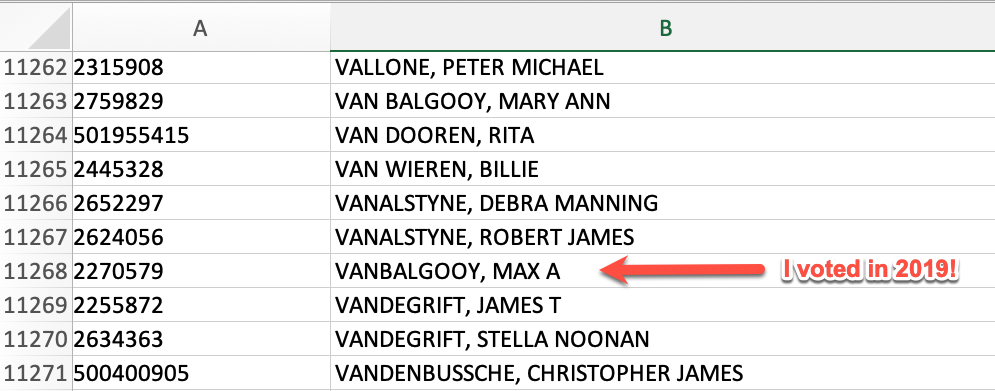
Finally, the strangest event of the week occurred after the October 5 Forum in the parking lot. I ran into a candidate for the Rockville council who pointed out an error in my post about their voting record. They told me they had voted in the 2019 election and thought I had used an incorrect 2019 voter list provided by the City of Rockville. They also mentioned that they had notified the City Clerk about this mistake. So, on October 6, I contacted the City Clerk’s office to request an updated voter list, as the one they gave me in September 2023 seemed to be incorrect. They responded quickly, but instead of giving me a corrected list, they directed me to the State of Maryland. This was very strange. The City Clerk’s Office didn’t show any concern about the potential error in the 2019 voter list—it could suggest there are errors in the voter list for the upcoming election. Hmm. There are several ways to get at this without the City’s cooperation. It’s slow and costly, but I’ll keep at it. Hopefully, I’ll have answers before the election.
Rockville’s Neighborhoods: A Key Factor in Local Elections?
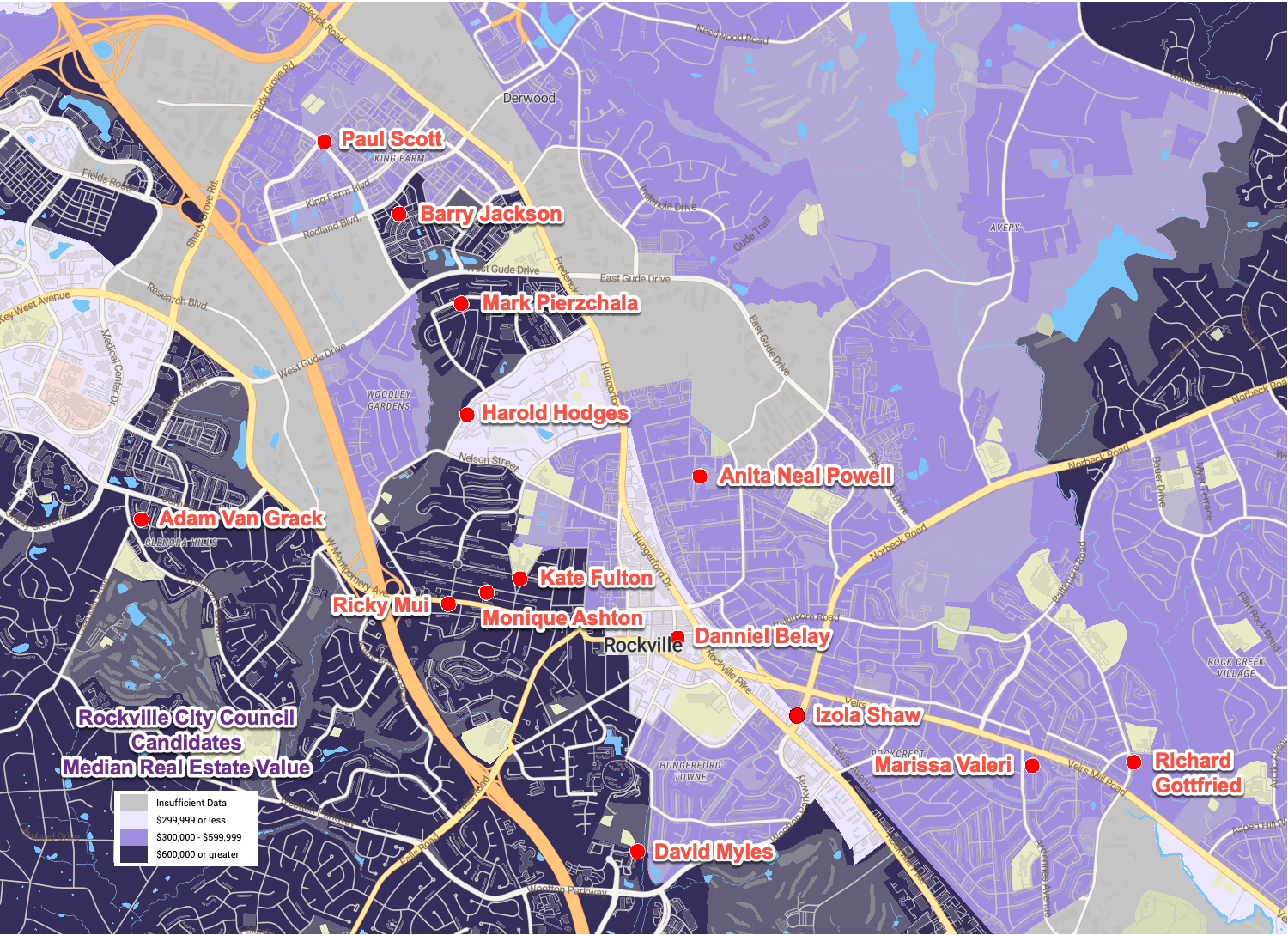
If you want to run for a spot on the Mayor and Council, you need to be at least 18, registered to vote, and have lived in Rockville for at least a year before the election (for this race, that means living here since November 7, 2022). But when people vote, they often pick candidates who they feel are like them and will represent what they care about. So, where a candidate lives can be really important, especially if they live in a neighborhood that’s similar to the voter’s.
Looking at the map, you can see Rockville is split into three parts by major highways. To the west of I-270 is the “wealthy west,” where the average house costs more than $600,000. Adam Van Grack is the only candidate from this part of Rockville. To the east of #355 (Rockville Pike/Hungerford Drive/Frederick Road—actually, the dividing line is Metro) are the “middleburbs,” where houses typically cost between $300,000 and $600,000 and is home to Anita Neal Powell, Izola Shaw, Marissa Valeri, and Richard Gottfried.
Right in the center of the city is the “mixing bowl,” where house prices vary the most and has the greatest number of candidates: Paul Scott, Barry Jackson, Mark Pierzchala, Harold Hodges, Kate Fulton, Monique Ashton, Ricky Mui, Danniel Belay, and David Myles.
In past elections, the richest neighborhoods usually had the most people voting. If we think they’ll vote for people who are like them or share their interests, we will likely see Barry Jackson, Adam Van Grack, Kate Fulton, Ricky Mui, and David Myles take five seats on the next city council. If we continue this logic, there is one more seat available on council so it will be a tight race between Paul Scott, Anita Neal Powell, Izola Shaw, Marissa Valeri, and Richard Gottfried. The contest for Mayor between Mark Pierzchala and Monique Ashton, who both live in wealthy neighborhoods, will be more complicated. Voters will likely consider additional factors like experience, background, personality, and age.
As for age, once again this council election attracted candidates that span at least three generations. The Millennial generation (born 1981-1996) is solely represented by Danniel Belay; Gen Xers (1965-1980) by David Myles, Monique Ashton, Ricky Mui, Izola Shaw, Kate Fulton, Barry Jackson, Marissa Valeri, Adam Van Grack, and Harold Hodges; and Boomers (1946-1964) by Paul Scott, Richard Gottfried, Mark Pierzchala, and Anita Neal Powell. Most people who vote in Rockville are from Generation X. If they vote for people who are like them, we might see a lot of candidates like David Myles, Monique Ashton, Ricky Mui, Izola Shaw, Kate Fulton, Barry Jackson, Marissa Valeri, Adam Van Grack, and Harold Hodges on the city council. But the people who vote the most are Baby Boomers, so Paul Scott, Richard Gottfried, Mark Pierzchala, and Anita Neal Powell could also have a good shot at winning.
The Rockville United campaign committee, which includes Monique Ashton, Kate Fulton, Paul Scott, Izola Shaw, and Marissa Valeri, could really shake things up in the city council if voters decide they want a big change. However, it’s hard to find information about this team online, and usually, people prefer to pick their candidates one by one. But remember, teams like Rockville United can be a great way to make the most out of limited resources.
Mayor and Council to Approve 82-Townhouse Development Despite Environmental and School Capacity Concerns
At its Monday, October 2, 2023 meeting, the Rockville Mayor and Council will discuss permission to build 82 townhouses at 2200 Tower Oaks Boulevard and reduce parking by 18% at 2000 Tower Oaks Boulevard. On the Consent Calendar (items approved without discussion) are increasing funding for stormwater management from $95,000 to $422,000 and appointing David Sklar to the Board of Supervisors of Elections. The Mayor and Council will also receive reports on the Seven Locks Road Diversion Center (aka “county jail”), Financial Advisory Board, and Pedestrian Master Plan.
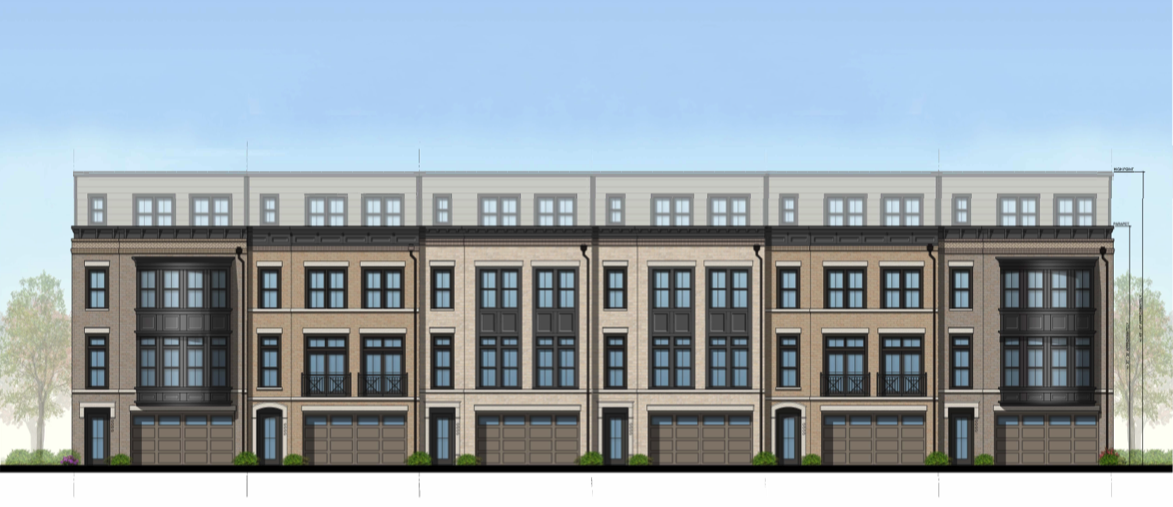
The Planning Commission, Bicycle Advisory Committee, and Pedestrian Advocacy Committee reviewed and approved the proposed 82-townhouse development, but strangely, the Mayor and Council excluded the Environment Commission and Education Commission. This project will replace about 10,000 sf of forest and with 7,600 sf of “new” forest; is adjacent to a stream; and subject to an existing Forest Conservation Plan (pages 47-8)—aren’t these environmental issues? For those who are concerned about school capacity in the Richard Montgomery Cluster Area, the proposed townhouse development will generate 18 students at the elementary school grade level; 10 students at the middle school level; and 14 students at the high school level (page 44). That means capacity is expected to rise to 99% for Bayard Rustin Elementary School, to 95% for Julius West Middle School, and to 123% for Richard Mongomery High School. By fall 2027, however, “capacity at Richard Montgomery is slated to be adequate due to an approved CIP project that will reassign students among Gaithersburg HS, Richard Montgomery HS, Quince Orchard HS, Thomas S. Wootton HS, and Crown HS.” What’s the purpose of the Education Committee if they aren’t aware of one of the most contentious school issues?
On pages 135-166, the Financial Advisory Board, chaired by Bob Wright, presented its FY2023 Annual report and found no discrepancies in Rockville’s financial reports; had no recommendations on the financial policies (although noted that no policies on donations was needed); found that the investment portfolio declined in value due to rising interest rates; stated that the city staff had done an outstanding job in preparing the annual budget; made three recommendations regarding the Capital Improvements Program; made complex findings and recommendations regarding the 2015 Purchasing Study; reported that the City has spent nearly $6 million on the King Farm Farmstead (and noted that the Mayor and Council do not agree on future uses); and that City is making good progress on including performance measures in the budget.
On pages 167-189, the Pedestrian Master Plan seems to be running ahead of itself and should take a step back. It offers five goals and ten recommendations, but nothing sufficiently specific nor any priorities to help the Mayor and Council know what to do next and why. Strangely, the Traffic and Transportation Department is hoping to propose an ordinance to City Council on October 23 even though the nearly 300 public comments collected since May haven’t been summarized (it doesn’t even close until October 13!). Perhaps they’re trying to get in done in “Walktober” month but it looks like they need to do a lot more research and analysis. For examples, here are pedestrian master plans from Portland and Seattle. Let’s hope the Mayor and Council provides clarity on expectations for a master plan.
October is National Arts and Humanities Month and the Rockville’s Cultural Arts Commission recommends that you celebrate by reading book, putting your child’s art on the fridge, and singing in the car, among others. Alas the expectations are pretty low, so here are five better suggestions from the non-human ChatGPT:
- Visit a Local Museum or Art Gallery: Explore the rich cultural heritage and artistic talent in your community by visiting local museums and art galleries.
- Attend a Workshop or Lecture: Many institutions offer workshops, lectures, or webinars during National Arts and Humanities Month. These can provide a deeper understanding of various art forms and humanities topics.
- Participate in a Community Art Project: Engage with your local community by participating in a collaborative art project or humanities event. This could be a mural painting, a community theater production, or a local history project.
- Read a Book: Celebrate the humanities by reading a book on a topic you’re interested in, such as history, philosophy, or literature. Consider joining a book club to discuss and share insights.
- Support Local Artists and Scholars: Purchase artwork from local artists or attend performances and presentations by local scholars. Your support can help sustain the arts and humanities in your community.
The Mayor and Council are conducting hybrid meetings. If you wish to submit comments in writing for Community Forum or Public Hearings, please email the comments to MayorAndCouncil@RockvilleMD.gov by no later than 10:00 a.m. on the date of the meeting.
More details in the 197-page agenda packet are available at https://www.rockvillemd.gov/AgendaCenter/ViewFile/Agenda/_10022023-7016.
Can You Survive on $1,693 a Month in Rockville?
A recent article in the Wall Street Journal chronicled the lives of baby boomers living in Florida on Social Security and unable to secure affordable rental housing. They are rotating between “couch-surfing” at friends’ homes, living in their cars, or sleeping on the street. While the article cited several areas across the country where the percentage of homeless people over the age of 65 is growing rapidly, Miami-Dade County rose to the top. As of the end of 2022, it was reported that over 31% of people over the age of 65 were homeless.
Rent Payments vs. Social Security Payments in Rockville
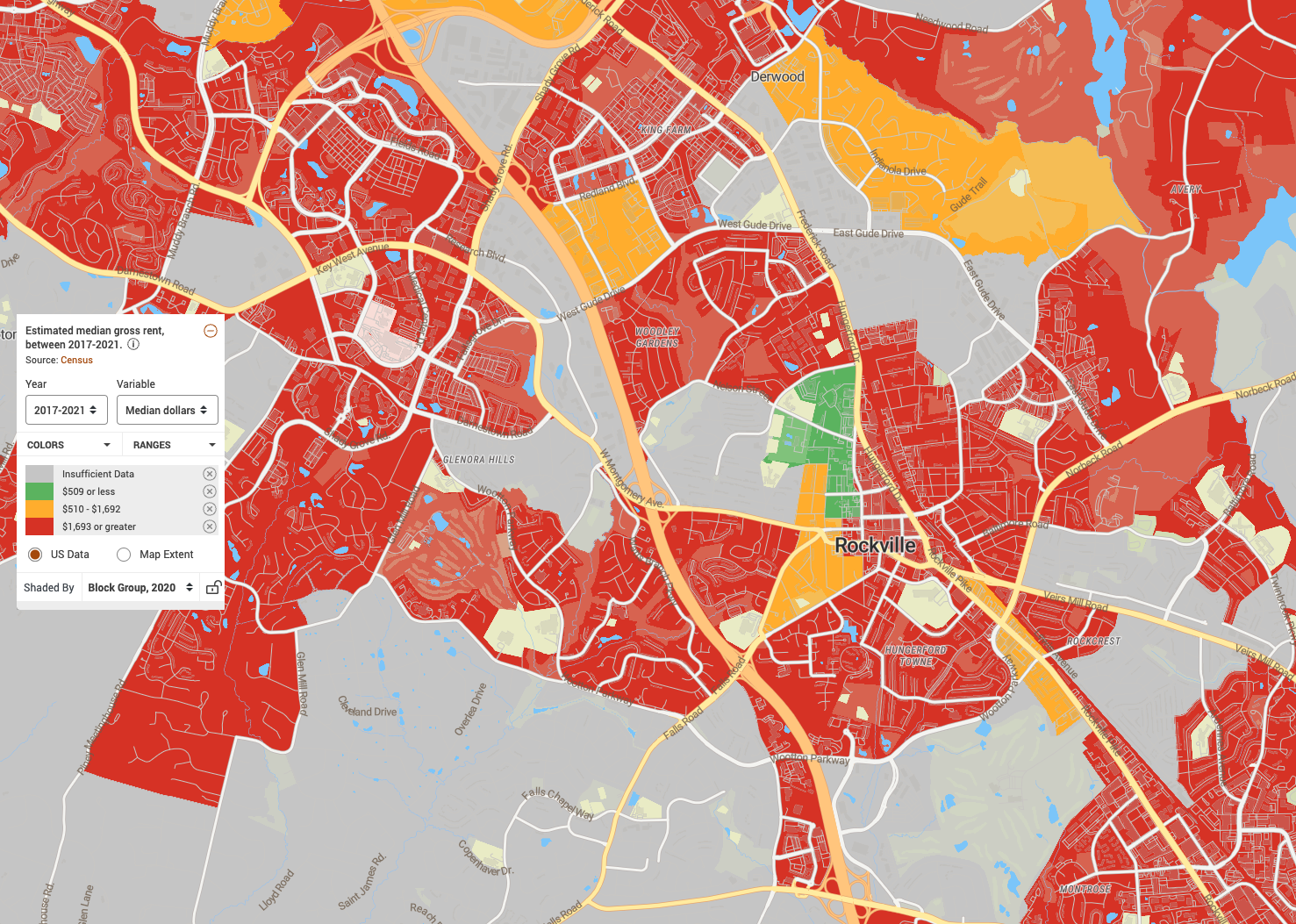
The most recent data from the Census’ American Community Survey (ACS) estimates that 12,000 people over the age of 65 live in Rockville (17% of the population). Of them, 7% or 840 people are living in poverty. As of February 2023, the average SSI check was $1,693 per month or $20,300 per year. It would not be a stretch to assume that most of these 840 people with annual incomes less than $25,000 are living off their Social Security benefits alone.
So, what rent can you afford when your monthly income is $1,693? According to HUD, a household is considered burdened when they spend more than 30% of their income on housing and severely burdened when they spend more than 50% of their income on housing. Ideally, an individual in this case would want to spend no more than $510 per month on housing for it to be considered affordable. As you can see in the map for Rockville, finding a place at a reasonable level of rent is highly unlikely (green is less than $510; orange or red exceeds $510 per month or 30% of the average Social Security monthly payment). The only neighborhoods that are affordable are College Square, Cambridge, and Heritage Park (in green; in addition there are several apartment buildings throughout the city that offer a limited number of affordable units).
Eligibility vs Participation: Three Rockville Council Candidates Didn’t Vote in 2019
October 7, 2023: I’ve been informed by a candidate for council that their voting record reported in this post is inaccurate. This information is this post is based on data provided by Montgomery County and the City of Rockville, so I am in the process of requesting further information from them to determine the source of the errors. My apologies to candidates affected by this blog post but I encourage all voters to ask about a candidate’s voting record to ensure they actively participate in our civic life and to ask the City of Rockville about the process for ensuring the accuracy of the voter database. More details at A Week of Surprises on Rockville’s Campaign Trail.
To run for a seat on the Mayor and Council, candidates must be 18 years old, a registered voter, and have lived in Rockville for at least one year prior to the election (that’s Nov. 7, 2022 for the current race). While you might be a registered voter, that doesn’t mean you vote. Indeed, in a review of voter records from Montgomery County and the City of Rockville shows that three candidates for City Council did not vote in the most recent 2019 City Council election: Danniel Belay, Ricky Mui, and Adam Van Grack. Perhaps they moved into Rockville after 2019, were sick, or out of town (although vote-by-mail was available), but it did make me wonder about the voting record of the other candidates. If you want to lead our little part of democracy, how active have you been in our democratic process? If you’re trying to convince people to vote, how convinced are you about the importance of voting?
Going back to the 2010 elections (I don’t have records for 2020 and 2022), four candidates voted in every election: Mark Pierzchala, Richard Gottfried, Anita Powell, and Marissa Valeri. That’s a 100% voting record. Voting less than half the time (50%) are Daniel Belay, Kate Fulton, Ricky Mui, Paul Scott, and Adam Van Grack. That doesn’t mean they should be automatically dismissed, but they should provide an explanation to voters (why should I vote for you when you didn’t vote most of the time?). The remaining field has a mixed record, although their voting record improved over time.
To see their voting records of the candidates at a glance, see the chart below. Green means they voted, red they didn’t vote, and yellow or ? is unknown. The date they registered to vote is important for evaluating their records—how long has the candidate been part of the democratic process? For example, Anita Powell has the longest record for Rockville, being a registered voter since 1975. On the other hand, Danniel Belay didn’t register until 2014 (I suspect he was under 18 until then), so he didn’t vote until 2014. Again, I don’t have records for 2020 and 2022 (the Montgomery County Board of Elections sells the list at a cost of a couple of hundred dollars), but the patterns are pretty clear from the data I have available.

Councilmember Pierzchala Announces Independent Run for Mayor
In response to Councilmember Myles’ arrest, Councilmember and candidate for Mayor Mark Pierzchala issued the following statement:
While we are still learning about the events that led to the arrest of Councilmember David Myles, I want to publicly state that I condemn domestic violence and all other forms of abuse. The harms of domestic violence go beyond the physical. No one should live in fear of those they love.
As a mayoral candidate, I am running independently, and not in conjunction with CM Myles or others at this time. I look forward to making sure that our City has the leadership it needs in the next term.
Mark Pierzchala
Candidates for City Council Expands to 14
By September 7, the Board of Supervisors of Elections had certified two candidates for Mayor and twelve candidates for Council for the upcoming November 7, 2023 election. Danniel Belay, Richard Gottfried, and Anita Neal Powell are the latest additions, so if candidates were selected randomly, the chances of gaining a seat on Council decreased from 67 to 50 percent. But Councilmembers are not elected randomly and rely on their campaign strategies and voter motivation and preferences. Here’s the current list of candidates:
- Candidates for the Office of Mayor
- Monique Ashton
- Mark Pierzchala
- Candidates for the Office of Council
- Danniel Belay
- Kate Fulton
- Richard Gottfried
- Harold Hodges
- Barry Jackson
- Ricky Mui
- David Myles
- Anita Neal Powell
- Paul Scott
- Izola Shaw
- Marissa Valeri
- Adam Van Grack
Rockville Town Center Dominates Community Discussions in January-March 2023

Based on an analysis of the minutes of the Rockville City Council by ChatGPT, the top five most discussed topics in the community forums from January to March 2023 seem to be:
- Town Center Parking and Plan: This topic was mentioned multiple times—what’s the future hold for downtown after the recent seismic shifts in the economy and work?
- Streetlights and Roadway Pothole Repairs: These two topics are grouped together as they both pertain to infrastructure and public works issues.
- Charter Review Commission Recommendations: The possibility of ranked-choice voting, lowering the age to vote, and establishing council districts were discussed in two different forums.
- Diversity, Equity, and Inclusion: These topics were mentioned in different contexts, reflecting the community’s interest in social issues. The Supreme Court eliminated the use of affirmative action in college admissions—how should that affect decisions by the City of Rockville?
- Rent Stabilization and Accessory Dwelling Units: Housing is an ongoing issue in Montgomery County—what is Rockville’s role and responsibility?
We’ll be watching for these topics in the upcoming council election.
Please note that this is an interpretive summary and the actual prominence of topics may vary depending on the number of comments and the depth of discussion for each topic.
Candidate Forums: The Heart of the Rockville City Council Race
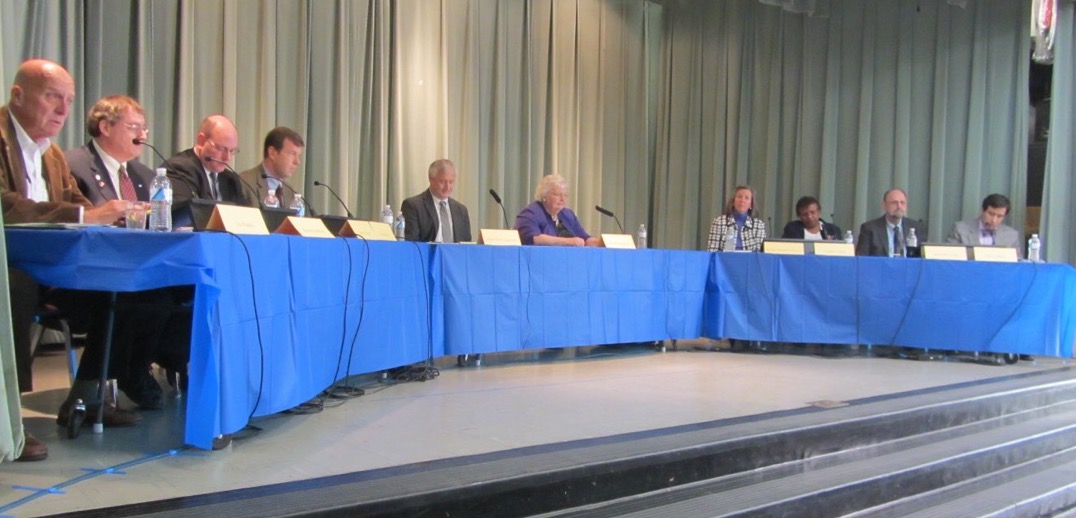
The race for Rockville City Council is gaining momentum, with candidate forums being among the most intriguing events. These forums provide an opportunity for each candidate to answer questions on various issues. While sometimes referred to as “debates,” they rarely involve direct exchanges between candidates or in-depth discussions. However, they do provide a platform for comparing candidates and understanding their stances. Their responses may be rough and awkward at times, yet this rawness often provides more insight into their true beliefs and intentions, unlike the polished and often vague statements we typically hear from elected officials in Congress.
The City of Rockville has selected the candidate forums that will be broadcast on Rockville 11 and YouTube, but everyone is welcome to attend in person:
Tuesday, September 26 from 2-3:30 pm at the Thomas Farm Community Center, hosted by the Greater Rockville Chamber of Commerce.
Thursday, October 5 from 7-8:30 pm at F. Scott Fitzgerald Theatre, hosted by Community Reach of Montgomery County with Rainbow Place Shelter.
Thursday, October 12 from noon to 1:30 pm at the Rockville Senior Center, hosted by the League of Women Voters of Montgomery County.
The hosting organization determines the format and questions, and obviously, each has a different interest so the topics will vary among the forums.
Other community organizations and neighborhood associations will host their own forums. Usually everyone is welcome and some will be broadcast, so look for announcements on a candidate’s or organization’s web sites or social media pages.
There are currently two candidates for mayor and nine candidates for council. If you are interested in serving, there is still time to get on the ballot. Petitions need to be signed by as least 100 registered voters who live in Rockville and submitted by this Friday, September 8. More details at Running for Office on the City web site.
Starting today until Election Day, I will close comments on this blog. Unfortunately, elections can bring out the worst in people and the blog comments become a place for slinging mud and venom. Question every fact and assertion from candidates, expect the stealing of yard signs, and know that impersonators will lurk on social media. Yes, in Rockville. Sigh.
Unexpected Resignation: Rockville City Manager Rob DiSpirito Departs Post

Rockville City Manager Rob DiSpirito resigned yesterday on Thursday, August 17, effective at 5:00 pm. The Mayor and Council accepted his resignation and appointed Deputy City Manager Barack Matite as acting city manager, effective immediately. DiSpirito had served as Rockville’s city manager since January 2017. DiSpirito was interim senior manager of the Sarasota County (Florida) Planning and Development Department when appointed in December 2016 and previously served as the city manager of Dunedin, Florida for nine years and city manager of Oberlin, Ohio for 11 years. Barack Matite was previously City Manager of Eudora, Kansas (population 6,449) and holds a master’s in public administration from the University of Kansas.
It’s unclear what prompted the resignation, but we can assume it’s related to the Mayor and Council Closed Session meeting yesterday, which was to conclude the Performance Improvement Plan that the Mayor and Council instituted 90 days ago. Unfortunately, once again the Mayor and Council is unable to follow Maryland Open Meetings Act and failed to post the adjournment of the meeting, which was held exclusively on WebEx. In Maryland, “After a public body has met in a session closed under § 3-305, it must include a summary of the session in the minutes of its next public meeting. Public bodies may instead include the summary in the minutes of the public meeting held that day—that way, the public will see the summary sooner—but should follow a consistent practice or include a cross-reference in the later set of minutes so that the public knows where to look” (Chapter 6, OMA). I strongly recommend the latter approach to provide greater transparency to government, but so far, the Mayor and Council has been reluctant to go down this path. What are they trying to hide? Perhaps this an issue for the upcoming election.
The City Manager is the “executive officer and head of the administrative branch of the City” and one of three employees that report directly to the Mayor and Council (Chapter 2, Rockville City Code). City Manager Rob DiSpirito served six years. The previous City Manager, Barbara B. Matthews, served almost four years, when she was fired by the Mayor and Council in a contentious 3-2 vote (Mayor Bridget Newton and Councilmembers Beryl Feinberg and Virginia Onley voted to terminate her employment; Councilmembers Mark Pierzchala and Julie Palakovich Carr voted against). City Manager Scott Ullery retired in December 2011 after seven years following conflicts with Mayor Phyllis Marcuccio over the management of the City. Notice a pattern? Ironically, most of the current city council members have NO experience supervising employees at a management or executive level, yet make crucial decisions about hiring, supervising, and terminating these types of employees. Are management skills an increasingly important qualification for Mayor and Council?
Follow-up: On August 19, 2023, Barry Jackson, candidate for Rockville City Council, insisted that current Mayor and Council should not begin the search for the new City Manager but instead that the “newly elected Mayor and City Council hire a City Manager through a transparent and thorough process.”

 Max for Rockville