Rockville Council Discussed Financial Oversight, Emergency Preparedness, and 2025 Legislative Priorities at October 7 Meeting
Note: I’ve been out of town in August and September, so I’m doing a bit of catch-up on the Mayor and Council meetings, including this meeting from last week. The next meeting is October 21.
At its Monday, October 7, 2024 meeting, the Rockville Mayor and Council discussed Emergency Management and the 2025 Mayor and Council State Legislative Priorities. On the Consent Agenda (items approved without discussion) were agreements for on-call roofing services with three companies, totaling up to $4.5 million annually; a contract with Magnolia Plumbing, Inc., for stormwater facility maintenance, not exceeding $435,000 annually; and approval of a storm drain easement at Rockshire Village Center, among others. The Mayor and Council also received reports on Financial Advisory Board’s FY 2024 Annual Report and FY 2025 Action Plan.
Mayor and Council Meeting Schedule Changed on October 7: Meetings now begin a
half hour earlier at 6:30 p.m. Proclamations — official statements or declarations presented by a city’s mayor and council to recognize and honor specific events, causes or individuals — will be presented
from 5:30-6:30 p.m. before the first meeting of the month. The Mayor and Council drop-in, where the mayor and a councilmember meet with members of the public, will be held from 5:15-6:15 p.m. before
the second meeting of each month. More details in Rockville Reports (October 2024), page 3.
Key Agenda Items:
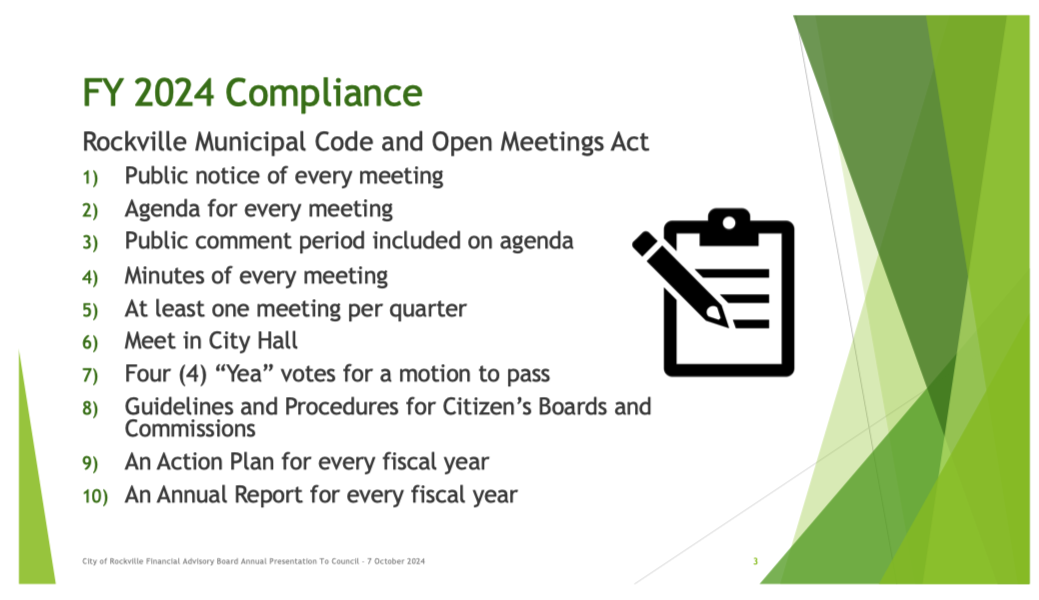
Financial Oversight and Policy Recommendations (pp 95-125). The Financial Advisory Board (FAB) presented its FY 2024 Annual Report and proposed FY 2025 Action Plan. The FAB plays a vital role in ensuring financial transparency and accountability for Rockville’s residents and businesses. Key accomplishments from FY 2024 include reviewing the City’s annual financial reports, assessing financial policies, and overseeing procurement practices. The FAB found no significant discrepancies in the City’s finances and recommended establishing an independent internal audit function to further enhance fiscal oversight. For FY 2025, the board will continue reviewing financial reports, monitor City-awarded grants, and evaluate revenue sources. The FAB will also focus on improving the City’s use of financial Key Performance Indicators (KPIs) to ensure Rockville’s finances remain healthy. These efforts aim to support informed financial planning and decision-making that benefits the entire Rockville community. BTW, this committee is among the best prepared and managed in the city, a model for others to follow.
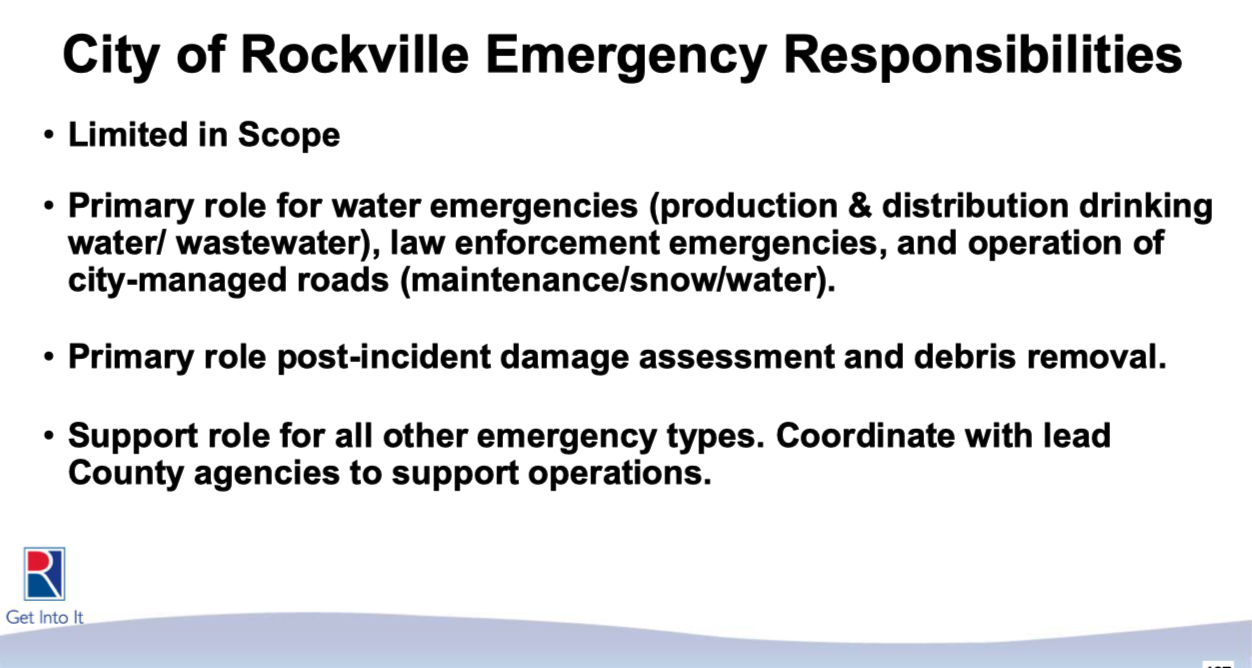
Emergency Preparedness (126-42). The City’s Emergency Management team highlighted key developments, including the completion of a Continuity of Operations Plan (COOP) that identifies 97 essential city functions and outlines strategies for dealing with potential disruptions. Rockville’s emergency responsibilities are closely integrated with Montgomery County’s Emergency Operations Plan, with the City playing a vital role in law enforcement, water supply, debris management, and damage assessment during emergencies. State law designates the county as the emergency management authority; the City of Rockville cannot declare a disaster and their authority is limited. A new Emergency Operations Center (EOC) is being developed at Taft Court, supported by federal funding, to improve coordination and response. Looking ahead, the City is finalizing its own Emergency Operations Plan, with a draft expected by December 2024.
State Legislative Priorities (143-50). The City of Rockville outlined its key priorities for the 2025 Maryland General Assembly. These legislative goals include advocating for the State Highway Administration to maintain sidewalks and bicycle pathways on state-owned roads and expanding the state property tax credit for low and moderate-income homeowners, including seniors, to help with rising living costs. Rockville will also work to preserve municipal highway user revenues (HUR) to maintain critical transportation infrastructure, which is at risk due to the state’s projected budget deficit. Rockville is also seeking funding for local projects, including the renovation of the Elwood Smith Community Center and the development of Talbot Street Park. In addition to these legislative efforts, the City is focused on ongoing support for education from birth to community college, pedestrian safety through Vision Zero initiatives, climate action, senior services, and more broadly on economic development, housing and zoning, and public safety and wellness.
How to Participate:
Attend in Person: The meeting will be held at City Hall, 111 Maryland Avenue (downtown, behind the Maryland District Courthouse). We encourage residents to attend and voice their opinions during Community Forum.
Watch Online: If you can’t make it in person, you can watch the live stream on the city’s website at https://www.rockvillemd.gov/157/Rockville-11.
Submit Comments: You can submit your comments or questions in advance by emailing MayorAndCouncil@RockvilleMD.gov by no later than 10:00 a.m. on the date of the meeting.
Your participation is crucial in shaping the future of our city. Whether you have specific concerns or just want to stay informed, we hope to see you at the meeting.
Stay Connected: For more updates on city council meetings and other local government news, subscribe to this blog. Your contact information is never shared.
Thank you for being an active and engaged member of our community. More details in the 160-page agenda packet are available at https://www.rockvillemd.gov/AgendaCenter/ViewFile/Agenda/_10072024-7299.
Mayor and Council to Approve 82-Townhouse Development Despite Environmental and School Capacity Concerns
At its Monday, October 2, 2023 meeting, the Rockville Mayor and Council will discuss permission to build 82 townhouses at 2200 Tower Oaks Boulevard and reduce parking by 18% at 2000 Tower Oaks Boulevard. On the Consent Calendar (items approved without discussion) are increasing funding for stormwater management from $95,000 to $422,000 and appointing David Sklar to the Board of Supervisors of Elections. The Mayor and Council will also receive reports on the Seven Locks Road Diversion Center (aka “county jail”), Financial Advisory Board, and Pedestrian Master Plan.
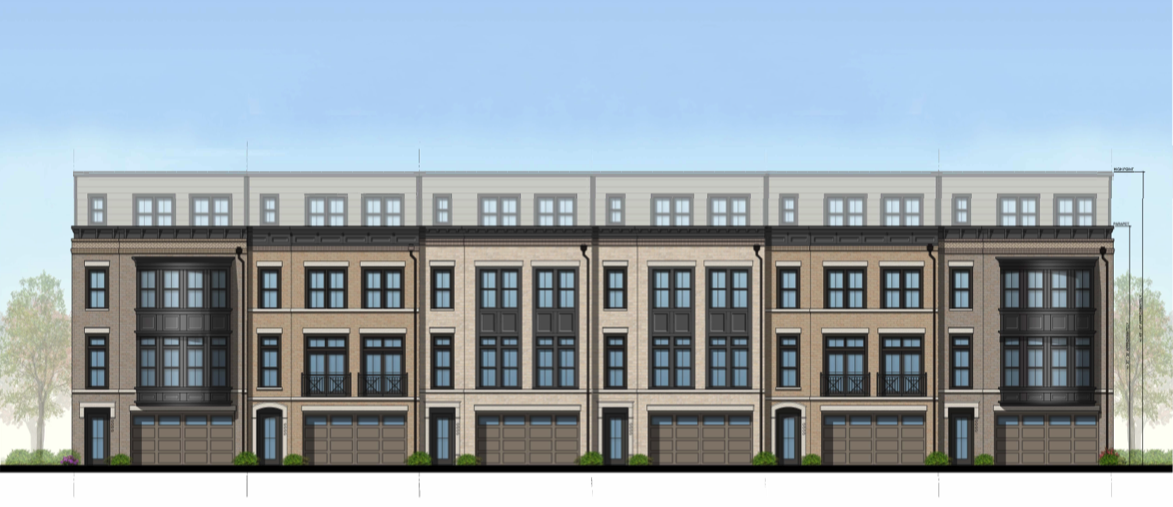
The Planning Commission, Bicycle Advisory Committee, and Pedestrian Advocacy Committee reviewed and approved the proposed 82-townhouse development, but strangely, the Mayor and Council excluded the Environment Commission and Education Commission. This project will replace about 10,000 sf of forest and with 7,600 sf of “new” forest; is adjacent to a stream; and subject to an existing Forest Conservation Plan (pages 47-8)—aren’t these environmental issues? For those who are concerned about school capacity in the Richard Montgomery Cluster Area, the proposed townhouse development will generate 18 students at the elementary school grade level; 10 students at the middle school level; and 14 students at the high school level (page 44). That means capacity is expected to rise to 99% for Bayard Rustin Elementary School, to 95% for Julius West Middle School, and to 123% for Richard Mongomery High School. By fall 2027, however, “capacity at Richard Montgomery is slated to be adequate due to an approved CIP project that will reassign students among Gaithersburg HS, Richard Montgomery HS, Quince Orchard HS, Thomas S. Wootton HS, and Crown HS.” What’s the purpose of the Education Committee if they aren’t aware of one of the most contentious school issues?
On pages 135-166, the Financial Advisory Board, chaired by Bob Wright, presented its FY2023 Annual report and found no discrepancies in Rockville’s financial reports; had no recommendations on the financial policies (although noted that no policies on donations was needed); found that the investment portfolio declined in value due to rising interest rates; stated that the city staff had done an outstanding job in preparing the annual budget; made three recommendations regarding the Capital Improvements Program; made complex findings and recommendations regarding the 2015 Purchasing Study; reported that the City has spent nearly $6 million on the King Farm Farmstead (and noted that the Mayor and Council do not agree on future uses); and that City is making good progress on including performance measures in the budget.
On pages 167-189, the Pedestrian Master Plan seems to be running ahead of itself and should take a step back. It offers five goals and ten recommendations, but nothing sufficiently specific nor any priorities to help the Mayor and Council know what to do next and why. Strangely, the Traffic and Transportation Department is hoping to propose an ordinance to City Council on October 23 even though the nearly 300 public comments collected since May haven’t been summarized (it doesn’t even close until October 13!). Perhaps they’re trying to get in done in “Walktober” month but it looks like they need to do a lot more research and analysis. For examples, here are pedestrian master plans from Portland and Seattle. Let’s hope the Mayor and Council provides clarity on expectations for a master plan.
October is National Arts and Humanities Month and the Rockville’s Cultural Arts Commission recommends that you celebrate by reading book, putting your child’s art on the fridge, and singing in the car, among others. Alas the expectations are pretty low, so here are five better suggestions from the non-human ChatGPT:
- Visit a Local Museum or Art Gallery: Explore the rich cultural heritage and artistic talent in your community by visiting local museums and art galleries.
- Attend a Workshop or Lecture: Many institutions offer workshops, lectures, or webinars during National Arts and Humanities Month. These can provide a deeper understanding of various art forms and humanities topics.
- Participate in a Community Art Project: Engage with your local community by participating in a collaborative art project or humanities event. This could be a mural painting, a community theater production, or a local history project.
- Read a Book: Celebrate the humanities by reading a book on a topic you’re interested in, such as history, philosophy, or literature. Consider joining a book club to discuss and share insights.
- Support Local Artists and Scholars: Purchase artwork from local artists or attend performances and presentations by local scholars. Your support can help sustain the arts and humanities in your community.
The Mayor and Council are conducting hybrid meetings. If you wish to submit comments in writing for Community Forum or Public Hearings, please email the comments to MayorAndCouncil@RockvilleMD.gov by no later than 10:00 a.m. on the date of the meeting.
More details in the 197-page agenda packet are available at https://www.rockvillemd.gov/AgendaCenter/ViewFile/Agenda/_10022023-7016.
Pandemic Resulted in High Subsidies for Recreation and Parks in 2021
At its Monday, November 21, 2022 meeting, the Rockville Mayor and Council will discuss financial management policies, annexing 1201 Seven Locks Road, and the new Comprehensive Plan. On the Consent Calendar (items approved without discussion) are employment agreements for the Deputy City Manager and Assistant City Manager for Project Management, among others. The Mayor and Council will also receive reports on staff vacancies and hiring.
How much should the city subsidize Recreation and Parks programs, such as summer camps, skate park, or childcare, that are used by a small segment of residents? How should it manage donations it receives annually for the Holiday Drive and Senior Assistance Fund? At the upcoming meeting, the Council will discuss these and other financial management policies.
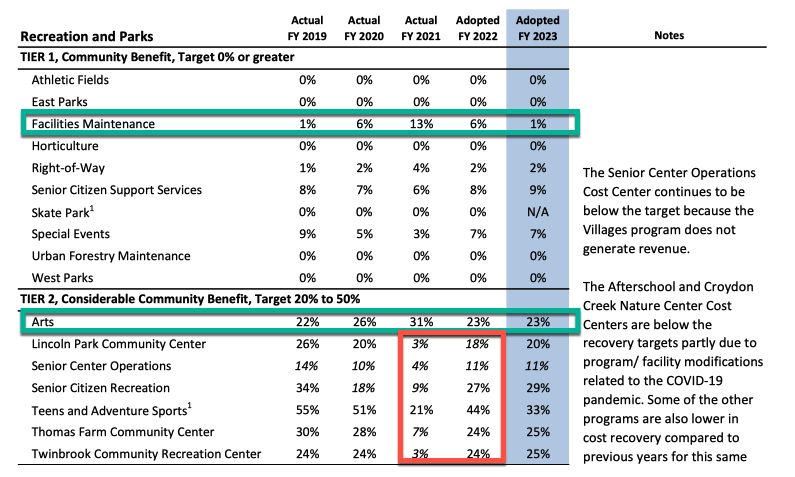
The City of Rockville has an extensive set of financial management policies that affect eight major areas: achieving and maintaining a structurally balanced budget, fund balance and reserve policies, capital planning policies, investment policies for both retirement plans and City funds, revenue control and management policies, economic development policies, and debt compliance and data analysis policies. For Recreation and Parks programs, the City uses a “five-tier cost-recovery pyramid” ranging from Tier 1 for parks, trails, landscapes, playgrounds, and general-use facilities with a 0% cost recovery to a Tier 5 for private rentals and private lessons with a 100% or more cost recovery. Fees and charges are reviewed and adjusted annually, but the pandemic lowered cost recovery significantly. In Tier 2, for example, the Lincoln Park Community Center is expected to recover 20% of its costs in 2022 (a subsidy of 80%) but in 2021 it actually recovered 3% (a subsidy of 97%). There are a couple of bright spots: Facilities Maintenance and Arts recovered more than expected (in other words, required less of a subsidy), most likely as well due to the reduced use of facilities and arts programs during the pandemic. A summary is available on Packet Page 34.
The Financial Advisory Board recently recommended that the City create a formal donations policy. The City receives less than one percent of its revenues from donations each year, which are accepted by check, made through the City’s website, the recreation registration system, and through the round-up feature with online utility bill payments. During FY 2022, the City received approximately $130,000 in donations from over 1,800 donors, averaging $12 for the Recreation Fund and $300 for the Holiday Drive. It also received two donations over $5,000: one $25,000 donation for the Holiday Drive and one $20,000 donation for the Eat Fresh program. Strangely, when the City explored this topic further, it discovered that a donations policy is not a common practice in municipal governments in Maryland. Geez, this suggests an obvious opportunity for embezzlement in government and I’m glad to see the City is thinking ahead. It’s a common practice in nonprofit organizations.
The big kahuna for the meeting (if not the year), however, is the progress on the Rockville 2040 Comprehensive Plan—the city’s “to do” list for the next twenty years. At this meeting, the City Council will review the progress on tasks that are to be completed in the next 1-3 years. This is an enormous undertaking not only to complete, but also to manage. These tasks include a zoning ordinance rewrite, updating the Town Center Master Plan, adopting a Pedestrian Master Plan, assessing speed limits on Wootton Parkway, redeveloping King Farm Farmstead, installing back-up power generation for critical facilities, promoting backyard composting, preparing a Flood Resiliency Plan, and constructing senior housing. Since the Plan’s adoption in August 2021, 228 actions are currently in the near-term completion timeframe, but are not yet completed or in progress; 43 actions are currently in the “in progress” status; and 19 actions have been completed. If you want details on what’s happening in the City or your neighborhood, start on Packet Page 89. Getting everyone on board and focused is a continual challenge, and residents and businesses (and Council members) always have new ideas—but time and staff are limited so establishing priorities is essential.
It’s also enlightening to see which neighborhoods are most engaged in the community. In October, the City distributed surveys about community needs and interests. Among the highest response rates were College Gardens (156 responses) and Twinbrook (52 responses). Among the lowest were Tower Oaks (1 response) and Lincoln Park (0 responses). I wonder if this correlates with voter turnout?
More details in the 152-page agenda packet are available at https://rockvillemd.gov/AgendaCenter/ViewFile/Agenda/_11212022-6754.
Mayor and Council to Adopt Plan for Red Gate Park
At its Monday, October 17, 2022 meeting, the Rockville Mayor and Council will discuss the FY2024 budget and adoption of a master plan for Red Gate Park. On the Consent Calendar (items approved without discussion) are agreements with the Rockville Football League and the Road Runners Club, among others. The Mayor and Council will also receive a report from the Financial Advisory Board.
The Financial Advisory Board‘s report found no issues with City finances under its scope of work, however, it also revealed several significant differences between them and the City Council and staff. The Board believes that all recreation and parks programs should recover their full costs in fees, however, the Council wants some programs to be subsidized for specific residents to be affordable. Secondly, the Board disagrees with the staff on the handling of donations. It’s unclear what the staff position is, but the Board seems to be recommending that a written policy be adopted. Finally, there seems to be a disconnect between Council priorities and city department goals. No examples are provided, but the city has hired Raftelis to review performance management practices.
Continue reading →
 Max for Rockville