Rockville’s Mayor and Council is returning from its August break facing a packed agenda with decisions that could shape the city’s future for years to come. At the September 8 meeting, three major issues will take center stage: housing affordability and federal funding priorities, a complete overhaul of the city’s election code, and progress on Rockville’s ambitious Vision Zero traffic safety plan. Each of these topics speaks directly to the daily lives of residents and businesses, raising questions about how Rockville grows, governs, and protects its people.
Rockville Council to Hear Public Testimony on Housing Needs and Federal Grant Priorities
The Rockville City Council will hold a public hearing to shape how the city will spend its $263,000 allocation of federal Community Development Block Grant (CDBG) funds for FY 2027. The grants, distributed through Montgomery County, must be used for projects that benefit low- and moderate-income residents.
In the past, Rockville has used CDBG funding to rehabilitate supportive housing at Jefferson House, upgrade shared recovery housing, replace failing HVAC systems at David Scull Courts, and fund its single-family rehab program. With housing affordability worsening, this year’s hearing carries added weight.
A recent city needs assessment underscores the challenge: nearly half of Rockville residents are renters, and more than half of them are cost-burdened, paying over 30 percent of their income on housing. Median rent has climbed to $2,244 per month, requiring an income of nearly $90,000, while the median home price now tops $681,500. Homeownership rates continue to fall, particularly for younger and first-time buyers.
CDBG funds provide an opportunity to target housing cost burdens through rehabilitation and affordability programs. Yet the limited size of the grant cannot keep pace with surging population growth and rising housing costs. Without additional tools and funding streams, the gap between income and housing affordability is likely to widen. In this situation, what is the community’s responsibility for providing housing and supporting low income households?
Next Steps: The public record will remain open until September 25. Housing providers must submit applications by October 1, with staff recommendations due to the Mayor and Council in November. The city’s final application will be submitted to Montgomery County by December 31, with funds available in fall 2026.
Rockville Council to Weigh Major Election Code Overhaul Ahead of 2027 Vote
At its September 8 meeting, Rockville’s Mayor and Council will consider adopting a sweeping consultant report that calls for a top-to-bottom rewrite of the city’s election code. Rockville faces systemic problems with outdated election laws, unclear procedures, weak enforcement, opaque campaign finance rules, and an underpowered election board (see Rockville Election Laws at Risk: Board Pushes for City Attorney Action). These gaps threaten public trust, fairness, and inclusive participation unless addressed with comprehensive reforms.
The recommendations, prepared by the Gant Group, address outdated laws, campaign finance loopholes, and governance of the Board of Supervisors of Elections (BSE). Key proposals include splitting election administration and campaign finance into separate sections of city code, creating an Election Handbook, banning code changes within 12 months of an election, and strengthening oversight of campaign finance with clear definitions, contribution limits, and stricter reporting rules. The BSE would gain new authority, staff support, and legal counsel to enforce violations. One proposal under consideration would also lower the voting age to 16 starting in 2027, if approved by the state and county.
The overhaul could boost transparency, modernize procedures, and expand civic engagement–especially among younger residents. Businesses may benefit from clearer campaign rules that level the playing field. Yet the scale of the changes poses risks: the city must move quickly to complete reforms by 2027, and implementing new systems such as public financing or ranked-choice voting could stretch staff capacity and resources. For families, especially those with teenagers, the possibility of extending the vote to 16- and 17-year-olds could foster early civic habits. Businesses and community organizations may see new opportunities–and responsibilities–in engaging a broader electorate.
Next Steps: Council is expected to accept the consultant’s report and establish a committee–including the City Clerk, a BSE member, and an election attorney–to draft code revisions. A timeline runs from this fall through spring 2026, with final policies to be in place ahead of the November 2027 election.
Rockville Council to Review Vision Zero Progress as City Pushes Safer Streets Agenda
At its September 8 meeting, Rockville’s Mayor and Council will receive a progress update on the city’s Vision Zero Action Plan, which aims to eliminate traffic-related deaths and serious injuries by 2030. The mid-year report shows a mix of completed projects, active construction, and new initiatives designed to make city streets safer for pedestrians, cyclists, and drivers.
From January to June 2025, Rockville advanced 30 intersection audits, 14 sidewalk projects, 9 Complete Streets redesigns, and 7 signal upgrades. A new pedestrian and bicycle bridge in Twinbrook has entered feasibility study, while energy-efficient LED streetlights are being installed citywide to improve visibility. Public engagement also grew, with school-based bike education, community festivals, and hundreds of residents interacting with Vision Zero content online.
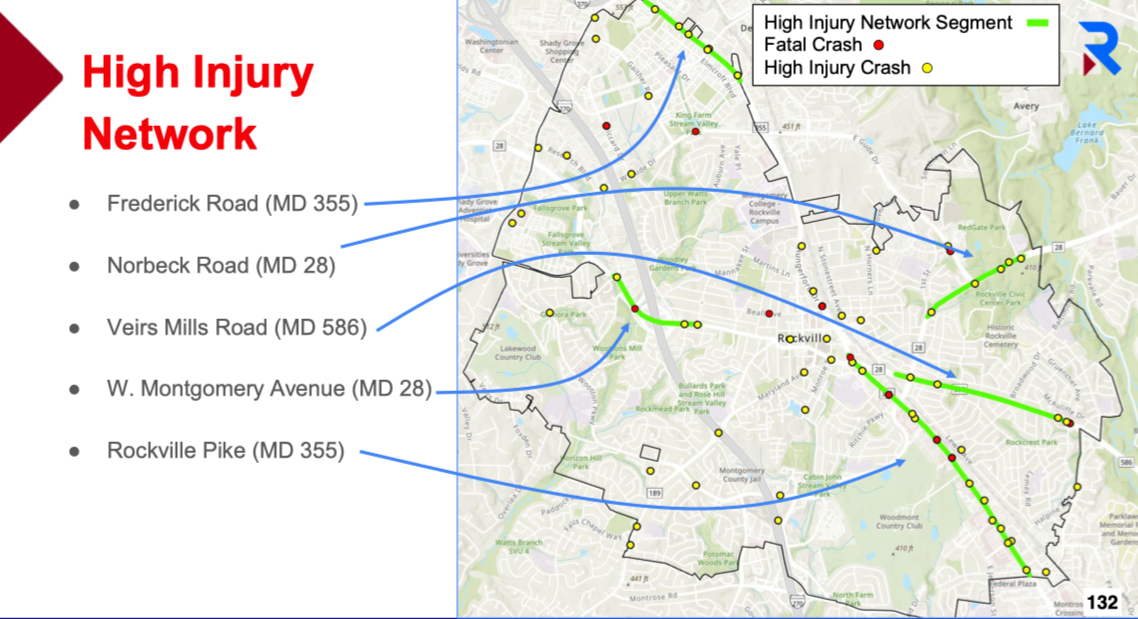
For families, safer crosswalks and new sidewalks mean children and seniors face fewer risks in daily travel. Businesses stand to benefit from calmer, more walkable streets that attract foot traffic. Yet challenges remain: the city’s most dangerous corridors–Rockville Pike, Frederick Road, and Veirs Mill Road–are state-owned, meaning Rockville must rely on state partners for fixes. Funding gaps could also slow implementation of key safety projects.
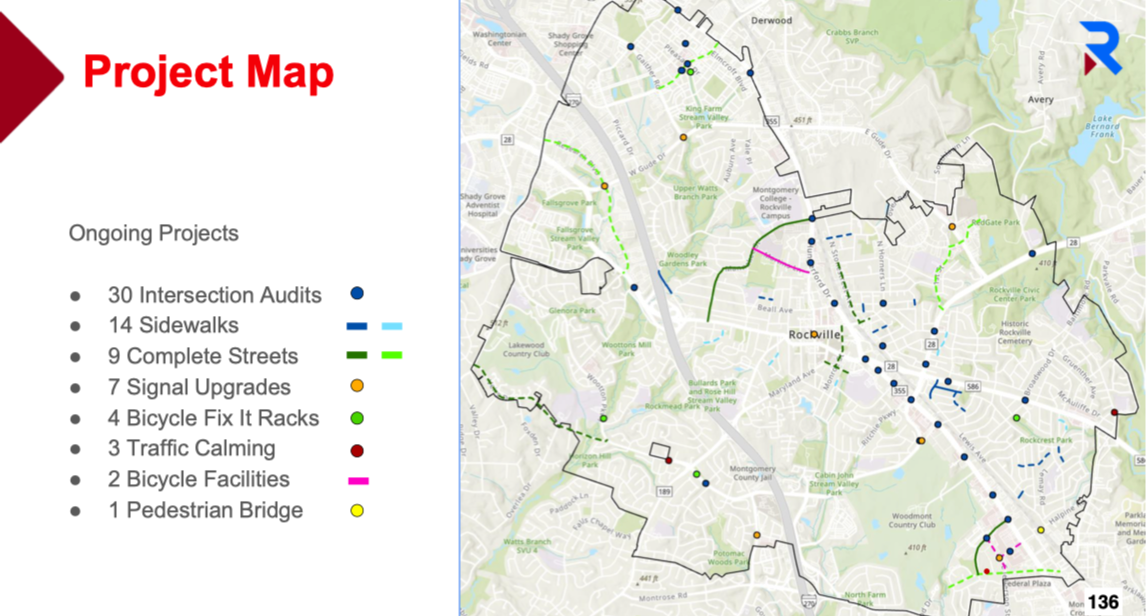
The Vision Zero project map raises important questions: How closely do Rockville’s current safety projects align with the corridors where the most serious crashes occur (see map at the top)? Which initiatives are directly addressing the High Injury Network—and which are tackling broader, citywide improvements? Exploring this alignment can help us see whether resources are being used in the most effective ways to save lives and prevent injuries.
Next Steps: Staff will continue audits, expand LED streetlight conversion, and coordinate with state and county agencies to address high-injury roads. Community engagement will remain central, with more opportunities for residents and businesses to weigh in as Rockville works toward its Vision Zero goal.
Together, these agenda items underscore the weight of the choices before Rockville’s leaders. Federal housing funds may seem modest, but they touch the lives of families struggling to afford rent or make critical repairs. Election code reforms may feel procedural, but they determine how fairly and transparently Rockville elects its leaders. And transportation safety is not just a planning goal—it is about protecting children crossing the street, seniors walking to the store, and businesses that rely on safe, accessible corridors. The September 8 meeting offers Rockville residents an important opportunity to stay engaged, share perspectives, and help shape the city’s path forward.
Other News
Rockville Councilmember Izola Shaw is running for the District 3 County Council seat, aiming to succeed term-limited Sidney Katz (who?). More at Bethesda Today.
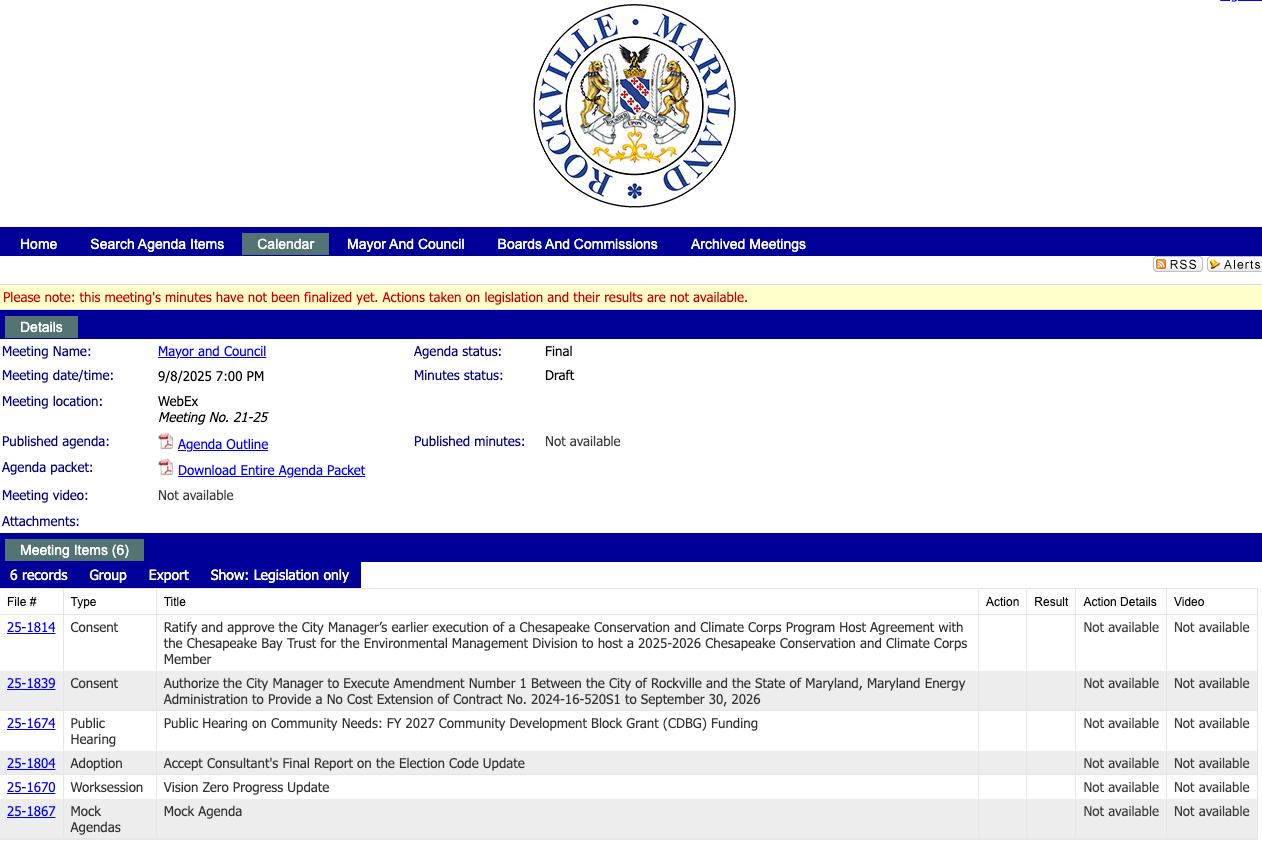
Rockville is now using a new web-based platform that should make public meetings easier to find and navigate. Available at rockvillemd.legistar.com, the site provides an agenda outline, a full agenda packet in PDF, links to individual items, and video recordings of meetings. Users can also search agendas by keyword to quickly find related items.

 Max for Rockville