Discrimination, Economic Hardships, and Mental Health Challenges in Rockville
The Rockville City Council will meet on Monday, February 24, 2025, at 6:30 pm to discuss a Human Services Needs Assessment Report, results from a community survey on human services, budget adjustments for FY 2025, a Zoning Text Amendment to implement changes from the Town Center Master Plan, and amendments to infrastructure contracts totaling $13.2 million for road and sidewalk improvements. A work session on the city’s Electric Vehicle Readiness Plan will explore strategies for expanding EV infrastructure. No public hearings or board appointments are scheduled. The meeting is open to the public.
This meeting is an important opportunity for you to stay informed and engaged with the decisions that shape our community.
Key Agenda Items:
Continue reading →Mayor and Council to Consider Loosening Requirements for Accessory Apartments
At its Monday, June 5, 2023 meeting, the Rockville Mayor and Council will discuss a FY2024 Budget Debrief and an ordinance to allow accessory apartments (aka Attached Accessory Dwelling Units) in residential zones. On the Consent Calendar (items approved without discussion) are construction contracts and grant authorization. The Mayor and Council will also receive reports on Environmental Excellence Awards, Human Services Advisory Commission, and Monthly Rent Schedule for Moderately Priced Dwelling Units.
Twenty years ago, the Rockville City Council established Environmental Excellence Awards to recognize residents, organizations, and businesses for their extraordinary efforts to improve the community’s environmental and sustainability efforts. Congratulations to Rishi Iyer (a student at Wootton High School who developed an online carbon footprint tool at co2schools.com) and to Mark Wright (for leading efforts to install two pollinator gardens at Christ Church and Christ Episcopal School).
Moderately Priced Dwelling Units are the City’s methods for keeping housing affordable to families with household incomes of less than $64,000-$99,000 (depending on household size). The City regulates the maximum rent allowed and adjusts it annually according to schedules prepared by the US Department of Housing and Urban Development (HUD). For FY2024, the maximum rent is $1,330-$1,900 (depending on the number of bedrooms) for an increase of 12-13 percent compared to the current year.
Attached Accessory Dwelling Units (aka Accessory Apartments) are a second dwelling that is either attached or within the main single family detached house (not to be confused with accessory dwelling units (ADU), which are unattached or separate from the main house–I think). They are currently allowed as a Special Exception by the Board of Appeals and the City is now considering an ordinance that would allow attached accessory dwelling units as a conditional use to streamline the process and provide more housing opportunities. These types of accessory dwelling units are often used by a retired person who wants to downsize, a professional who’s moved to the area, or a college student (that’s how I lived during grad school). The City held public hearings in 2019 and 2021, the City Council discussed it in 2020, and the Planning Commission reviewed it in 2023. The Twinbrook Community Association, Lincoln Park Civic Association, East Rockville Civic Association, and West End Citizens Association support accessory apartments as a conditional use. Lots of interesting comments for and against accessory apartments, but you’ll want to read these carefully because they can refer to AirBnB, VRBO, and attached and unattached dwelling units interchangeably. For more details, including the draft ordinance, see page 232+.
Coming up: new brand for the City of Rockville, amending Chapter 8 “Elections” in the City Code, annexation of 1201 Seven Locks Road, community organization grant agreements, and repealing the requirement for COVID-19 vaccinations for city employees and contractors (page 273+).
More details in the 276-page agenda packet are available at https://www.rockvillemd.gov/AgendaCenter/ViewFile/Agenda/_06052023-6928.
Mayor and Council to Explore Financial Assistance to City Employees and ALICE Residents
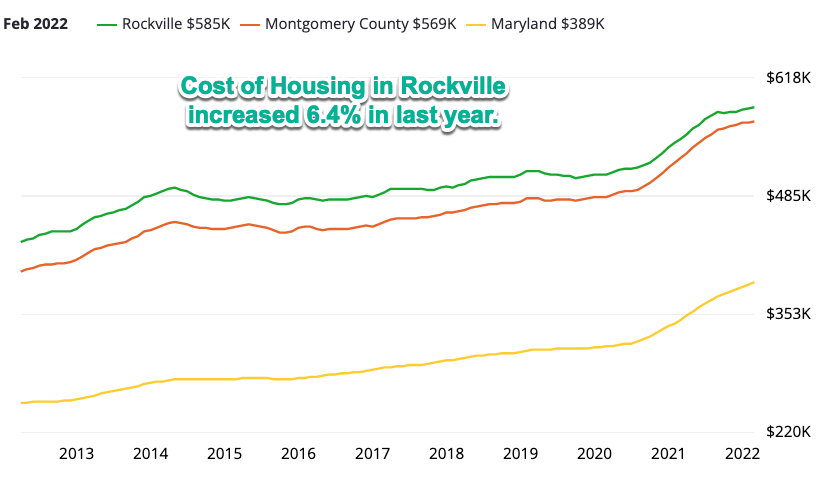
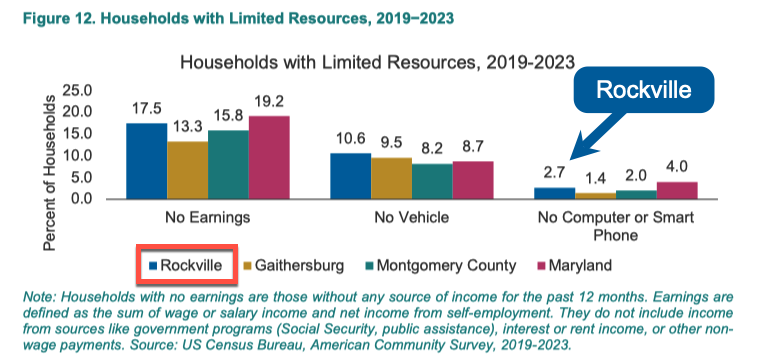
At its Monday, March 21, 2022 meeting, the Rockville Mayor and Council will hold a public hearing on the FY2023 Budget and discussion employer-assisted housing; a proposed Bank on Rockville program; and use of American Rescue Plan Act (ARPA) funds. A surprise for the upcoming budget discussion is a half-dozen requests at the last public hearing to increase city staff to support specific services. While there was one request for staff devoted to public safety (i.e., police), it was matched by requests for the arts, human services, bike and pedestrian safety, and environmental sustainability—significantly different results from the community survey, which had police and crime prevention as a top priority. These diverse opinions suggest the challenges that City Council members face when making decisions for the community. My advice: think long-term and focus on your purpose and vision.
Continue reading →Mayor and Council to Discuss Big and Dull Changes in Twinbrook
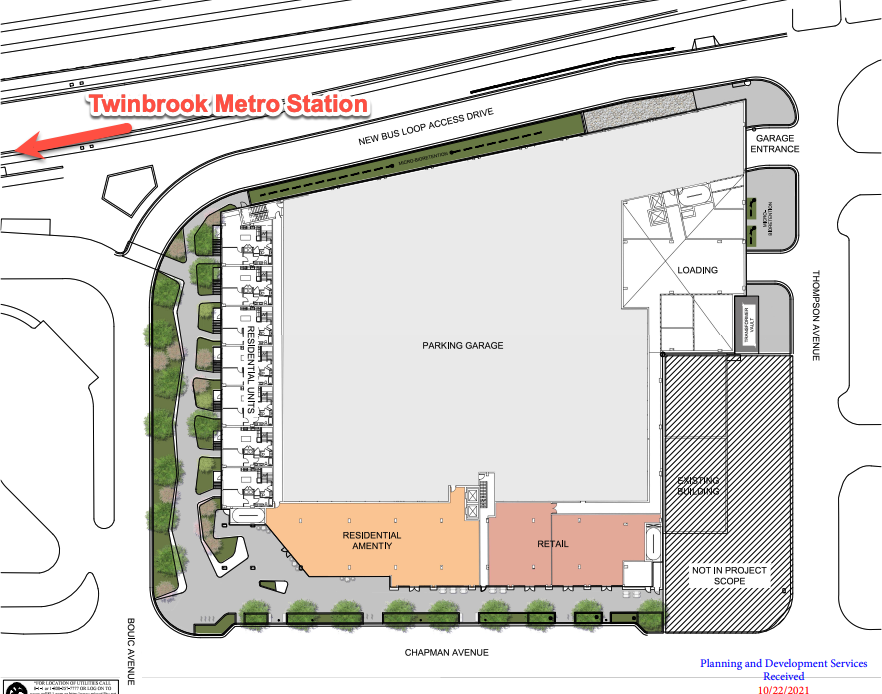
At its Monday, March 7, 2022 meeting, the Rockville Mayor and Council will discuss Twinbrook Commons, Tropical Storm Ida, and the proposed FY2023 budget. On the Consent Calendar (items approved without discussion) are multiple construction contracts for stormwater maintenance and repair for a total not to exceed $9 million over four years. The Mayor and Council will also receive reports from Human Services Advisory Commission and on a 37-question survey (good heavens, that’s too long) conducted by the Human Rights Commission on the impact of the pandemic and the community’s perception of discrimination and inclusion following the murder of George Floyd (the results seem unreliable: 24% of the respondents were from Fallsmead and 14% from Twinbrook—why do cities insist on conducting surveys??).
Continue reading →2011 City Boards and Commissions Scorecard
Along with the City Council, the City of Rockville has 23 official boards and commissions to study, advise, and decide on a wide range of issues, from city planning to cultural arts, from human services to animal matters. In addition, there are at least ten other unofficial task forces or committees. All of these boards and commissions are composed of volunteers, usually residents (some include property or business owners who live elsewhere) and most members are nominated by the Mayor and appointed by City Council (a few have members elected in other ways, such as RSI).
Rockville has always encouraged and supported citizen involvement in its government, and used these board and commissions to keep the residents informed and part of the decision-making process. But how well informed are its citizens? All commission meetings are open to the public (I’m going to call them all “commissions” to keep things simple), but only three commissions–Planning Commission, Historic District Commission, and the Board of Appeals–have meetings that are regularly broadcast on Channel 11 and the City website (most likely because the City Council has granted them exclusive decision-making powers). For the other commissions, to find out what’s happening you have to attend the meeting, talk to one of the commissioners, or review the minutes. Obviously, the most convenient way is reviewing the minutes or notes of the meeting, so let’s see how we’ve done.
On January 20, 2012, I tallied the number of meetings and minutes posted on the City website for 2011 (cancelled meetings don’t count). By dividing the number of minutes by the number of meetings, I calculated a “public information score.” So if a commission had posted 9 minutes for 12 meetings, that would earn them a Minutes Score of 9/12 or 75%. The higher the score the better, and here’s how they fared: Continue reading →

 Max for Rockville