Mayor and Council to Approve 82-Townhouse Development Despite Environmental and School Capacity Concerns
At its Monday, October 2, 2023 meeting, the Rockville Mayor and Council will discuss permission to build 82 townhouses at 2200 Tower Oaks Boulevard and reduce parking by 18% at 2000 Tower Oaks Boulevard. On the Consent Calendar (items approved without discussion) are increasing funding for stormwater management from $95,000 to $422,000 and appointing David Sklar to the Board of Supervisors of Elections. The Mayor and Council will also receive reports on the Seven Locks Road Diversion Center (aka “county jail”), Financial Advisory Board, and Pedestrian Master Plan.
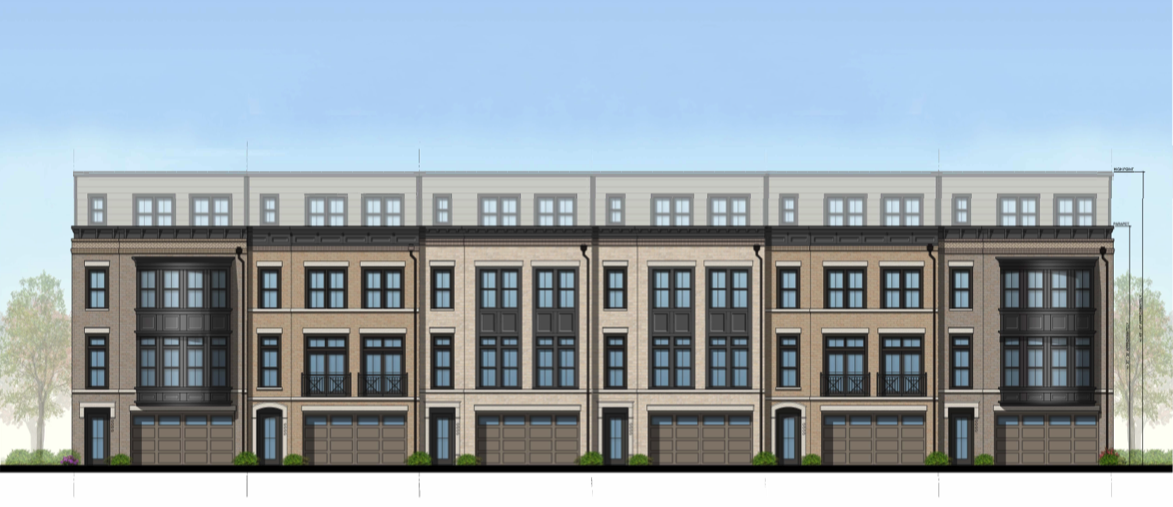
The Planning Commission, Bicycle Advisory Committee, and Pedestrian Advocacy Committee reviewed and approved the proposed 82-townhouse development, but strangely, the Mayor and Council excluded the Environment Commission and Education Commission. This project will replace about 10,000 sf of forest and with 7,600 sf of “new” forest; is adjacent to a stream; and subject to an existing Forest Conservation Plan (pages 47-8)—aren’t these environmental issues? For those who are concerned about school capacity in the Richard Montgomery Cluster Area, the proposed townhouse development will generate 18 students at the elementary school grade level; 10 students at the middle school level; and 14 students at the high school level (page 44). That means capacity is expected to rise to 99% for Bayard Rustin Elementary School, to 95% for Julius West Middle School, and to 123% for Richard Mongomery High School. By fall 2027, however, “capacity at Richard Montgomery is slated to be adequate due to an approved CIP project that will reassign students among Gaithersburg HS, Richard Montgomery HS, Quince Orchard HS, Thomas S. Wootton HS, and Crown HS.” What’s the purpose of the Education Committee if they aren’t aware of one of the most contentious school issues?
On pages 135-166, the Financial Advisory Board, chaired by Bob Wright, presented its FY2023 Annual report and found no discrepancies in Rockville’s financial reports; had no recommendations on the financial policies (although noted that no policies on donations was needed); found that the investment portfolio declined in value due to rising interest rates; stated that the city staff had done an outstanding job in preparing the annual budget; made three recommendations regarding the Capital Improvements Program; made complex findings and recommendations regarding the 2015 Purchasing Study; reported that the City has spent nearly $6 million on the King Farm Farmstead (and noted that the Mayor and Council do not agree on future uses); and that City is making good progress on including performance measures in the budget.
On pages 167-189, the Pedestrian Master Plan seems to be running ahead of itself and should take a step back. It offers five goals and ten recommendations, but nothing sufficiently specific nor any priorities to help the Mayor and Council know what to do next and why. Strangely, the Traffic and Transportation Department is hoping to propose an ordinance to City Council on October 23 even though the nearly 300 public comments collected since May haven’t been summarized (it doesn’t even close until October 13!). Perhaps they’re trying to get in done in “Walktober” month but it looks like they need to do a lot more research and analysis. For examples, here are pedestrian master plans from Portland and Seattle. Let’s hope the Mayor and Council provides clarity on expectations for a master plan.
October is National Arts and Humanities Month and the Rockville’s Cultural Arts Commission recommends that you celebrate by reading book, putting your child’s art on the fridge, and singing in the car, among others. Alas the expectations are pretty low, so here are five better suggestions from the non-human ChatGPT:
- Visit a Local Museum or Art Gallery: Explore the rich cultural heritage and artistic talent in your community by visiting local museums and art galleries.
- Attend a Workshop or Lecture: Many institutions offer workshops, lectures, or webinars during National Arts and Humanities Month. These can provide a deeper understanding of various art forms and humanities topics.
- Participate in a Community Art Project: Engage with your local community by participating in a collaborative art project or humanities event. This could be a mural painting, a community theater production, or a local history project.
- Read a Book: Celebrate the humanities by reading a book on a topic you’re interested in, such as history, philosophy, or literature. Consider joining a book club to discuss and share insights.
- Support Local Artists and Scholars: Purchase artwork from local artists or attend performances and presentations by local scholars. Your support can help sustain the arts and humanities in your community.
The Mayor and Council are conducting hybrid meetings. If you wish to submit comments in writing for Community Forum or Public Hearings, please email the comments to MayorAndCouncil@RockvilleMD.gov by no later than 10:00 a.m. on the date of the meeting.
More details in the 197-page agenda packet are available at https://www.rockvillemd.gov/AgendaCenter/ViewFile/Agenda/_10022023-7016.
Rockville Solar Co-Op Closing Soon
 The Rockville solar energy cooperative is growing, sufficiently to the point that it looks like it’ll be able to solicit bids from installers in June. Maryland Solar United Neighborhoods (Maryland SUN), a nonprofit organization, is working with the Environment Commission of the City of Rockville to make solar energy more affordable and accessible. By using the collective buying power of a group of Rockville residents, we’ll save on the cost of installation (yup, my family has joined). If you’re interested in going solar but not sure where to start, this co-op is a great place to learn. At this point, there’s no obligation to purchase a system or have it installed, they’re just collecting names of homeowners who are interested so that we can obtain the best bids possible. Based on the same principle as buying in bulk, the group will go through the process of going solar together by working with a Maryland SUN to select a single installer. Each participant signs an individual contract with the chosen installer, but all participants get the group discount. After the installer has been chosen in August, it may not be possible to participate in this round.
They’ve held two info sessions so far and the last is coming up on Tuesday, June 9 at 7 pm at Glenview Mansion. For more information and to sign up, visit MDSun.org or contact solarteam@mdsun.org.
2011 City Boards and Commissions Scorecard
Along with the City Council, the City of Rockville has 23 official boards and commissions to study, advise, and decide on a wide range of issues, from city planning to cultural arts, from human services to animal matters. In addition, there are at least ten other unofficial task forces or committees. All of these boards and commissions are composed of volunteers, usually residents (some include property or business owners who live elsewhere) and most members are nominated by the Mayor and appointed by City Council (a few have members elected in other ways, such as RSI).
Rockville has always encouraged and supported citizen involvement in its government, and used these board and commissions to keep the residents informed and part of the decision-making process. But how well informed are its citizens? All commission meetings are open to the public (I’m going to call them all “commissions” to keep things simple), but only three commissions–Planning Commission, Historic District Commission, and the Board of Appeals–have meetings that are regularly broadcast on Channel 11 and the City website (most likely because the City Council has granted them exclusive decision-making powers). For the other commissions, to find out what’s happening you have to attend the meeting, talk to one of the commissioners, or review the minutes. Obviously, the most convenient way is reviewing the minutes or notes of the meeting, so let’s see how we’ve done.
On January 20, 2012, I tallied the number of meetings and minutes posted on the City website for 2011 (cancelled meetings don’t count). By dividing the number of minutes by the number of meetings, I calculated a “public information score.” So if a commission had posted 9 minutes for 12 meetings, that would earn them a Minutes Score of 9/12 or 75%. The higher the score the better, and here’s how they fared: Continue reading →
A Very Long HDC Meeting
Last Thursday the Historic District Commission held its regular monthly meeting and if anyone was watching to the end, you may have noticed that the clock was nearing midnight. We usually try to finish at 10 pm but we had an ambitious agenda, including:
1. A joint meeting with the Environment Commission, which included three Planning Commissioners. The City has about two dozen commissions and boards but they rarely, if ever, talk with each other, even if they share some common goals or are tackling the same issue. This past year the HDC has requested meetings with other commissions but it’s been slow because finding mutual agreeable times is difficult and sometimes, I regret to say, the Chair of the other commission refused to respond to emails or phone calls to meet (what’s that about??). So far, we’ve met with the Planning Commission and this month with the Environment Commission. These meetings are just an hour so no decisions are made, but they provide introductions and we learn a bit more about each other to discover areas of mutual interest. It’s obvious that the Environmental Commission and the HDC both want to encourage Continue reading →

 Max for Rockville