Rockville is revising Chapter 8 of the City Code, which governs municipal elections. Much of the discussion understandably focuses on election integrity: campaign contributions, disclosure, independent expenditures, enforcement, and the rules governing political committees.
But there is another test the Mayor and Council should apply to the proposed ordinance:
Could a first-time candidate running a $2,000 volunteer campaign comply confidently with these rules without hiring an attorney or experienced campaign treasurer?
That is not a hypothetical concern. Rockville’s own 2025 Election Review concluded that the existing code needed substantial revision in part so candidates could understand the rules “without having to hire an attorney to decipher the language.” It also recommended clearer explanations, an election handbook, and simpler navigation for candidates and voters.
The current draft certainly uses plainer language. But plain language does not necessarily mean a simple system.
A first-time candidate must understand when they legally become a candidate, appoint a treasurer, distinguish among candidate committees, campaign committees, slates, political committees, and affiliated committees, determine what counts as a contribution or expenditure, value in-kind contributions, track several different financial thresholds, and meet multiple reporting deadlines.
Some of the proposed provisions themselves can be difficult to reconcile. A campaign committee has a reporting requirement when expenditures exceed $500. A candidate using a limited-activity affidavit encounters a cumulative $300 threshold. Independent expenditures become reportable above $100.
The rules governing donated services are confusing. The ordinance requires campaigns to account for in-kind contributions at fair-market value, but elsewhere excludes certain volunteer services and costs of producing media from the definitions of contributions and expenditures. A new candidate might reasonably wonder whether a friend’s donated website, photography, graphic design, or video production must be reported—and at what value.
Mistakes have serious consequences. The proposed late-filing penalties rise from $50 per day to $250 per day, with a maximum of $2,500 for a report. A successful candidate with unresolved filing problems can also be prevented from taking office or receiving compensation.
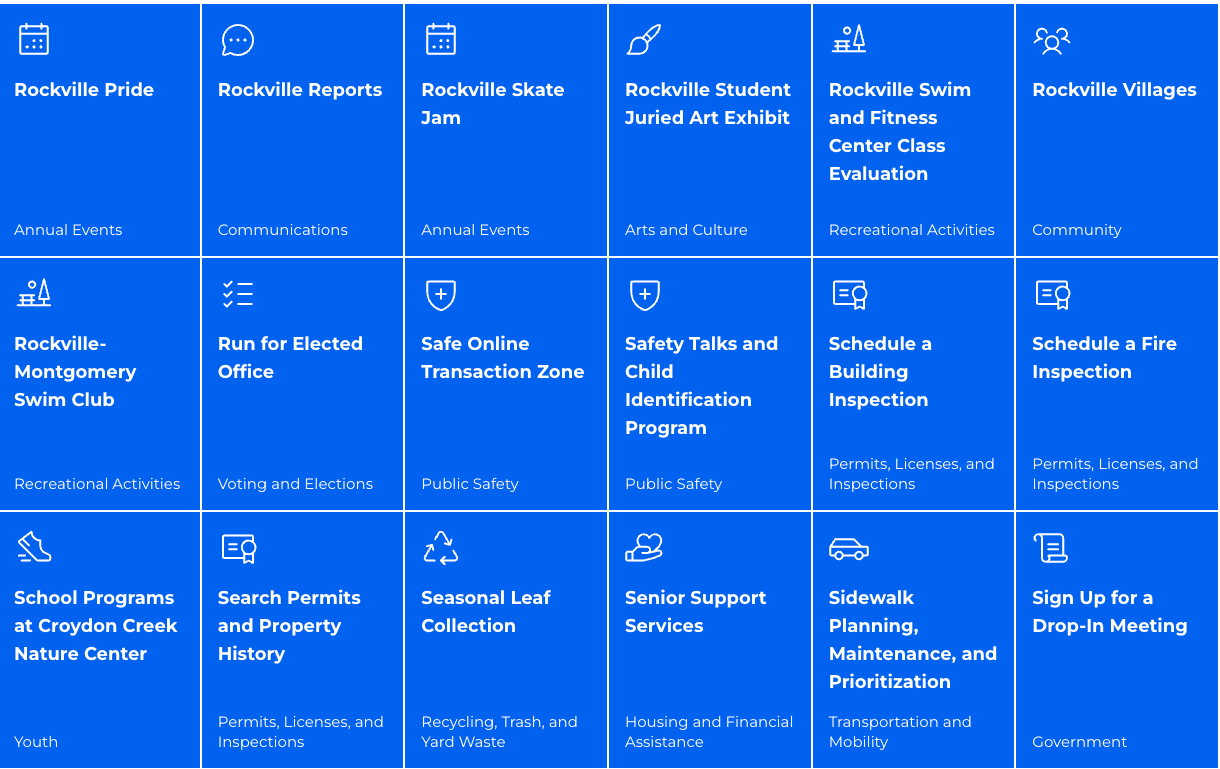
Rockville already recognizes that candidates need considerable assistance. Its current “Run for Elected Office” page directs candidates to an election packet, campaign-finance spreadsheets, sample reports, instructions, affidavits, loan schedules, and mandatory candidate-and-treasurer training. The Board of Supervisors of Elections similarly recommended after the 2023 election that the city provide a campaign-finance handbook or list of “dos and don’ts” to prevent common mistakes.
This is more than an administrative inconvenience. It is a candidate-access issue.
Rules that are understandable mainly to experienced candidates, attorneys, professional consultants, or sophisticated treasurers can unintentionally create barriers to entry. Incumbents and repeat candidates already know the system. Well-funded campaigns can obtain advice. A resident deciding for the first time to run for Council may have neither advantage.
Election integrity therefore requires two things at once: rules strong enough to prevent abuse and rules clear enough that ordinary residents can follow them.
As the Mayor and Council reviews Chapter 8, it should repeatedly ask a simple question: Could a newcomer understand what to do next?
If the answer requires a lawyer, another revision may be necessary.
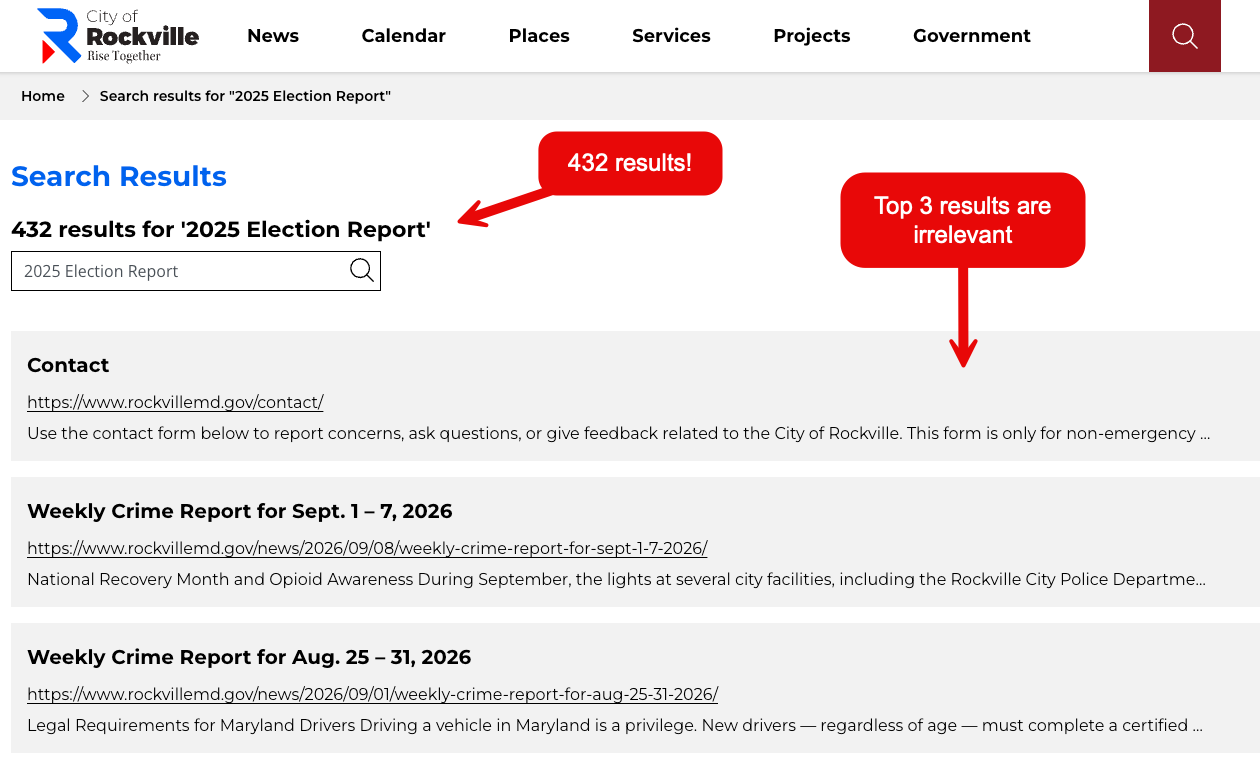
PS. Rockville’s new website seems to have eliminated the Document Center, where reports such as the 2025 Election Report by the Gant Group were made available. Today the Search function of the website produced more than 400 results for “2025 Election Report,” and the top results are irrelevant. The best process currently is identifying when the Mayor and Council discussed the report and then searching the Agenda Packet—that’s not likely for most people so I’ve attached the report on this blog post. Local government is growing increasingly opaque and difficult to navigate.
Update September 10, 2026
Sara Taylor-Ferrell, City Clerk and Director of Council Operations, shared:
The document can be found on the Vote in Rockville Elections page in the Resources box of the sidebar, titled “Chapter 8 Elections Rewrite.”
Here is the link: https://www.rockvillemd.gov/wp-content/uploads/2025/09/Chapter-8-Elections-Rewrite.pdf
The Document Center changed in October 2025 when we launched the new city website.
Update September 26, 2026
Nick Kanary, Web and Digital Communications Manager at the City of Rockville, provided the following helpful update:
We have implemented some changes to the global site search on the city website in response to the issue you had finding the election report:
- The global site search was using broad “or” logic, which pulls in pages matching any single word in the phrase, resulting in a large number of results when searching for a phrase with multiple words. The global site search has now been changed to use “and” logic, so that all words in a search phrase must be present on a webpage in order to return it as a search result. This follows a similar logic to the section-specific searches, for example in the News or Services sections. The fix reduces the number of search results to a more focused list.
- The hierarchy of importance in the global site search has been changed so that Services, Government, Projects, and Places pages are given greater importance than News and Calendar pages, to prioritize the more evergreen, informational content types.
Note: This change was made earlier in the year to also improve the global site search, so I thought it was worth mentioning in the context of the above changes: News pages older than one year are excluded on a rolling basis, to avoid potentially out-of-date News pages being returned in the search results. (This exclusion does not apply to the News section-specific search, where results include all articles going back to 2016.)


