The Rockville Mayor and Council will meet on Monday, September 29, 2025. Several significant issues are up for discussion, ranging from meeting rules to long-term planning for land use, transportation, and historic preservation. Below is a preview of the topics most relevant to residents and businesses.
Rules of Decorum for Council Meetings
The Council will consider adopting formal Rules of Decorum and Protocols for public meetings. These rules cover conduct for councilmembers, staff, and members of the public, aiming to ensure meetings run efficiently and respectfully. This proposal formalizes expectations for behavior in Council chambers, reinforcing civility and safety. Some of the proposed rules may be toughest for the councilmembers themselves to follow, especially the bans on interrupting or talking over colleagues and on making lengthy or repetitive comments that delay business.
Opportunities and Threats
- Opportunity: Could encourage more residents to attend and speak, knowing meetings are respectful and orderly. Presiding officers need training to distinguish between legitimate criticism and disruptive conduct.
- Threat: If enforced too rigidly, rules could be perceived as limiting free speech or discouraging heated—but legitimate—criticism of city policies. Rockville has a history of active, sometimes heated public engagement. Strong community voices have shaped issues like Town Center redevelopment, traffic calming, and budget priorities. Rules that discourage sharp criticism—even unintentionally—could reduce the diversity of views expressed in public forums, leaving decisions shaped more by insiders than by residents.
Transportation and Mobility Commission Annual Report
The Transportation and Mobility Commission will present its 2025 annual report. The Commission advises on walking, biking, driving, and transit issues, with this year’s focus on safety improvements, multimodal planning, and transit connections. The report highlights specific projects the TMC has influenced, including:
- Backing red-light camera enforcement to reduce dangerous driving.
- Supporting new residential parking permits along Lewis Avenue to protect neighborhoods from spillover parking.
- Providing input on bike facilities at E. Jefferson Street and Halpine Road and the Congressional Lane Complete Streets study.
- Endorsing the City’s grant for Complete Streets improvements on Rollins Avenue/Twinbrook Parkway.
- Advising on the Rockville Metrorail Station Visioning Plan to improve access for walkers, cyclists, and transit users.
These projects directly affect how residents move through the city and how safe the streets feel.
Opportunities and Threats
- Opportunity: Greater investment in safe crosswalks, bike lanes, and transit could improve access for all ages and abilities, and strengthen Rockville’s economy by making it more attractive for businesses and commuters.
- Threat: Some projects may require trade-offs, such as reduced on-street parking or construction disruptions. If not handled carefully, neighborhood pushback could stall progress.
King Farm Farmstead Master Plan
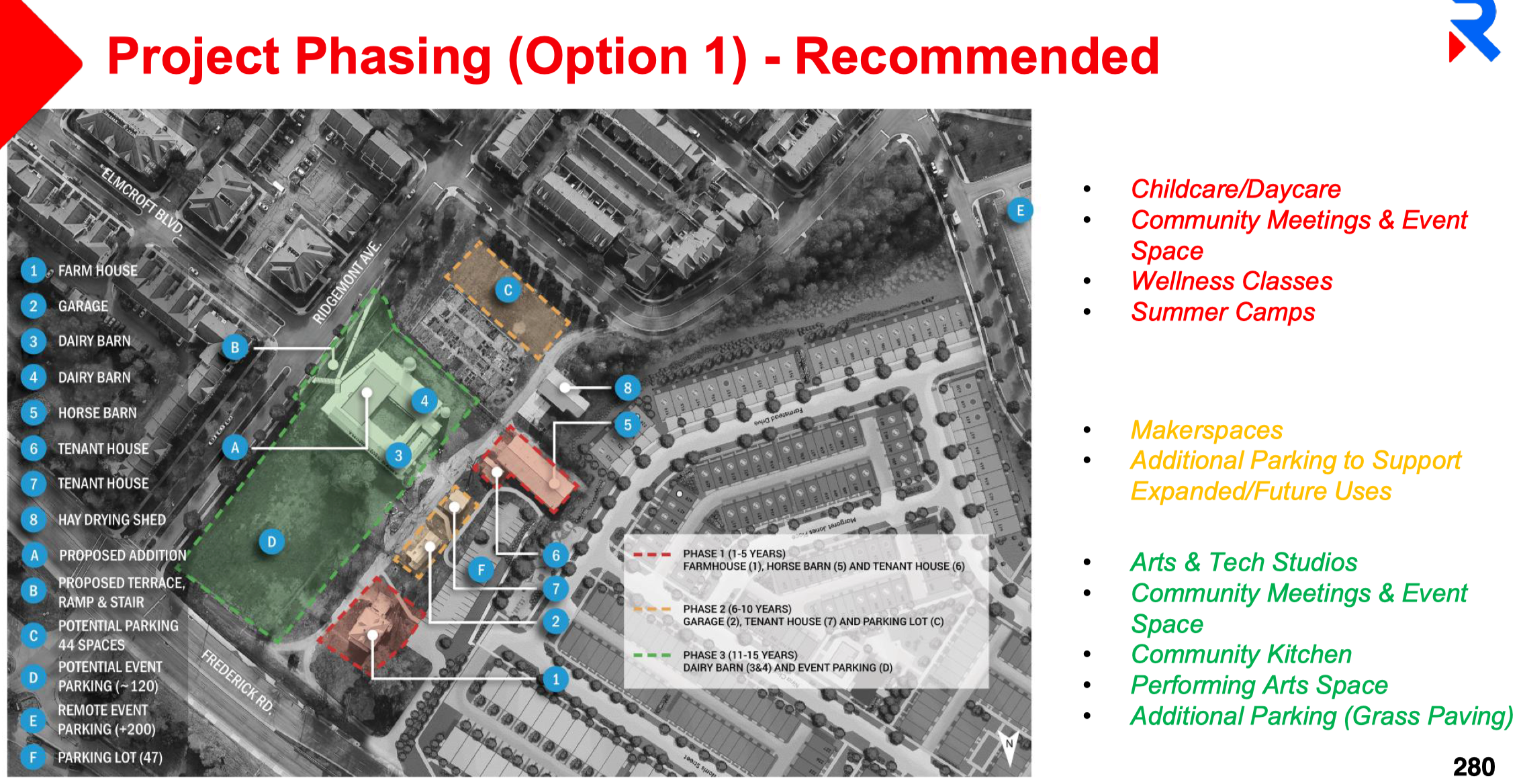
Council will review construction cost and economic analyses for reuse options at King Farm Farmstead. Options include a multipurpose hall, community kitchen, arts and tech labs, makerspaces, wellness areas, and childcare/youth facilities. The Farmstead is a historic landmark, and this decision will shape its role in Rockville’s cultural and community life.
Strengths
- Community-driven vision, reflecting survey input. The options being considered (multipurpose hall, kitchen, arts & tech labs, makerspaces, wellness spaces, childcare/teen center) directly reflect community surveys and engagement sessions. This ensures the plan responds to real resident needs.
- Preserves history while adding modern uses.
- Flexible investment options ($18.7M–$21.3M).
- Potential for revenue from rentals and events. Spaces like multipurpose halls and community kitchens can be rented for events, helping offset operating costs.
Weaknesses
- High costs and no committed funding yet. Even the “leaner” option comes in at nearly $19 million, before factoring in long-term maintenance and staffing. Without dedicated funding sources, the project risks delays or scaling back.
- Parking remains limited, even with expansion scenarios. Only 47 on-site spaces exist today. Even with expansion scenarios, parking could become a barrier for large events, frustrating both visitors and neighbors.
- Risk of trying to serve too many purposes at once. With so many program ideas, there’s a risk the site tries to serve everyone but ends up stretching resources too thin.
Opportunities and Threats
- Opportunity: Could become a flagship community hub, supporting families, arts, and small businesses.
- Threat: Without careful planning and funding, it could become a financial burden rather than an asset.
Zoning Ordinance Rewrite Work Session
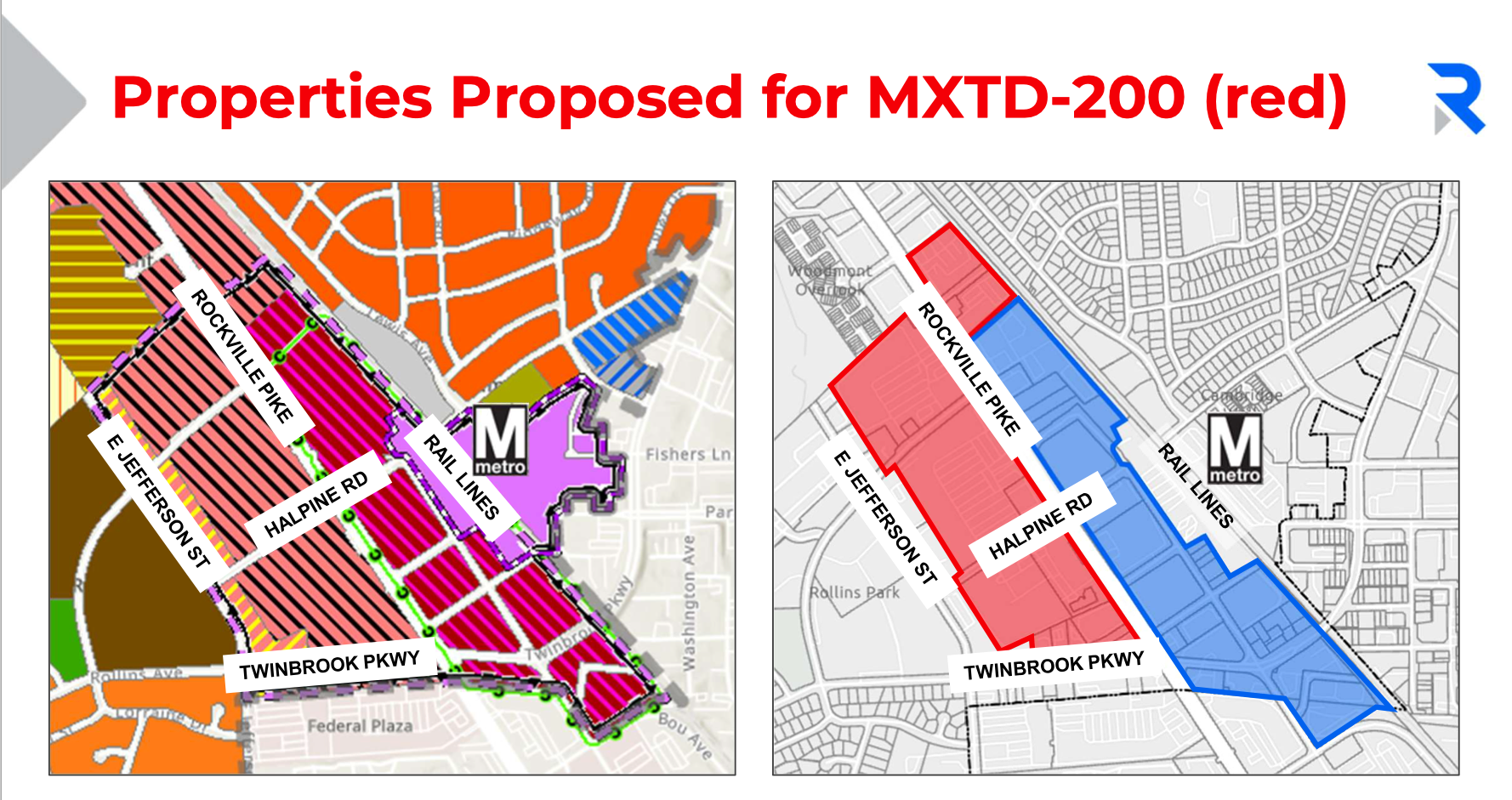
The Council will continue work on the Zoning Ordinance Rewrite and Comprehensive Map Amendment, focusing on amenity space, landscaping, signage, historic preservation, and rezonings near the Twinbrook Metro. These updates will affect how new developments are designed, how neighborhoods transition, and how Rockville balances growth with livability.
Strengths
- Updates a patchwork code into a more modern, user-friendly document.
- Moves from vague “open space” to higher-quality amenity space standards.
- Clearer landscaping and buffering rules, especially near residential neighborhoods.
- Aligns with federal court rulings on signs and incorporates sustainability and equity goals.
Weaknesses
- Historic preservation risks: The recommendation that only property owners can initiate nominations (or at least giving them more decisive weight) means fewer “third-party” nominations — such as a neighborhood association identifying a historic resource or the City proactively protecting a threatened building. Many of Rockville’s heritage stories (especially those tied to underrepresented communities or overlooked buildings) came to light because historians, neighbors, or civic groups pushed for recognition. Restricting nominations may filter out those voices.
- Overall amenity space requirements shrink in size, even if quality improves, which could leave some neighborhoods with less green or open space.
- Transition to new rules could add costs or confusion for businesses and homeowners.
- Allowing a height transition near Twinbrook Metro similar to Town Center could change neighborhood character, sparking pushback.
Opportunities and Threats
- Opportunity: Could make Rockville more competitive and livable, ensuring new housing and business developments contribute positively to the community.
- Threat: If preservation standards are diluted, historic character and cultural resources could be lost permanently. Missteps in rezoning could trigger distrust and opposition.
The meeting will be broadcast live on Rockville 11 and streamed on the city’s website. Residents can voice their opinions by emailing the Mayor and Council in advance or speaking during Community Forum.


