Fabulous Fall
Fall is one of my favorite times of year and each year I nearly run off the road when I’m stunned by a brilliant tree. So for everyone’s safety, I head to Lake Frank, a reservoir off Avery Road just east of Rockville, to walk the paths and take it all in as slowly as I can. Here are some shots from today’s afternoon stroll.
Finding Fungus Can be Fun in Fall
Okay, this is going to sound a bit strange, but this fall, explore the forests around Rockville hunting for fungus. August and September’s warmth and humidity encourage lots of mushrooms to burst out of the forest floor and dead trees, and because they’re so short-lived, it’s a great time to see this and wonderful world at our feet. If you don’t remember this from biology class in high school, fungi are one of the six Kingdoms (others include Plantae and Animalia), so if you haven’t taken a close look at them, you’re missing a major part of the life.
In Rockville, you’ll find fungus in your yard and nearby parks, but the best location I’ve found with the largest diversity is the John G. Hayes Forest Preserve which is part of the Civic Center Park. The entrance is next to the Croydon Creek Nature Center. You’ll want to explore the forest above as well as the slopes below near the creek, so wear sturdy shoes. The big white mushrooms are easy to spot standing up from the ground or clinging to the bark of a tree, but usually you have to look more carefully and gently brush away leaves to find ones that are brown, small, or hidden underneath. In a couple hours, you should be able to find at least a dozen different types of mushrooms, many of which you’ll never have seen before. I’ve shared just a few in the slide show.
And now that I’ve shared my secret with you, I have a couple requests:
- please don’t pick up or remove the mushrooms you find. Kids love to kick them for some reason, but remind them to leave them for others to find and enjoy.
- don’t eat the mushrooms you find, unless you’re a mycologist. If you don’t know what that means, don’t even touch them. Many mushrooms are toxic and there’s no easy way to distinguish between edible and poisonous ones. You may not die but you could experience headaches, drowsiness, nausea, lowered blood pressure, diarrhea, urgent urination, profuse vomiting, extreme pain, blurred vision, asthma, muscle spasms, liver damage, and hallucinations. I didn’t list all the possible symptoms, just the ones that caught my attention.
If you’d like to learn more, pick up the Field Guide to the Mid-Atlantic States by Peter Alden and Brian Cassie (National Audubon Society) or the in-depth North American Mushrooms by Orson Miller and Hope Miller (Falcon Guide). I bought my copies at REI.
Pitcher Plants in Bloom in Rock Creek
Come out to Comus in the fall
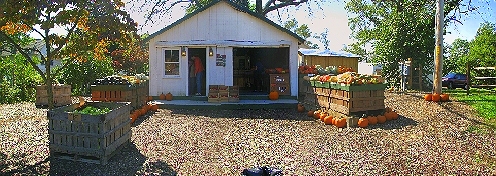
Every year, Mary and I make a pilgrimage to Comus Market, a small farmstand at a crossroads of Comus Road and Old Hundred Road in northern Montgomery County that specializes in unusual pumpkins and squash. It’s a beautiful drive in the countryside through rolling hills with stunning views. David Heisler has operated this store for years and provides an amazing selection of pumpkins and squash which are both decorative and edible (if you spot a middle-aged man hauling pumpkins as well as working the sales counter, that’s David). You’ll find a few that are common to grocery stores, such as sugar pumpkins and butternut squash, but he also has princess pumpkins, blue hubbards, carnival acorns, and delicata squash that you’ll rarely find even in a Whole Foods Market. But he has so many of them stacked in bins that you can’t help but admire their bold colors and shapes. I always bring my camera and take lots of pictures–everyone can find something interesting to capture. His market is only open in the fall and business is at it’s peak in mid-October, so you’ll want to visit soon.
We usually leave with Continue reading →

 Max for Rockville