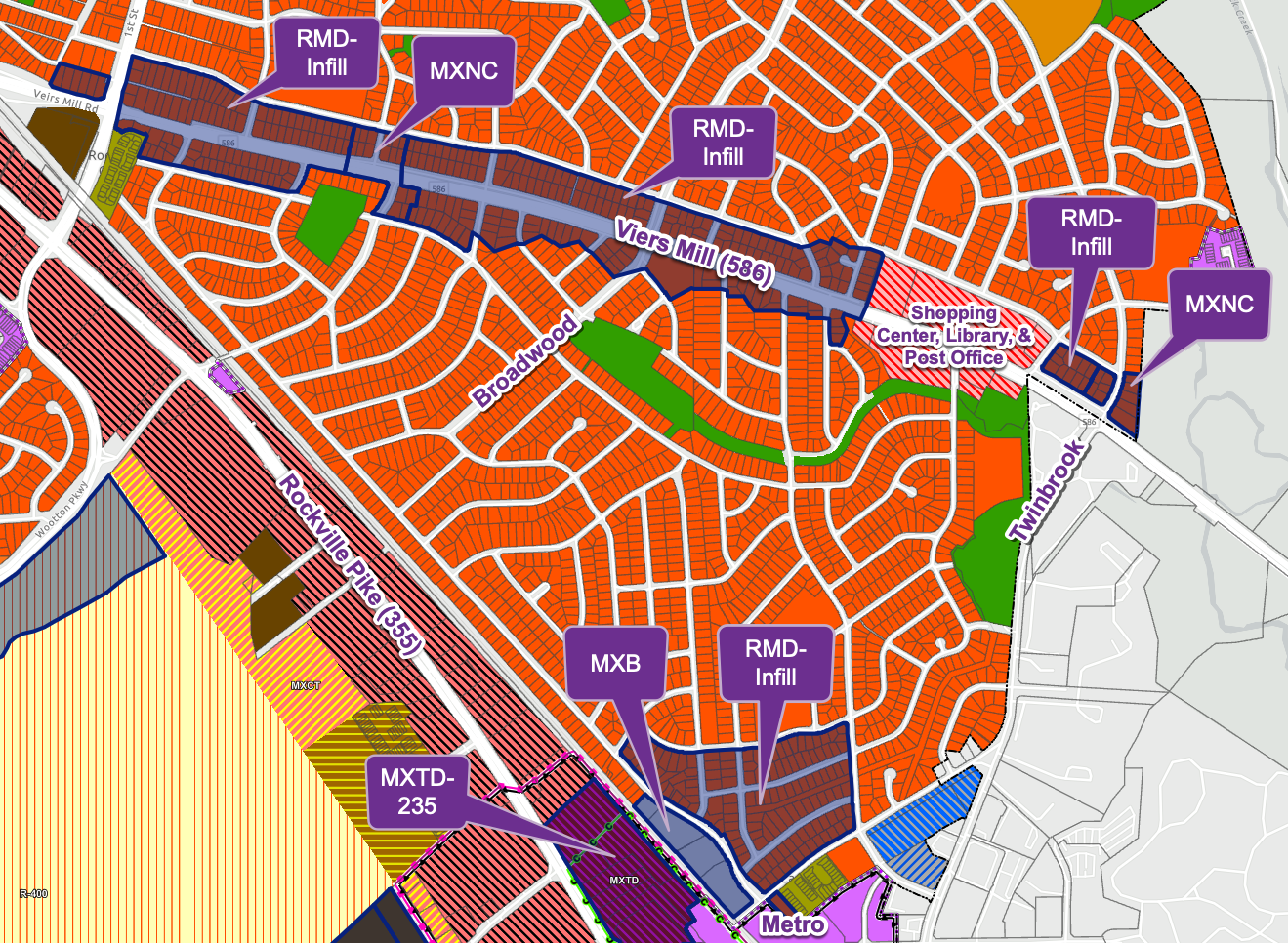
Rockville is rethinking the rules that shape how our neighborhoods and business districts grow—and major zoning changes are on the table for both downtown Rockville and the Twinbrook neighborhood.
The city is updating its zoning ordinance for the first time since 2009 to reflect how people live and work today. This rewrite will bring Rockville’s zoning in line with the Rockville 2040 Comprehensive Plan and could pave the way for new housing options, business models, and construction types—especially in areas identified for growth and change.
If you live, work, or own property in Twinbrook or downtown Rockville, this is the time to get involved.
Key dates to watch:
- Tuesday, June 17 at 7:00 p.m. – Twinbrook Community Association meeting at the Twinbrook Recreation Center (residents especially encouraged to attend)
- Monday, June 24 and Wednesday, June 26 – Two virtual citywide zoning update meetings. Register for the virtual meetings at www.engagerockville.com/zoningrewrite
These meetings will explore how zoning changes could shape the future of your neighborhood—from building heights to business uses and green space requirements.
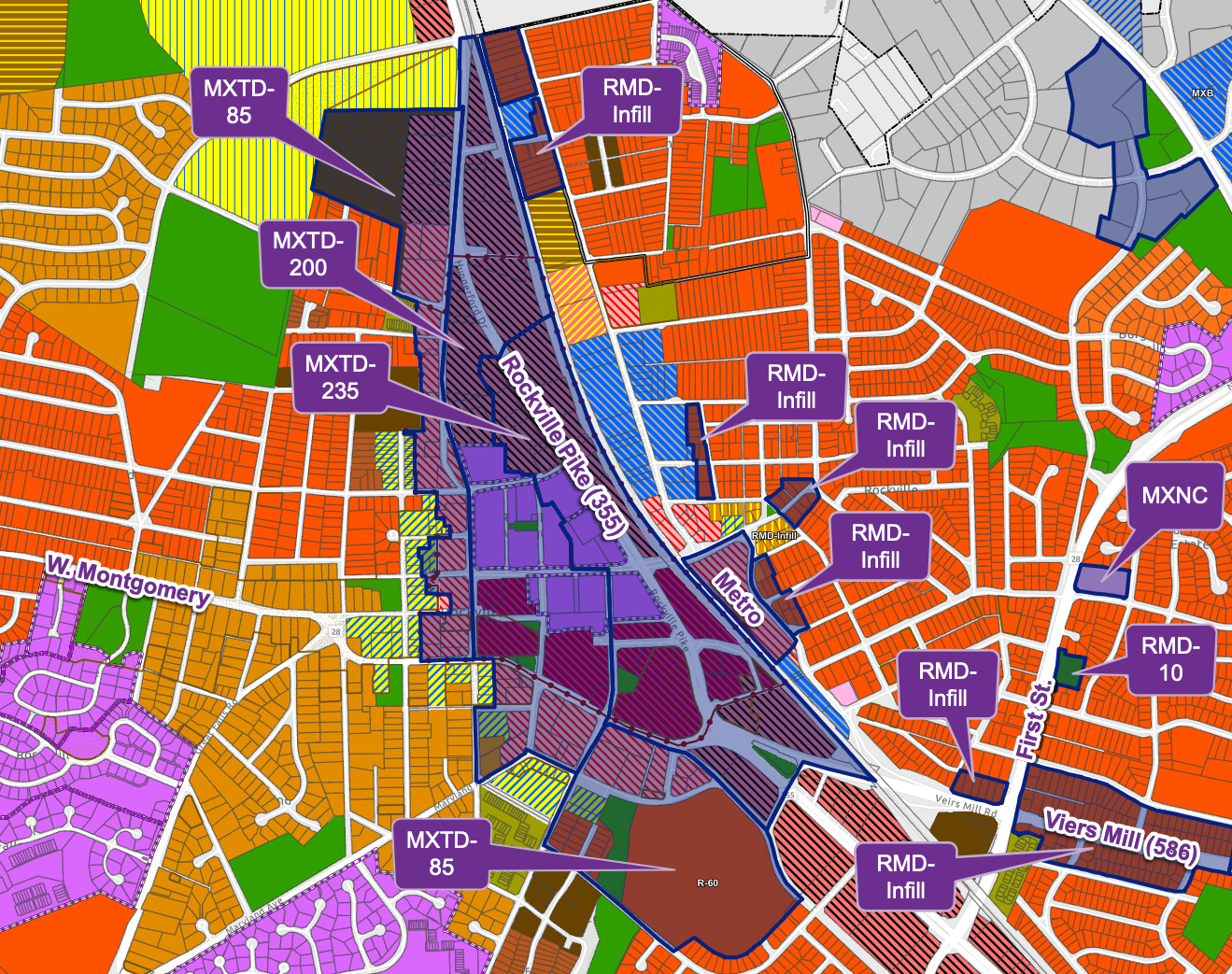
Understanding Rockville’s Zoning: A Guide for Residents and Businesses
As Rockville updates its zoning ordinance, it’s helpful to understand what the current zones mean—especially if you live, work, or plan to develop in the city. Here’s a breakdown of five key zones under consideration, explained for non-specialists:
1. RMD-Infill (Residential Medium Density – Infill)
- Purpose: Allows moderate-density housing, typically duplexes or small apartment buildings, designed to fit into existing residential neighborhoods.
- Permitted Uses: Single-family homes, duplexes, and small multi-unit buildings.
- Not Permitted: Large commercial buildings, major retail centers, and industrial uses.
- Distinguishing Features: Tailored for existing neighborhoods where new housing needs to “fit in” visually and structurally. Emphasis on preserving character while increasing housing options.
2. MXNC (Mixed-Use Neighborhood Commercial)
- Purpose: Encourages small-scale retail and service businesses integrated into residential areas.
- Permitted Uses: Shops, cafes, offices, apartments above stores, and neighborhood-serving services.
- Not Permitted: Large shopping centers, big-box stores, and heavy industry.
- Distinguishing Features: Walkable, low-rise development with a blend of homes and businesses. Think local coffee shop or corner store with apartments upstairs.
3. MXB (Mixed-Use Business)
- Purpose: Supports a mix of offices, retail, and residential uses, typically at a larger scale than MXNC.
- Permitted Uses: Office buildings, hotels, restaurants, apartments, and some commercial services.
- Not Permitted: Heavy industrial and large-scale warehousing.
- Distinguishing Features: Flexible zone for business corridors—can include residential above retail or office but allows more intensive business uses than MXNC.
4. MXTD-85 (Mixed-Use Transit District – up to 85 feet height)
- Purpose: Designed for walkable, transit-oriented development near Metro stations or major bus routes.
- Permitted Uses: Apartments, offices, shops, restaurants, civic uses—often in the same building.
- Not Permitted: Low-density residential, heavy industrial, and auto-oriented uses.
- Distinguishing Features: Encourages compact, pedestrian-friendly development with buildings up to 85 feet tall (about 7 stories). Perfect for people who want to live or work near transit.
5. MXTD-200 and MXTD-235
- Purpose: Similar to MXTD-85 but allows significantly taller buildings—up to 200 or 235 feet, respectively.
- Permitted Uses: High-rise apartments, office towers, retail, hospitality, and mixed-use developments.
- Not Permitted: Single-family homes, warehouses, and non-urban uses.
- Distinguishing Features: These are Rockville’s highest-density zones, typically found in downtown or Metro-adjacent areas. Designed to accommodate growth in a concentrated footprint with tall buildings and lots of activity.
If you live near one of these zones—or are considering a project—it’s worth attending one of the upcoming meetings on the zoning rewrite. The city is shaping how Rockville grows for decades to come.


