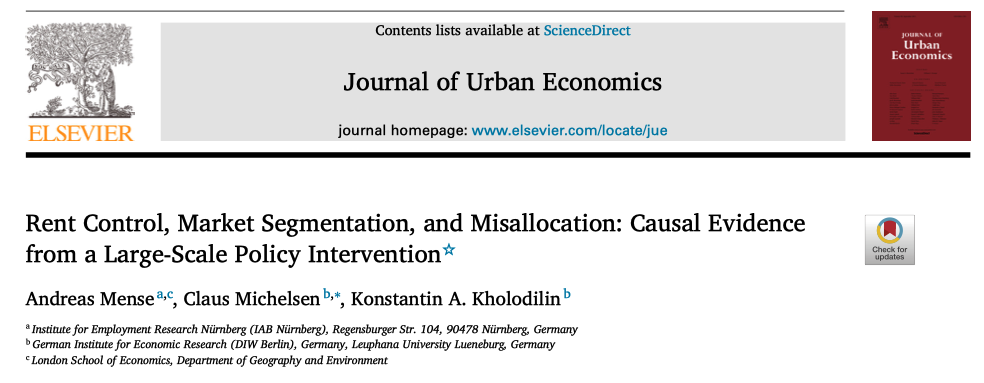
Rent control and rent stabilization are hot topics in housing policy debates in across the US due to rising rents, increased homelessness, and housing affordability crises. A recent study published in the Journal of Urban Economics analyzes rent control in Germany, helping Rockville residents and businesses understand how these policies impact renters, landlords, and the broader housing market.
What Are Rent Control and Rent Stabilization?
Rent control and rent stabilization are regulatory measures designed to keep housing affordable by capping rent increases. Rent control typically refers to stringent policies that freeze rents at a certain level, while rent stabilization allows for regulated, modest increases tied to inflation or other factors. These policies aim to protect tenants from sudden and significant rent hikes, providing housing stability and affordability. Keep in mind that policies affecting housing vary significantly by jurisdiction, so if you do a deep dive, it can quickly become complex and overwhelming as you mentally juggle all the pieces. This research looks at a specific situation, which may or may not fully apply to Rockville or MoCo, but does provide a sense of the issues that deserve consideration by the Mayor and Council.
In 2015, the German parliament passed a law that empowered state governments to introduce a rent cap in municipalities characterized by “tight housing markets”, loosely defined in terms of local rent growth and several other indicators of market tightness. This rent cap introduces a rent ceiling for new rental contracts that depends on past local rent growth. In new contracts, rents are not allowed to exceed the typical local rent by more than 10%. Rent renewals in existing contracts were not affected by the regulation.
There are four major exceptions from the 2015 law: First, rents are freely negotiable for contracts of newly built dwellings (housing completed after October 1, 2014) and all contracts that follow, making the rent cap an example of “second-generation rent control.” Second, short-term rental units (e.g., vacation homes, AirBnB) are exempted. Third, there is no limit on the rent in the first contract after a substantial remodeling of an existing dwelling (worth at least one-third of today’s reconstruction costs of the dwelling). Fourth, if the rent of the previous contract was above the limit of the rent cap, landlords may adopt this level in all subsequent contracts. (I warned you this quickly becomes complex!)
Key Findings from Recent Research
1. Rent Control Reduces Rents for Regulated Units
A 2023 study by Andreas Mense, Claus Michelsen, and Konstantin A. Kholodilin, published in the Journal of Urban Economics, analyzed the impact of rent control introduced in Germany in 2015.* The study found that rent control effectively reduced rents for units under regulation. This outcome aligns with the primary goal of rent control: to make housing more affordable for tenants in regulated units.
2. Market Segmentation and Misallocation
While rent control benefits tenants in regulated units, it can also lead to unintended consequences in the broader housing market. Mense, Michelsen, and Kholodilin’s research highlights how rent control creates market segmentation and misallocation. Here’s what happens:
– Market Segmentation: Rent control divides the housing market into two segments: regulated and unregulated. As a result, the unregulated segment experiences upward pressure on rents due to increased demand from households unable to secure regulated units.
– Misallocation: Rent control can lead to inefficient allocation of housing resources. Households unable to pay high rents might secure rent-controlled units, displacing those with a willingness to pay higher rents. This misallocation reduces overall welfare by mismatching housing needs and availability.
3. Reduced Mobility Among Tenants
Another significant finding from the study is the reduced mobility among tenants in rent-controlled units. When tenants benefit from lower, regulated rents, they are less likely to move, even if their housing needs change. This reduced mobility can lead to various issues:
– Reduced Housing Supply: As tenants stay put, fewer rental units become available, exacerbating housing shortages in high-demand areas.
– Limited Opportunities for New Tenants: Newcomers and those seeking housing face increased competition and higher rents in the unregulated market segment.
4. Long-Term Effects on Housing Market
The long-term effects of rent control policies extend beyond immediate rent reductions. Over time, these policies can impact housing supply and market dynamics:
– Reduced Investment in Housing: Rent control can discourage investment in rental housing, leading to a slower growth in the overall housing supply. Landlords may be less inclined to invest in maintenance and upgrades, resulting in lower-quality housing stock.
– Increased Rents in Unregulated Market: As the supply of rent-controlled units remains fixed or declines, demand spills over into the unregulated market, driving up rents. This can create a cycle where housing affordability worsens for those not in rent-controlled units.
Balancing Benefits and Drawbacks
The findings from Mense, Michelsen, and Kholodilin’s study, along with other recent research, highlight the complexity of rent control and rent stabilization policies. While these measures provide crucial protections for some tenants, they also introduce challenges that policymakers must navigate carefully.
Policy Considerations:
1. Targeted Approaches: The Mayor and Council should consider targeted rent control measures that protect vulnerable populations without distorting the broader housing market. This could involve applying rent control selectively in high-need areas or for specific tenant groups.
2. Incentives for Landlords: Offering incentives for landlords to maintain and upgrade properties can help mitigate the negative effects of rent control on housing quality. Tax breaks or subsidies for property improvements could encourage landlords to invest in their units.
3. Complementary Policies: Rent control should be part of a broader strategy that includes measures to increase housing supply. Policies that promote new construction, streamline permitting processes, and provide affordable housing funding can help address the root causes of housing affordability issues. Recent legislation to allow Accessory Dwelling Units (ADUs) in Rockville is a step in the right direction, but may have limited impact due to zoning constraints and capital costs that are beyond the ability of most homeowners.
4. Regular Review and Adjustment: Rent control policies should be regularly reviewed and adjusted based on market conditions. Flexible policies that can adapt to changing economic and housing dynamics are more likely to achieve their goals without unintended side effects.
Conclusion
Understanding the latest research on rent control and rent stabilization is crucial for local residents, policymakers, and stakeholders. While these policies play an essential role in protecting tenants and ensuring housing affordability, they also come with challenges that need careful consideration and balanced approaches. By staying informed and advocating for thoughtful policy solutions, we can work towards a housing market that serves the needs of all residents, ensuring stability, affordability, and quality housing for everyone.
Stay tuned for more updates and insights on housing policies and their impacts on our community. Be aware that elected officials tend to focus on short-term solutions because they’re thinking about the next election and want to satisfy the immediate needs of residents. The long-term consequences are usually not their concern (that’s for the next City Council) and voters are rarely aware of the spillover effects of legislation, so they don’t voice their opinions. If you have any questions or thoughts, feel free to share them in the comments below!
FYI. In a recent opinion piece in the Baltimore Sun, Rockville Councilmember David Myles expressed regret for signing a letter against Montgomery County’s rent stabilization last year. He acknowledged that voluntary rent guidelines have been inadequate, with many Rockville residents facing over 10% rent increases. As a former renter and landlord, Myles supports rent stabilization to help families stay in their homes without harming most landlords. He urges his colleagues to join Councilmember Shaw and President Biden in supporting this initiative.
*Mense, Andreas, Claus Michelsen, and Konstantin A. Kholodilin. “Rent Control, Market Segmentation, and Misallocation: Causal Evidence from a Large-Scale Policy Intervention.” Journal of Urban Economics 134 (2023): 103513. https://doi.org/10.1016/j.jue.2022.103513.

 Max for Rockville
Max,
Rent Stabilization is PRICE CONTROL.
It’s a cutesy marketing term, but it is PRICE CONTROL.
Even the Mayor of Hanoi, Viet Nam a communist nation said it was the worst thing for housing for Hanoi. Numerous articles of the 2019 NYC rent control impacts abound, non to the good, units kept off market, scarcity , drive up rents and what have you.
In addition, in Montgomery there is VACANCY CONTROL- which is another form of PRICE CONTROL–in that the vacant unit when vacated can never get to then current market rate rents. So many times long term tenants have rents below then market rate and usually by a fair margin. May be only raise by 10% of THE OLD RENT THEN IN PLACE AT MOVE OUT.
Trust you can understand the difference.
EVEN IF the unit was completely renovated like new bathroom or kitchen flooring etc, would gather NO MORE rent increase than if it were relet in AS IS condition.
So, it stands to reason, that no economic incentive to refurbish a unit and recoup costs. It was the death spiral to DC housing until it was lifted under The Control Board. You should note last week as reported; that DC is crowing about the amount of new housing being built to date and meeting its target. Montgomery, not really at all.
To put in perspective; Montgomery is larger than all of DC and Baltimore combined and its new housing is but a fraction of DC OR VIRGINIA.
I can tell you a national investor builder who has two (2) deals; one (1) in Fairfax and one (1) in Rockville/Gaithersburg market, after analysis of RENT CONTROL; just walked away from a office teardown for housing deal due to the climate of RENT CONTROL in Montgomery.
They KEPT the Virginia site and looking for a 2nd site in Fairfax instead. Again, knock on effects of RENT CONTROL.